[ad_1]
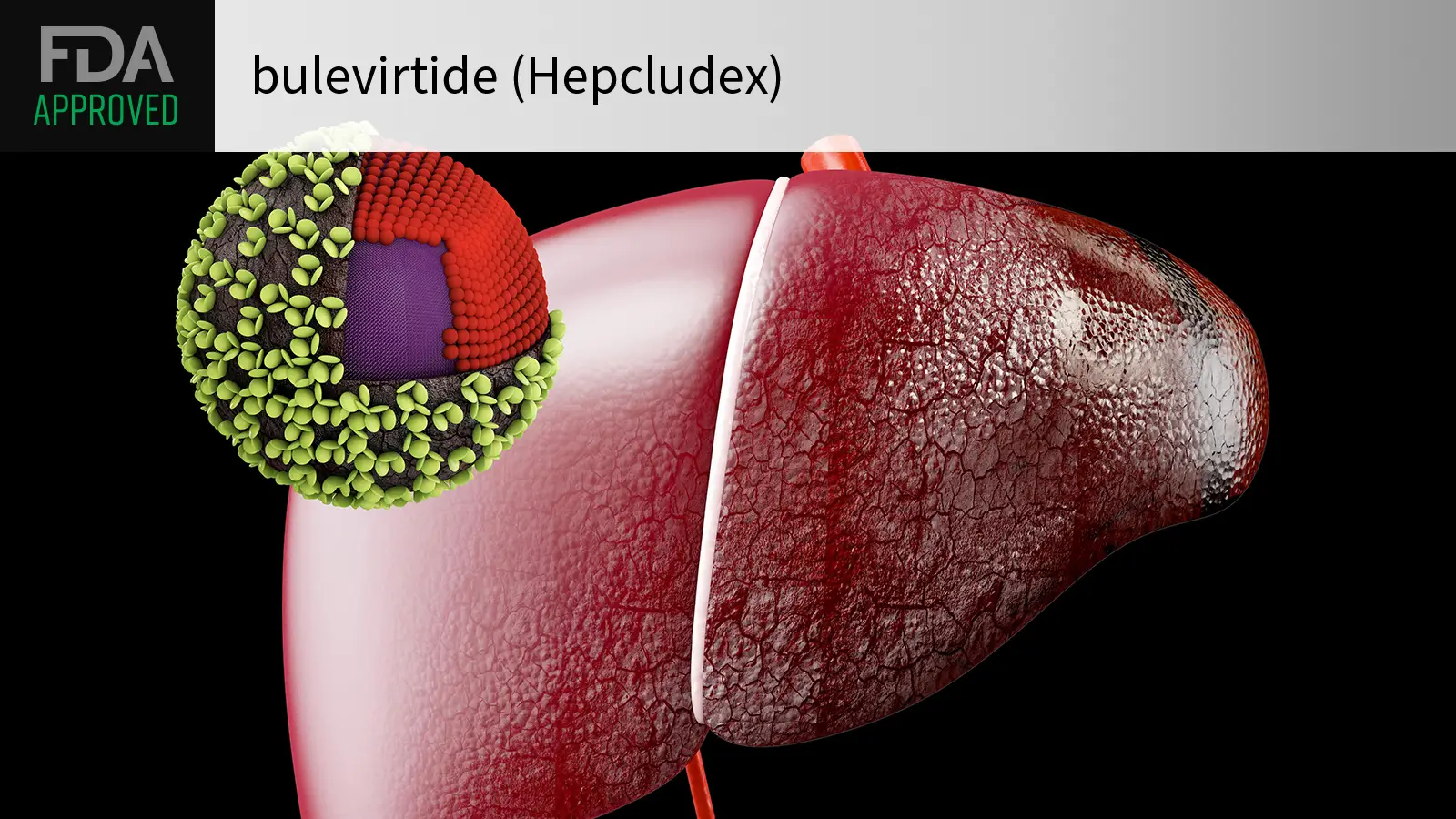
Chronic hepatitis delta virus (HDV) infection has its first FDA-approved treatment, after the agency granted accelerated approval to bulevirtide (Hepcludex) injection for adults without cirrhosis or with compensated cirrhosis.
The most severe form of viral hepatitis, HDV infection only occurs in people with hepatitis B virus (HBV) infection and brings greater risks of disease progression, liver failure, and mortality than HBV alone. An estimated 40,000 people in the U.S. have chronic HDV. Bulevirtide blocks entry of both HBV and HDV into liver cells.
“For patients, an HDV diagnosis means managing two distinct viral liver diseases — hepatitis B and hepatitis D — each contributing to disease progression, monitoring demands, and treatment complexities,” said Ira Jacobson, MD, of New York University Grossman School of Medicine, in a statement from drugmaker Gilead Sciences. “The approval of Hepcludex for chronic HDV represents a critical advancement, introducing a long-awaited option that begins to address a significant unmet medical need and has the potential to meaningfully alter the course of this devastating disease for people living with HDV in the United States.”
The FDA had previously rejected bulevirtide for chronic HDV in 2022, citing manufacturing and delivery concerns at the time.
The approval was based on results from the multicenter, randomized, open-label, phase III MYR301 study, which showed that treatment with bulevirtide led to greater rates of undetectable HDV RNA levels and alanine aminotransferase (ALT) normalization.
At 48 weeks, 48% of those randomized to immediate bulevirtide had achieved the combined response of undetectable HDV RNA, or at least a 2 log10 IU/mL decline from baseline, and ALT normalization, compared with 2% of those who didn’t start the antiviral until after 48 weeks. Twenty percent of those taking bulevirtide had undetectable HDV RNA levels at 48 weeks, compared with no participants who received delayed treatment.
More than a third of those taking bulevirtide (36%) had undetectable HDV RNA levels by 96 weeks, a rate that rose to 50% by 144 weeks.
The most common adverse events in the study included injection site reactions, headache, abdominal pain, fatigue, and itching.
“For individuals living with this chronic viral infection, this new treatment option offers hope in managing a disease that can rapidly progress to serious liver complications,” said Wendy Carter, DO, of the FDA’s Center for Drug Evaluation and Research, in a statement.
Bulevirtide’s labeling comes with a boxed warning that patients who stop bulevirtide could see severe acute exacerbations of HDV and HBV infection, particularly in those with cirrhosis. Hepatic function should be monitored for at least 6 months after drug cessation.
Other label warnings and precautions include hypersensitivity reactions such as anaphylaxis.
[ad_2]
Source link : https://www.medpagetoday.com/infectiousdisease/hepatitis/121433
Author :
Publish date : 2026-05-26 18:05:00
Copyright for syndicated content belongs to the linked Source.