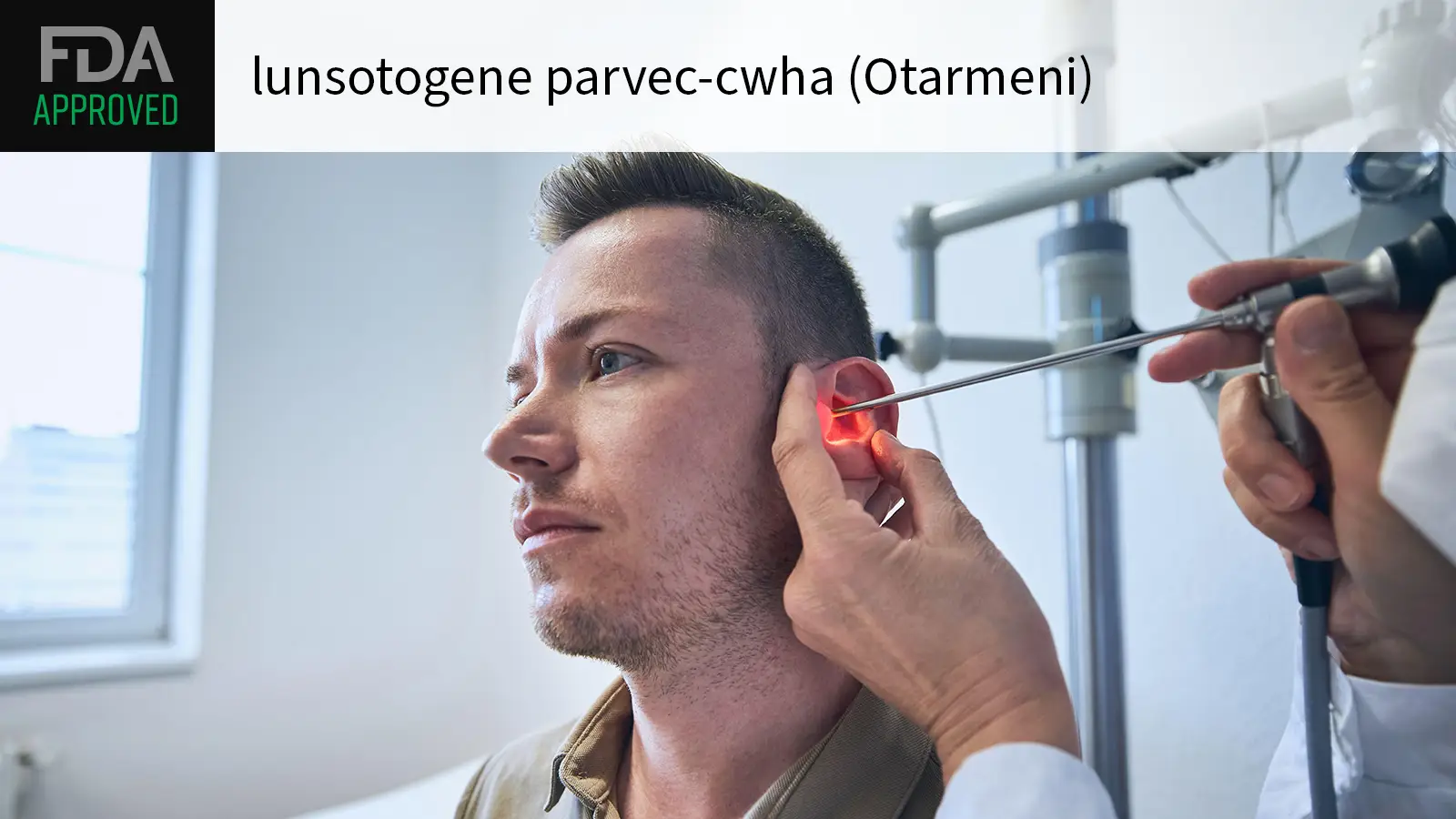
The FDA granted accelerated approval to lunsotogene parvec (Otarmeni) as the first gene therapy for genetic hearing loss, the agency announced on Thursday.
An adeno-associated virus vector-based gene therapy, lunsotogene parvec is indicated for pediatric and adult patients with severe-to-profound and profound sensorineural hearing loss (any frequency >90 decibel hearing level [dB HL]) associated with molecularly confirmed biallelic variants in the OTOF gene, and with preserved outer hair cell function and no prior cochlear implant in the same ear.
The ultra-rare condition, which affects about 50 newborns each year in the U.S., causes a lack of a functional otoferlin protein critical for communication between the sensory cells of the inner ear and the auditory nerve.
Lunsotogene parvec works by delivering a functional copy of the OTOF gene to inner hair cells to restore otoferlin production and auditory signaling.
Maker Regeneron said it will provide the drug at no cost to eligible patients in the U.S.
Prior to the approval, OTOF-related deafness was considered permanent and could only be managed with hearing devices.
“The FDA approval of Otarmeni signals a new era in the treatment of genetic forms of hearing loss, where reinstating 24/7 natural hearing is now possible,” said A. Eliot Shearer, MD, PhD, of Boston Children’s Hospital and Harvard Medical School, in a press release from maker Regeneron. “In the pivotal trial, the one-time gene therapy demonstrated rapid, meaningful, and consistent hearing responses, with most children achieving remarkable hearing improvements.”
“I’ve witnessed firsthand my trial participant responding to their mother’s voice, dancing to music, and interacting with the world, and these moments are now possible for more children born with this specific form of hearing loss,” he added.
In the ongoing phase I/II CHORD study, 16 of 20 participants experienced hearing improvements per pure tone audiometry assessments at a threshold of ≤70 dB HL — typically the cutoff for not needing cochlear implantation — at 24 weeks. Another participant achieved this threshold by week 48.
In addition, 14 patients demonstrated an auditory brainstem response at ≤90 dB at 24 weeks. All 12 responders followed for 48 weeks maintained hearing, and five (42%) achieved normal hearing that included whispers (≤25 dB HL).
“Continued approval may be contingent upon assessment of durability of hearing improvement along with verification of treatment effects on clinical measures of speech development and quality of life,” the FDA noted.
The most common adverse events (occurring in ≥5% of participants) included otitis media, vomiting, nausea, dizziness, procedural pain, gait disturbance, and nystagmus. The label lists no contraindications.
The trial included participants ages 10 months to 16 years who were given a single dose of the biologic via intracochlear infusion, either unilaterally or bilaterally. The drug and administration kit come in a one-time biologic-device combination product to be administered by a specially trained surgeon. It uses an approach similar to cochlear implantation and can be used in young infants.
Approved within 61 days of filing, lunsotogene parvec marks the sixth approval under the FDA Commissioner’s National Priority Voucher pilot program and the first gene therapy approved under the program.
Source link : https://www.medpagetoday.com/genetics/generalgenetics/120935
Author :
Publish date : 2026-04-23 21:17:00
Copyright for syndicated content belongs to the linked Source.