Welcome to “Medical Mavericks,” a series from MedPage Today featuring interviews with healthcare professionals working in unconventional fields of health and medicine.
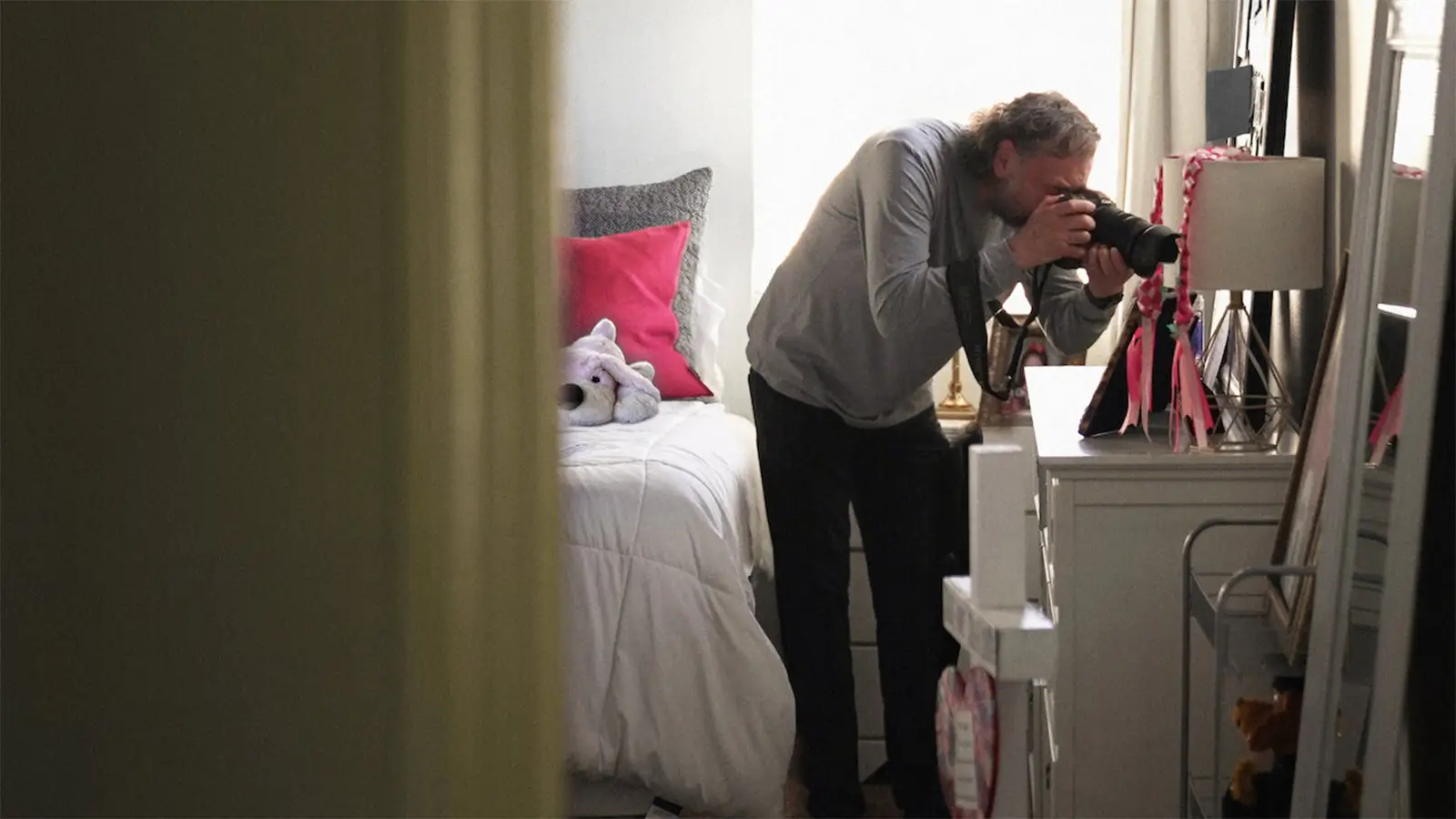
We spoke with pediatric surgeon Chethan Sathya, MD, director of Northwell Health’s Center for Gun Violence Prevention, about his experience as a consulting producer for the Oscar-winning short documentary film, “All the Empty Rooms,” which follows broadcast journalist Steve Hartman and photographer Lou Bopp as they travel across the country to document the bedrooms of children killed in school shootings. Sathya discussed with us how he got involved with the short and how its unique look at the aftermath of mass shootings could help move the needle in gun violence prevention.
Sathya is also vice president of strategic initiatives, where he oversees many of the health system’s public health efforts.
This interview has been edited for brevity and clarity.
How did you initially get into pediatric surgery?
Sathya: I fell in love with the specialty in medical school. I knew I wanted to do a surgery — I just found it incredible that we could go in and operate on somebody and either save a life or cure a cancer. Taking families through that journey was incredible.
But then in pediatric surgery in particular, working with babies and children, being able to watch them grow and become productive adults was just an incredible experience. And taking these families through that very stressful time when their child is sick was an added experience I just couldn’t find in another specialty.
Have you treated youth victims of gun violence?
Sathya: Yeah, absolutely. My first week on the job in Chicago I had to treat a 6-month-old baby with a bullet wound. That’s a big one. I remember what it was like to have both my fingers on those wounds, blood gushing out. I remember what that baby’s face looked like and her eyes rolling to the back of her head. And in pediatric trauma the family comes into the trauma bay with you, and you can only imagine the horrific expressions they had on their faces. That one certainly sticks with me, but there are countless other stories.
A couple years ago there was a 14-year-old girl shot in the neck after studying with her friends, totally paralyzed from the neck down. She survived, but she didn’t even know she had been shot. We have another recent example of a child who was shot in the abdomen, required 20 units of blood, barely survived. We had to open his chest on the way to the operating room for cardiac massage. And he is now — actually through gun violence prevention efforts — on his way to potentially going to nursing or medical school. He is out of a cycle of violence for the first time.
You have a lot of cases like that when you’re in this field — where you see it up front and we’re very used to just treating the bullet injury, right? And then sending patients back out into the community. But we’ve come a long way. Multiple hospitals have done groundbreaking research on this topic. And because of that, we’ve been able to incorporate preventive strategies into our work.
So, a lot of these kids, even after we treat them, we feel like we’re doing something to prevent something from happening again. And I have been so fortunate to work at an institution like Northwell, which is really one of the first big health systems to say, listen, from all leadership levels, we need to really prioritize this topic.
Can you tell me more about “All the Empty Rooms” and how you got involved?
Sathya: When we think about mass shootings, the headlines almost always focus on the shooter. But we rarely think about the families and the devastation that’s left behind. And this film exposes the empty rooms of these children that are no longer here. Hearing the messages from parents about how they wished their children had the chance to go to high school, all the things they wished they could do with their kids, and how they don’t touch these empty rooms for years, it makes you think, listen. It’s an unbearable tragedy to live through. And this film beautifully highlights the impact we often don’t talk about.
My involvement was serendipity on many levels. I got introduced to the director, Josh Seftel, through a parent of a child I treated. And they knew I had been doing gun violence prevention work here at Northwell, that we had a big presence in this space. At the same time, they knew Josh was trying to pursue a film on gun violence prevention. That’s really what brought us together.
What did your involvement look like?
Sathya: So really, constant contact. On content, on working with the families, how can you get the facts? How can we think about working with the right families that would want to share their stories? How do you think about what to include and what not to include in the film? From a gun violence prevention standpoint, something that’s going to resonate with folks — bipartisan, right? If you notice in the film, they really never mention a gun. They’re focusing on the empty rooms.
That’s actually what resonated with me in deciding to pursue this project. And certainly a big part of my role has also been to help the team think about what an impact campaign can look like. Post-Oscars as well, we are still hosting hundreds of screenings this year. It’s all about how we can take the film and create actionable change.
How might the film’s unique framing of gun violence move the needle in ways other efforts have not?
Sathya: We’ve done screenings with diverse groups on both sides of the political spectrum, and I’ve never really seen a message resonate with so many folks as this one has. I think it’s because it’s not talking about gun control. We’re talking about what’s left behind after a mass shooting. And I have to say, I really have never met an American family that doesn’t want fewer mass shootings, less violence, or to keep their kids safe.
There are thousands of different prevention strategies when it comes to gun violence. And this film offers everyone an opportunity to see why this topic resonates with them. Everyone can relate. Seeing these parents leave that empty room untouched, what they’re smelling, what they’re feeling after that experience is just absolutely horrific. And that gets people to start thinking, “What are some solutions I could get behind rather than just shutting down?” And remember, the families involved are across the spectrum of political ideology too. This issue affects all communities.
Did the documentary’s Oscars win change anything for you about the experience?
Sathya: Just from a platform standpoint, when Netflix acquired the film, it was huge. And when it wins an Academy Award, it’s huge because that many more people are going to see this film. That was by far the most exciting part [or the Oscars win].
Do you plan to stay involved in film-making moving forward?
Sathya: I’m a journalist by background, so storytelling has always been a part of my work. It is the best way that we, as healthcare workers, can communicate what we’re seeing and how we can translate that to the lay public and even lawmakers to change policy.
Being part of the film certainly reinvigorates my ongoing interest to incorporate storytelling in everything we do. And one of the things that resonated with me the most is how can we do our part again to tell the stories of these families? The more we can do to get those messages out, the more people are going to understand that this is an issue we all need to care about.
Is there anything else I haven’t asked about that you’d like to share?
Sathya: Particularly from the public health standpoint, we hope that this film activates healthcare workers across the country. There’s a lot that healthcare workers and hospitals can do on this topic. That’s part of the impact campaign.
Physicians can start talking to patients about safe access, safely storing guns, violence prevention. Healthcare workers and hospitals can advocate for policies that help prevent mass shootings. At Northwell, for example, we have the largest screening program for patients related to gun violence risk in the country; we screened over 200,000 patients for gun violence risk. Films like “All the Empty Rooms” also help inspire healthcare workers to continue doing that work and to make it a priority.
Source link : https://www.medpagetoday.com/popmedicine/popmedicine/120595
Author :
Publish date : 2026-04-01 15:05:00
Copyright for syndicated content belongs to the linked Source.