[ad_1]
The Trump administration’s cuts to international public health programs have blunted the response to the latest Ebola outbreak in Central Africa, and the cumulative impact could lead to failure in future public health emergencies, according to public health experts.
In a briefing sponsored by the Infectious Diseases Society of America (IDSA), three experts discussed international public health funding cuts and reduced international cooperation, the nation’s capacity for managing potential Ebola cases, and the effectiveness of new restrictions on air travel to the U.S.
“Preparedness is a team sport — it requires multinational collaboration and coordination to respond quickly and efficiently,” said Jay Butler, MD, of the University of Alaska Anchorage, and a former deputy director of the CDC. “This is particularly important in responding to outbreaks in resource-limited or conflict-torn areas where preparedness infrastructure may be limited.”
With the dismantling of resources such as the U.S. Agency for International Development and disengagement with institutions such as the WHO, “what we’re seeing now may be only the beginning of what may portend down the road if funding cuts continue the impact that they’re having now,” Butler warned.
The international preparedness system may not fail immediately, he added, but “it’s going to have more and more problems until potentially there’s a catastrophic failure.”
Krutika Kuppalli, MD, of UT Southwestern Medical Center in Dallas, who served as a medical director of a large Ebola treatment center in Sierra Leone during the 2014 outbreak, noted that the current Ebola outbreak “comes at a time when global health systems are under strain from funding cuts, workforce reductions, geopolitical fragmentation, and weakening international public health infrastructure.”
“Ultimately, infectious diseases don’t respect borders,” Kuppalli said. “Investing in global health preparedness, supporting international coordination through organizations like WHO, and strengthening local health systems are not acts of charity — they are essential components of global health security and collective strategy.”
U.S. Ebola Beds Are Ready but Unused
Seven Ebola-exposed U.S. citizens, including one who contracted the disease, have been evacuated from the Democratic Republic of Congo and Uganda to facilities in Germany and the Czech Republic for monitoring and treatment, despite the U.S. having facilities of its own for managing Ebola cases.
The Washington Post reported that the Trump administration refused to allow an infected U.S. physician back home for care. In a social media post during the 2014 Ebola outbreak, Trump asserted that “Ebola is much easier to transmit than the CDC and government representatives are admitting. Spreading all over Africa-and fast. Stop flights.” By that outbreak’s end, 11 people had been treated in the U.S., according to the CDC.
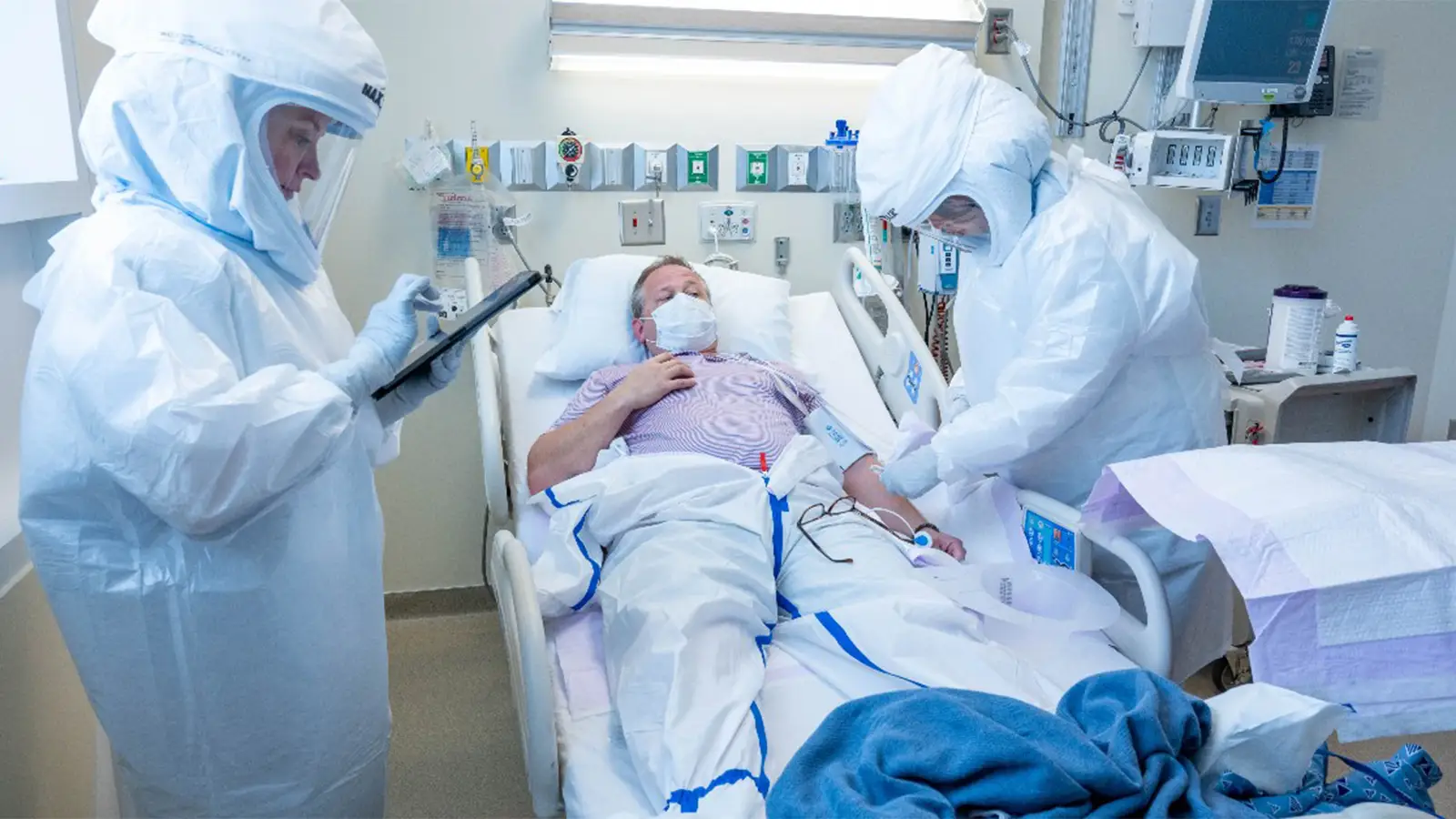
The U.S. has a national network of 13 Regional Emerging Special Pathogen Treatment Centers with clinical biocontainment units run by the National Emerging Special Pathogens Training and Education Center, which could handle at least 26 Ebola cases in total, said Angela Hewlett, MD, of the University of Nebraska Medical Center in Omaha, who is the medical director of the Nebraska Biocontainment Unit. That unit is currently housing 18 passengers from a high-profile cruise ship hantavirus outbreak under monitoring.
“All of those units are ready and available to care for individuals with Ebola virus disease or to monitor individuals potentially exposed to Ebola virus disease,” Hewlett said. “We have not been overtly informed of any geographic plans for where these individuals would be taken should they need care.”
For cases of viral hemorrhagic fevers such as Ebola, which have stricter waste management requirements, each of those 13 units can handle two to three patients. That tally can rise to 10 patients per unit for airborne diseases with less stringent waste-management needs, Hewlett explained. Expanding beyond those level 1 regional treatment centers to include prepared level 2 treatment centers could add bed capacity for Ebola cases, she noted.
Tightened U.S. Travel Restrictions Don’t Fly
As of May 21, the U.S. Department of Homeland Security announced that all flights with travelers who’ve been to Congo, Uganda, or South Sudan within 21 days of entering the U.S. must land at a single airport, Washington Dulles International Airport in Virginia.
Screening travelers will reveal those who are symptomatic and help identify high-risk contacts, Kuppalli said, but “I don’t think that funneling people through maybe one airport is going to help things. I think it causes actually more confusion and chaos.”
During the 2014-2016 Ebola outbreak, the U.S. channeled international passengers at risk of exposure through five airports, Kuppalli pointed out. A broader, more regional approach could reduce bottlenecks and logistical challenges for those returning to the U.S.
[ad_2]
Source link : https://www.medpagetoday.com/infectiousdisease/ebola/121413
Author :
Publish date : 2026-05-21 21:19:00
Copyright for syndicated content belongs to the linked Source.