[ad_1]
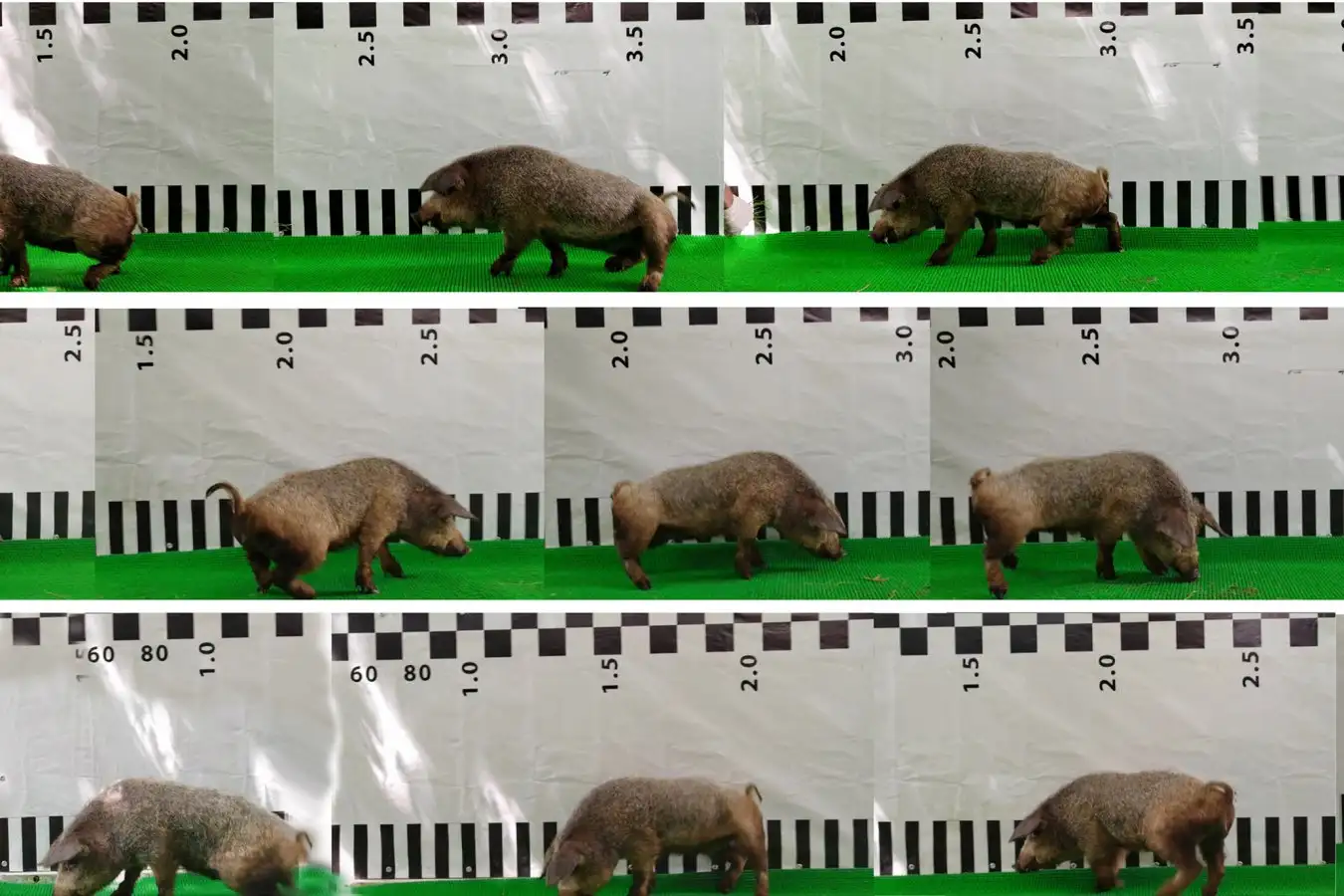
Pigs with severed spinal cords regained the ability to walk after “fusogenic” therapy
Michael Lebenstein-Gumovski et al. 2026
More than 15 million people live with a spinal cord injury. With so few effective treatments, my interest was well and truly piqued when I saw a recent paper reporting that a new intervention had allowed pigs with completely severed spinal cords to walk again.
The feat was performed by a team led by Michael Lebenstein-Gumovski at the Sklifosovsky Institute for Emergency Medicine in Russia. The paper also has editorial contributions from neurosurgeon Sergio Canavero, who you might remember claimed in 2015 that human head transplants were just two years away. With his involvement, and with Russia due to add the spinal cord to its authorised list of transplantable tissues this year, colour me intrigued.
But what did Lebenstein-Gumovski and his team actually do? First, they anaesthetised the animals and removed the bony arch surrounding the pigs’ spinal cord, cooled the area and then sliced through the spinal cord with a sharp blade in the mid-back region. This severed the connection between the brain and the body below the abdomen – replicating one of the most severe forms of spinal cord injury.
They then stabilised the spine around the lesion and placed the two cut ends of the spinal cord in close proximity. Three animals were given a “fusogen” composed of polyethylene glycol – a compound commonly used in cosmetics, for drug delivery and as a laxative – and a biological polymer called chitosan, which is derived from the chitin in crustacean shells. This was injected into the injury site and infused into the pigs’ blood. Two animals didn’t receive the fusogen to serve as controls.
All animals received electrostimulation to each limb, for 20 minutes twice daily, as well as drugs to reduce inflammation and prevent bowel obstruction. For one week after surgery, the pigs in the experimental group also received further fusogen infusions.
Immediately after surgery, all animals had motor and sensory paraplegia in their lower limbs and pelvis, which persisted in the control animals. In the treated group, however, one animal started to move its hind limb on day two, and all three responded to pinpricks in some areas of their hind leg. By day seven, one animal attempted to stand.
By the end of the 60-day study, all three treated pigs could walk, albeit unsteadily, and had recovered pelvic control and some sensitivity to touch. Later analysis of the injury site showed less degeneration in the treated animals, as well as a significant number of twisted and thickened axons – the long, slender part of a nerve that conducts electricity towards other nerve cells or muscles – forming what the authors describe as “axonal bridges” across the lesion.
The team believes that the polyethylene glycol helps seal damaged nerves before they degenerate and may also encourage axons to fuse across the lesion. Chitosan may further help by sealing nerve membranes and providing a supportive scaffold.
In theory, this might preserve some electrical conduction across the lesion – a little like gluing two bunches of wires end to end, so that some make contact and can carry a signal.
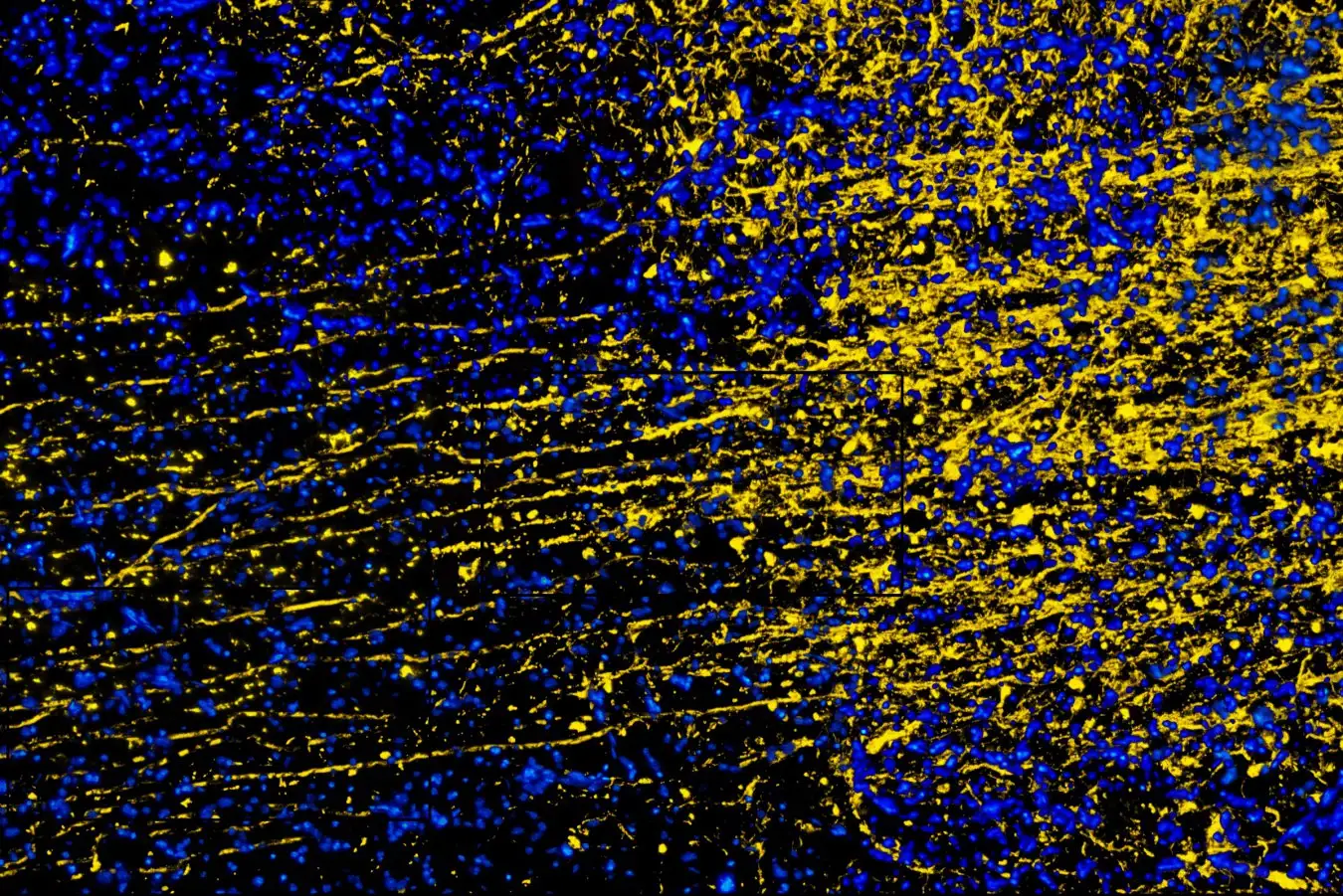
Staining reveals spinal cord axons (yellow) at the injury site in the pigs
Michael Lebenstein-Gumovski et al. 2026
The obvious problem is that the spinal cord is not a simple electrical cable. It’s a dense bundle of axons, together with immune cells, blood vessels and supporting tissue, all of which undergo immediate damage, inflammation and scarring if injured. Even if some reseal, it may not promote full recovery. Previous work in mice has suggested that functional recovery depends on guiding axons back to their natural targets, while random regrowth is ineffective. Which is why, in the past, some researchers have been cautious about accepting that fusogens do what they appear to do.
It is possible that some fibres were spared when the cord was cut. Without electrophysiological assessment immediately after the transection, it is difficult to exclude entirely.
The researchers provided New Scientist with a video of the technique, and say that the controlled nature of the surgery, together with the fact that the control animals did not regain movement, gives them confidence that the injuries were complete. However, Lebenstein-Gumovski also says his team plans to include electrophysiology in future experiments.
“The results of this study are striking, with treated animals recovering some sensory and motor function,” says Melissa Andrews at the University of Southampton, UK. “This equates to being able to stand after injury and sense pinpricks in affected limbs – functions commonly lost in humans with spinal cord injury.”
She notes, however, that the spinal cord was cooled for a minute before being cut, which does not reflect most real-world injuries. Nevertheless, she says that “results thus far look encouraging”.
Are human head transplants next?

Could fusogenic neurosurgery make head transplants possible?
Sally Anderson/Alamy
When I asked Lebenstein-Gumovski about the researchers’ ultimate goal, he said their research was focused on developing new strategies for repairing the structure and function of damaged spinal cords in humans. But with Canavero’s involvement, the possible link with head or brain transplants was hard to ignore.
While no one stated this as the immediate aim of the pig study, Lebenstein-Gumovski acknowledged that the research sits within a broader picture. “Our research is part of an emerging direction that we describe as fusogenic neurosurgery,” he says.
This, he says, combines bioengineering, membrane fusion and neuroplasticity. In parallel, the team is exploring how the technology might be used in “transplant neurosurgery”.
He says the next step is to repeat the experiment in a larger group of animals, ideally with involvement from independent groups in several countries. “My aim is not to make unsupported promises, but to test this approach repeatedly and critically, and to ensure that we do not move toward clinical translation before the methodology has been validated with the highest possible level of care.”
After that, he plans to move towards clinical studies in humans. Already, similar techniques have been rehearsed in cadavers, but that is a long way from demonstrating that such procedures are safe or effective in living people.
There is also a practical problem. Real spinal cord injuries trigger an immediate flood of inflammation, degradation and scarring, making repair far harder than in the controlled conditions of the study. Lebenstein-Gumovski acknowledges this. “Bringing a powerful fusogen into an unprepared spinal cord… would be like bringing a quantum computer into a forest cabin: the technology exists, but the system required to make it work is absent.”
For that reason, he says, the team is considering ways to route people with new injuries into the right kind of preoperative care. This approach won’t help those with old injuries, however. For these people, he says, the team is developing related technologies involving transplantation of donor spinal cord segments that would bridge damaged areas.
This is where legalities enter the equation. On 1 September, a law will come into effect in Russia adding “nerve, spinal cord and its fragments” to the country’s authorised list of transplant tissues. I couldn’t find evidence of any other country with the spinal cord on such lists, although some, including Israel and the US, allow stem cells to be taken from a patient and transformed into material implanted into the spinal cord.
It does feel as though this is all gearing up to eventually allow whole head and brain transplants. According to Canavero, that feeling is correct. He says this is “another key step toward brain transplants, which are in the works”. He also claims that the first surgeries to trial spinal cord fusion protocols in people with paraplegia are in fact scheduled for late this year, although further details were not forthcoming.
There is, clearly, a much bigger story to explore here, one that stretches from Robert White’s monkey head-transplant experiments in the 1970s, in which the spinal cord was not reconnected, to today’s extreme life-extensionists who dream of preserving their mind by transplanting their brain into a younger, brainless clone. Sometimes it feels like the associated benefit for the millions of paralysed people is almost an afterthought.
This is a field where extraordinary claims can quickly outpace evidence. If fusogenic neurosurgery is to move into people, it will need independent replication, rigorous oversight, transparent data and careful regulation. It might also help to draw a much clearer line between spinal cord repair as a therapy for paralysis and the more ethically fraught ambitions of brain transplantation. Without that, a promising treatment for paralysis might face unnecessary challenges.
Topics:
[ad_2]
Source link : https://www.newscientist.com/article/2531428-fusogenic-neurosurgery-let-paralysed-pigs-walk-again-are-we-next/?utm_campaign=RSS%7CNSNS&utm_source=NSNS&utm_medium=RSS&utm_content=home
Author :
Publish date : 2026-06-22 15:40:00
Copyright for syndicated content belongs to the linked Source.