[ad_1]
Looking back at the cheeses I ate as a kid, I mainly remember bright orange cheddar, monterey jack, and powdery parmesan from a metallic green cylindrical can. And, at parties hosted by my grandparents, rubbery string cheese along with pickled vegetables and a “special” item containing raw, finely-ground lamb that my mother and I loved while my father quietly said: “I wouldn’t eat that if you paid me.”
Nonetheless, in the 1960s, when we visited France and I was introduced to the more glamorous side of cheese, even my wary dad enjoyed soft, delicious cheeses like brie, camembert, and blue-veined marvels. I suppose it never occurred to him that their higher moisture and the raw milk with which they were made might up their risk for dangerous bacteria.
What naive bliss. In 1985, as a young infectious diseases doctor, I got a wake-up call when I treated an early victim of Los Angeles’s notorious Listeria outbreak linked to a locally-produced queso fresco cheese made, in part, with raw milk. Not only was my patient septic, but as soon as she entered our hospital’s emergency department, she lost her 20-week unborn child in a sudden, dramatic miscarriage. By the time it concluded, the tragic fiasco earned the dubious honor of being the deadliest cheese-borne outbreak the U.S. had ever recorded, sickening 142 people and killing 18 non-pregnant adults, 10 neonates, and 20 fetuses.
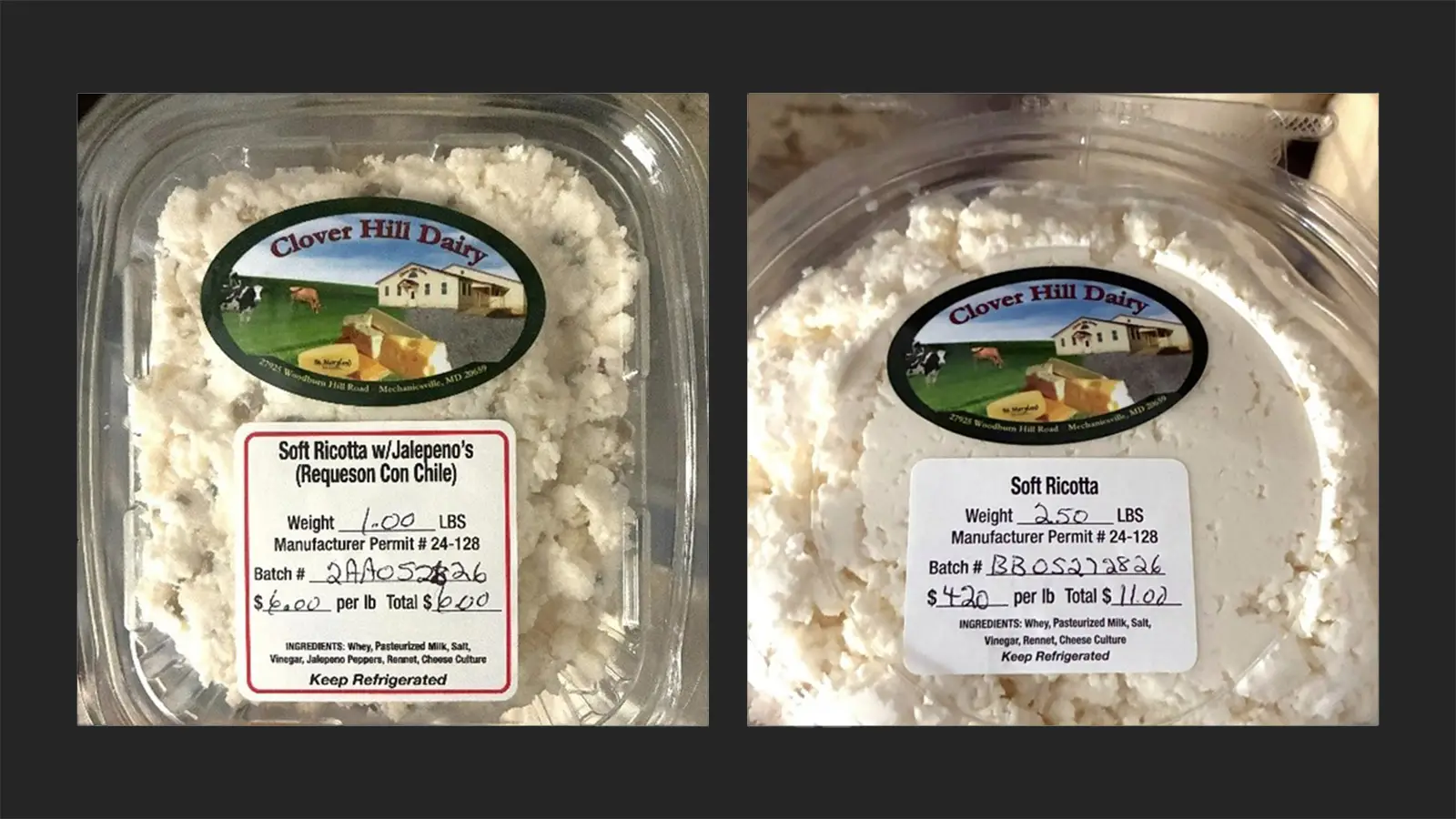
When news broke earlier this month of a yet another Listeria calamity linked to a soft, ricotta-like cheese called requesón, the memories flooded back.
Thus far, this latest outbreak is known to have hospitalized nine people in Maryland, New York, and Virginia, including one who died. Moreover, genomic fingerprinting of the culprit strain has shown that the outbreak began in 2023. This means that ongoing sanitary issues in the manufacturing facility, as opposed to a one-time use of contaminated milk or a single post-production mishap, likely accounted for Listeria repeatedly tainting the requesón.
A Look at Safe Cheese-Making
Although I’m far from an expert, this much I know: The process by which the milk of buffalo, cows, sheep, and goats is converted into a nutritious, delicious food is both ancient and complex. But today, in order to ensure maximum safety, many modern cheeses are made industrially using “highly specific and defined microorganisms as starter cultures, along with controlled production and aging,” according to food microbiologist Catherine Donnelly, PhD, who edited the 2017 James Beard Award-winning “Oxford Companion to Cheese.” Meanwhile, all around the world, we’ve seen an explosion of interest in small-scale, hand-made, local cheeses that now include roughly 1,800 individual varieties.
Here at home, guidelines meant to ensure the safety of these products stress strict pasteurization and aging. But as the requesón outbreak has revealed, even pasteurized products require careful oversight to prevent environmental contamination.
Another fact worth knowing? For unpasteurized cheeses, the FDA requires aging for at least 60 days at a temperature no lower than 35°F to allow natural acids to kill pathogens. But the strategy isn’t foolproof. Some popular soft cheeses like brie, camembert, and fresh chèvre are typically unaged or young, so they cannot meet the 60-day requirement and must therefore be pasteurized.
Things look somewhat different over in France, where it is still possible to buy fresh, soft, artisanal cheeses made of raw milk. Just ask most natives and you’ll find out why. To their palate, the flavors of certain beloved cheeses are far more exquisite than pasteurized versions you’ll typically find in a supermarché.
A Broader Look at Cheese-borne Pathogens
Without a doubt, modern U.S. cheeses — whether soft, semi-hard, or even unpasteurized — are far less prone than liquid unpasteurized milk to infect consumers with common dairy pathogens like Campylobacter, Salmonella, E. coli 0157, and Listeria.
As it happens, of all the microbes that have triggered multi-state cheese-related outbreaks and recalls, Listeria typically leads the list, even though other bad bugs are sometimes implicated.
For example, as recently as April 2026, Raw Farm LLC (formerly known as Organic Pastures) — a $30 million business in California’s San Joaquin Valley whose owner ardently defends many controversial claims about raw dairy’s virtues — finally issued a voluntary recall “under protest” after its Raw Cheddar Cheese products containing E. coli 0157 sickened nine consumers in California, Florida, and Texas. This Shiga toxin-producing strain (as well as several other toxigenic E. colis) sometimes causes not just bloody diarrhea but life-threatening hemolytic uremic syndrome, which afflicted at least one of the three hospitalized individuals who ate Raw Farm’s tainted cheddar.
But the list of cheese-borne baddies doesn’t end there. Other, once-common blights of unpasteurized milk, such as bovine tuberculosis and brucellosis, can still gravely harm cheese lovers here in the U.S. who consume products from other countries. In fact, just last month the Los Angeles County Department of Health issued an alert about a new cluster of human Brucella melitensis infections contracted from imported, unpasteurized cheese from Mexico.
And back in 2013, there was a story I’ll never forget that made multiple headlines in the Las Vegas Review-Journal. It involved the tragic deaths of Vanessa White, a 25-year-old previously-healthy woman, and both of her premature, hospitalized newborns. What ultimately became clear is that all three desperately ill patients died of disseminated infections due to a specific strain of Mycobacterium bovis originally acquired by White after she ate M. bovis-tainted Mexican cheese bought in San Diego.
Coda
In closing, I’d like to honor Wallace and Gromit, two beloved animated film characters with a shared passion for the historic, North Yorkshire cheese called Wensleydale.
Although Wallace, the duo’s goofy human, may be an airhead (his beagle Gromit definitely is not), the characters’ creators wisely chose a low-risk, white, crumbly cheese as the pair’s favorite food. In contrast, a blue Wensleydale — with its creamier texture, stronger flavor, and colored veins reflecting the addition of Penicillium roqueforti spores — would have been a riskier choice to tout to millions of “Wallace and Gromit” fans. After all, who among them might get the wrong impression about the blue Wensleydale’s safety in clinically-vulnerable hosts?
Bottom line: if a family member or a patient is pregnant or at heightened risk for a serious food-borne infection due to age or immunosuppression, please remind them to do online research or consult CDC’s “safer food” guide before eating certain items, including specific artisanal cheeses.
[ad_2]
Source link : https://www.medpagetoday.com/opinion/parasites-and-plagues/121780
Author :
Publish date : 2026-06-16 17:13:00
Copyright for syndicated content belongs to the linked Source.