[ad_1]
A collaborative of public health groups are utilizing tools like wastewater surveillance to monitor pathogens throughout the upcoming FIFA World Cup, hoping to detect and prevent the spread of disease during the massive soccer event — and to trigger a public health response early if threats arise.
The effort is being led by the Health Security Operations Center (HSOC), a project of Georgetown University’s National Center for Health Security and Resilience in partnership with MedStar Health.
Rebecca Katz, PhD, MPH, a professor at Georgetown University and director of HSOC, described it as an “independent civil society effort” with more than 30 collaborators monitoring infectious disease threats throughout the World Cup.
Katz noted that when it comes to major global events, the onus to prepare for public health threats and conduct monitoring usually falls on the host country. However, America’s public health infrastructure has been gutted in recent years, and the Trump administration removed the U.S. from the World Health Organization earlier this year.
A CDC spokesperson told MedPage Today the agency is utilizing “syndromic surveillance, laboratory data, wastewater surveillance, traveler-based genomic surveillance, and event-based intelligence” in their World Cup surveillance.
“As part of HHS, CDC is regularly engaging with public health departments in host cities, other federal agencies, and partner organizations,” the spokesperson said.
They also highlighted port of entry protocols to respond to ill international travelers and a forthcoming World Cup data dashboard.
“This is really the first time we’re trying this, to see how a nongovernmental entity can work independently but in support of all of these efforts,” Katz told MedPage Today.
FIFA is not an official partner, but the organization will receive HSOC’s daily situation reports which will highlight relevant public health findings synthesized from HSOC collaborators. Government officials, associations, and emergency managers in major hospital systems are also on the distribution list.
Wastewater surveillance is one important thread, with partners like Verily, Biobot Analytics, SecureBio, and WastewaterSCAN providing data and analyses then synthesized by HSOC. Most are utilizing existing infrastructure for World Cup surveillance.
“It’s really important when you are preparing for large events to have systems that you already know and trust, and have them work really well,” said Marlene Wolfe, MSc, PhD, an assistant professor at Emory University in Atlanta and the program director and co-principal investigator of WastewaterSCAN, in an interview in which a press person was also present.
The group has 50 sites across the country, testing for 20 infectious diseases multiple times a week. These pathogens are mostly respiratory diseases, like COVID and respiratory syncytial virus; gastrointestinal viruses, like norovirus and rotavirus; and outbreak diseases, like measles and hepatitis A. From years of collecting data, WastewaterSCAN already has baselines and knows annual averages and seasonal trends. Wolfe said for the World Cup and beyond, wastewater data can help clinics and hospitals be prepared for surges and inform clinicians’ differentials.
Vindell Washington, MD, MS, chief physician executive at the health tech company Verily, noted that wastewater surveillance trims down the window of noticing a change in pathogens that could impact public health really quickly. On their World Cup dashboard, Verily will be featuring analysis from Katelyn Jetelina, PhD, MPH, a communication partner of HSOC, who is explaining what wastewater trends indicate alongside other public health analyses on her popular newsletter Your Local Epidemiologist.
Depending on how it goes with the World Cup, Katz said HSOC plans to use the lessons learned to plan efforts for the 2028 Los Angeles Olympics, which will also be “an extraordinarily complex mass gathering event.” However, the project has little funding, but most collaborators are contributing using their own resources — goodwill Katz isn’t sure how long she can count on.
How Wastewater Surveillance Works
Anthony Maresso, PhD, a professor of virology and microbiology at Baylor College of Medicine in Houston and principal investigator of Texas Wastewater and Environmental Biomonitoring (TexWEB), explained that while basic wastewater surveillance dates back to the 1940s, it grew in popularity during the COVID pandemic.
“The field has really exploded,” Maresso said. “Almost any pathogen can kind of be tracked.”
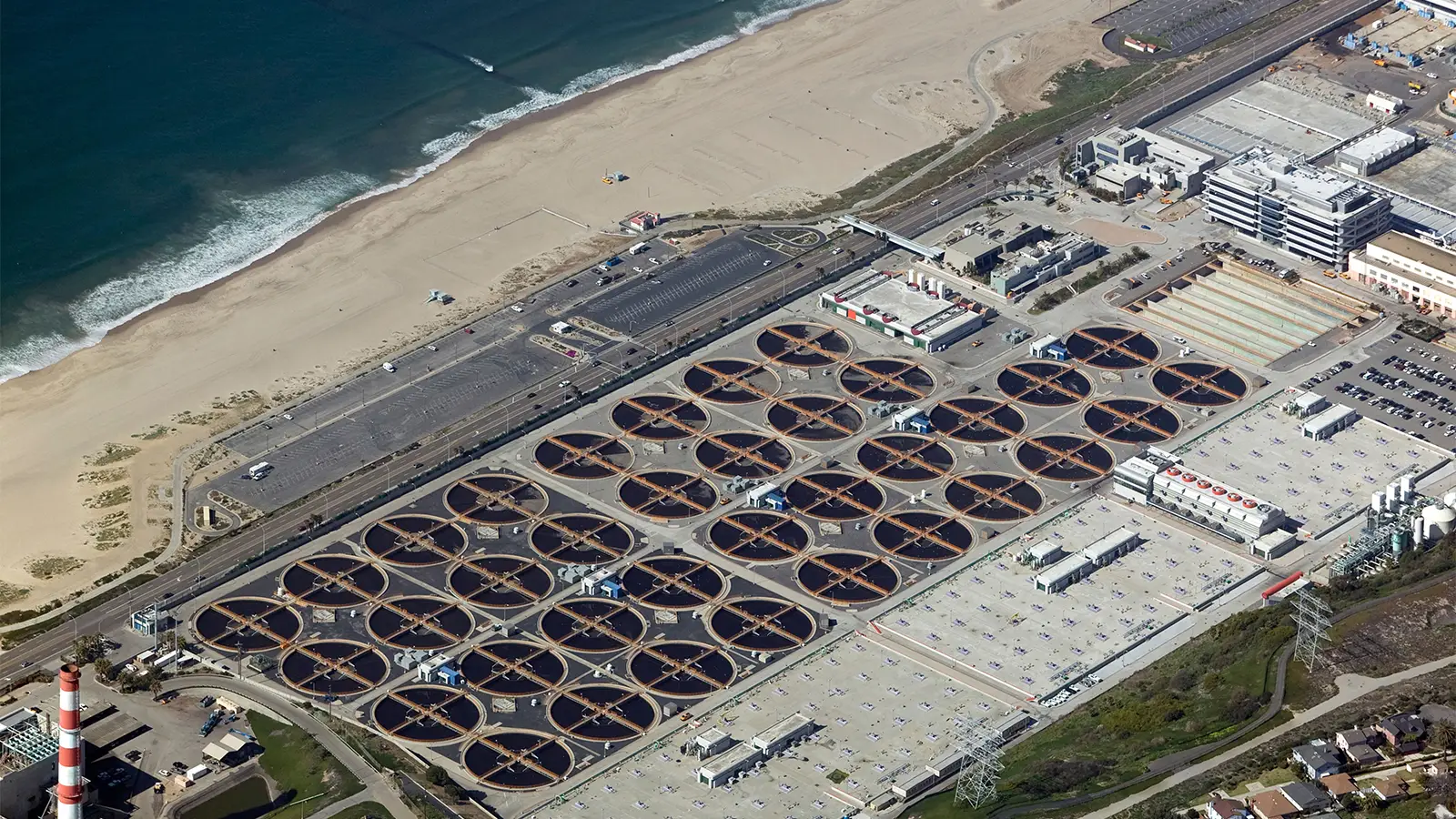
Wastewater surveillance is simple — samples are collected, sent to a lab, and processed — and far cheaper than other detection or surveillance measures, Maresso noted.
There are two methods of sample analysis: polymerase chain reaction (PCR) and metagenomic sequencing. PCR tests for particular pathogens has about a 48-hour turnaround time. Metagenomic sequencing takes about a week from sample collection to data output, but it can catch a wider web of pathogens since it analyzes all the genetic material in a sample. Wastewater surveillance groups contributing to HSOC utilize both types.
“That’s why I think it’s perfect for the World Cup,” Maresso said. With mass travel, it’s hard to predict exact pathogens. He said to think of wastewater surveillance like weather radar: a tool to help decision makers figure out how to respond to probable threats.
The World Cup kicks off June 11 and will end July 19. Millions of fans will travel to attend games in 11 U.S. cities and some locations in Canada and Mexico. On top of that, the participating teams have base camps in North American cities. For instance, the Democratic Republic of the Congo, where an Ebola outbreak is raging, is partnered with Houston, Texas.
While measures are in place to prevent Ebola’s spread into the U.S., Maresso said metagenomic wastewater surveillance would help detect it early.
Marisa Donnelly, PhD, director of epidemiology at Biobot Analytics, said that Biobot added additional testing sites and is deploying some metagenomic sequencing on top of their usual PCR testing.
“I think this World Cup is a test case to show the system that we built for wastewater monitoring,” Donnelly said.
[ad_2]
Source link : https://www.medpagetoday.com/special-reports/features/121671
Author :
Publish date : 2026-06-09 17:46:00
Copyright for syndicated content belongs to the linked Source.