[ad_1]
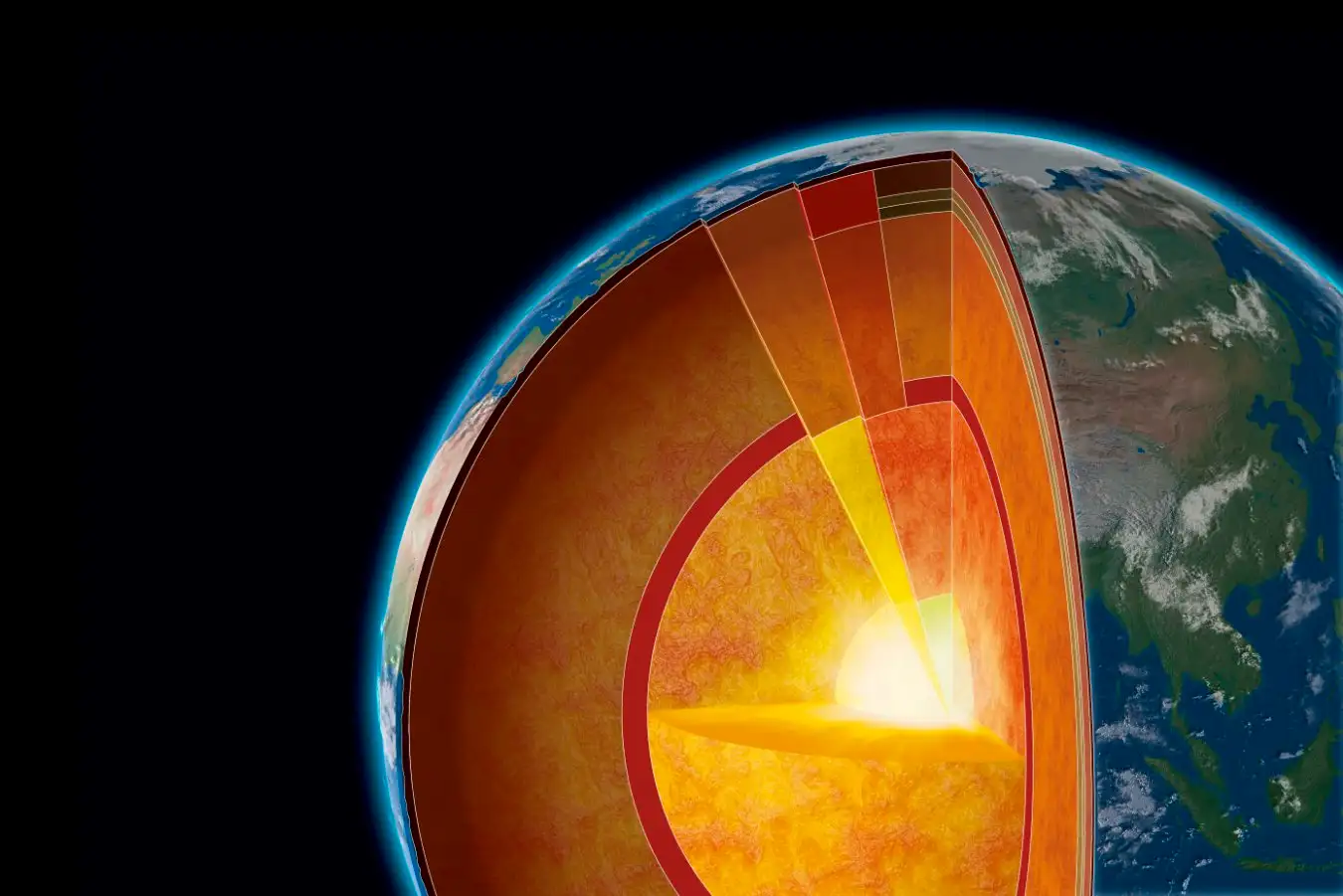
Beneath Earth’s surface, unusual compounds may exist
CLAUS LUNAU/SCIENCE PHOTO LIBRARY
Deep below our feet, manganese may exist in a form we have never seen before, and this underground source of the metal could have played a role in the story of how Earth got its oxygen.
Until about 2 billion years ago, Earth’s atmosphere barely contained any oxygen. Then came the Great Oxygenation Event (GOE) when oxygen produced by photosynthesizing microbes started to accumulate, spurring development of more diverse forms of life and changing the planet.
Manganese is thought to have been a crucial component in an early version of photosynthesis, before the evolution of the oxygen-producing pathway that is widespread today. In Earth’s crust, manganese is commonly found in oxygen-containing ores, which started to accumulate at around the same time as the GOE.
According to Jingming Shi at Jiangsu Normal University in China, some of this ore could have come from a hitherto unknown manganese compound deep underground, hiding in Earth’s mantle.
Many manganese oxides are known to exist at standard pressure, but Shi and his colleagues set out to explore which of them may be stable at extreme pressures and temperatures deep inside our planet. They used a computer simulation to explore how thousands of different arrangements of manganese and oxygen atoms would behave at pressures up to 1.5 million times the atmospheric pressure, comparable to conditions about 2900 kilometres under Earth’s surface.
This led them to several new compounds, including one that has four manganese atoms for every oxygen atom, which is unusually rich in the metal. “We did not necessarily expect such a manganese-rich oxide to be stable over such a wide pressure range. That was the most interesting and unexpected finding,” says Shi.
While the team doesn’t have direct evidence that the new compound exists within Earth’s mantle, its properties could partly explain why seismic waves travel unusually slowly through some regions where our planet’s mantle and core meet. This raises the possibility that some very manganese-rich patches in Earth’s interior have gone unrecognised in studies of how manganese moved through it in the past, says Shi.
The new manganese compound could have plausibly moved from Earth’s interior to the floor of ancient oceans, partly explaining why so much manganese ore appeared during the GOE, says Timothy Lyons at the University of California, Riverside. “[It’s] a potentially important piece of the manganese cycle, an element with far reaching importance from the early evolution of life to modern production of steel and batteries and human health,” he says.
“One reason this work is interesting is that high pressure can stabilise compounds that would not normally exist near Earth’s surface. Under extreme compression, atoms bond differently and materials can adopt unusual crystal structures and oxidation states,” says Caroline Peacock at the University of Leeds in the UK.
But a lot more evidence is needed to make any firm conclusions about manganese oxides within Earth, in her view. Peacock says the links the team made to seismic data, motions of metals within Earth’s mantle, and even the GOE are intriguing, but still fairly speculative.
Accordingly, Shi and his colleagues hope to eventually study the new manganese oxide in experiments where a special instrument made from diamonds could compress it to very high pressures, emulating deep Earth conditions.
Topics:
[ad_2]
Source link : https://www.newscientist.com/article/2528586-hidden-store-of-manganese-may-have-helped-earth-get-its-oxygen/?utm_campaign=RSS%7CNSNS&utm_source=NSNS&utm_medium=RSS&utm_content=home
Author :
Publish date : 2026-06-02 16:00:00
Copyright for syndicated content belongs to the linked Source.