[ad_1]
Real-world data presented at the American Society of Clinical Oncology (ASCO) annual meeting reinforced the effectiveness and safety of bispecific antibodies for relapsed or refractory follicular lymphoma, including in patients with high-risk disease features.
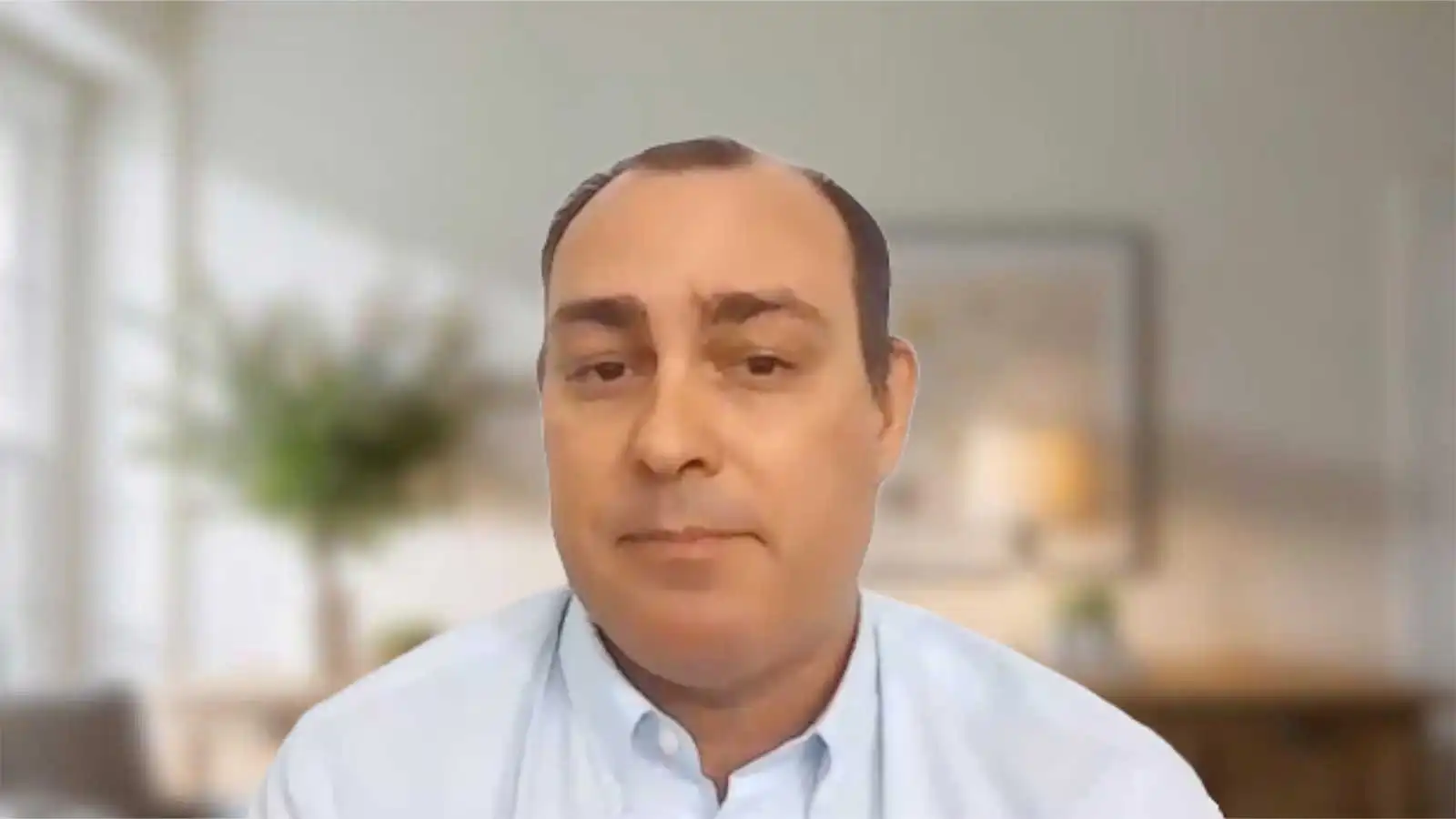
In this MedPage Today video, Juan Alderuccio, MD, of the University of Miami Miller School of Medicine, offers additional perspective on the findings discussed in our earlier coverage, focusing on what they may mean for treatment decisions in everyday practice.
Following is a transcript of his remarks:
This is a study presented at ASCO by Dr. Allen evaluating the real-world outcomes of bispecific antibodies in patients with relapsed/refractory follicular lymphoma.
This is an interesting study including 99 patients. Most of them, 91 of them, were treated with mosunetuzumab [Lunsumio Velo] and eight of them with epcoritamab [Epkinly] across eight academic institutions in the United States. The median age of patients was slightly older than patients enrolled in the pivotal clinical trials with mosunetuzumab and epcoritamab with 68 years, but was similar to the median prior lines of therapy of three. However, most patients previously treated with CAR-T [therapy] were included in this real-world analysis compared to the clinical trials with mosunetuzumab and epcoritamab.
What is interesting is that the response rate, the overall response rate and the complete response rate, was higher in this real-world analysis compared to the initial clinical trials, which can be secondary to different time points and lack of centralized review that usually happen in clinical trials. But at the end of the day, it’s important to know that the efficacy was maintained in this real-world analysis.
Also, I think that the most relevant point is the safety analysis that showed that the CRS [cytokine release syndrome], the any grade was 34%, with majority of them being low grade, grade 1, and few grade 2, without any grade 3 CRS. And the incidence of ICANS [immune effector cell-associated neurotoxicity syndrome] was only 3% with all of them being grade 1. Again, it’s important to recall that most of these patients, 91 out of 99 patients, received mosunetuzumab.
So I think the safety and efficacy analysis is mainly concentrating on mosunetuzumab rather than on epcoritamab as only eight patients were included in this analysis.
There are important points, first that bispecifics, specifically mosunetuzumab, are effective in the post-CAR-T setting. So this is a valuable option in patients that relapse or progress after CAR T-cell [therapy] with follicular lymphoma. Of course, always these patients require a new tissue biopsy to make sure that the patient didn’t transform because the approach is different in these situations, transformed to diffuse large B-cell lymphoma.
The second point, an important point, is the safety that shows that most of the CRS had a grade 1 majority and very few grade 2. So that supports the use of mosunetuzumab outside academic institutions and with mainly outpatient practices. And also the incidence of ICANS was very low, only 3%, and all grade 1.
And also I think it’s important, although the median follow-up was relatively short for sure for follicular lymphoma, the responses are maintained in the real world compared to what we see in clinical trials.
[ad_2]
Source link : https://www.medpagetoday.com/meetingcoverage/ascofffollicularlymphoma/122118
Author :
Publish date : 2026-07-09 17:21:00
Copyright for syndicated content belongs to the linked Source.