
[ad_1]
Following the June 24 twin earthquakes, magnitudes 7.2 and 7.5, that struck northern Venezuela 39 seconds apart, the death toll now stands above 3,500 people, with tens of thousands more missing. Some 8.6 million people were exposed to moderate-to-severe shaking, including approximately 2.1 million who experienced the strongest shocks. Thousands of Venezuelans abruptly rendered homeless have since poured into parks, plazas, and even the shoulders of blocked highways in search of a place to rest. This adds a compounded layer of crisis to a nation of approximately 30 million already grappling with decades of economic struggle.
I share this with a U.S. healthcare audience because the physiology and psychology of disaster displacement don’t stop at any border. The patients you see after a hurricane evacuation in Florida, a wildfire in California, or a flood in the Midwest are living a version of what I’m about to describe, and the clinical lesson applies directly to your practice.
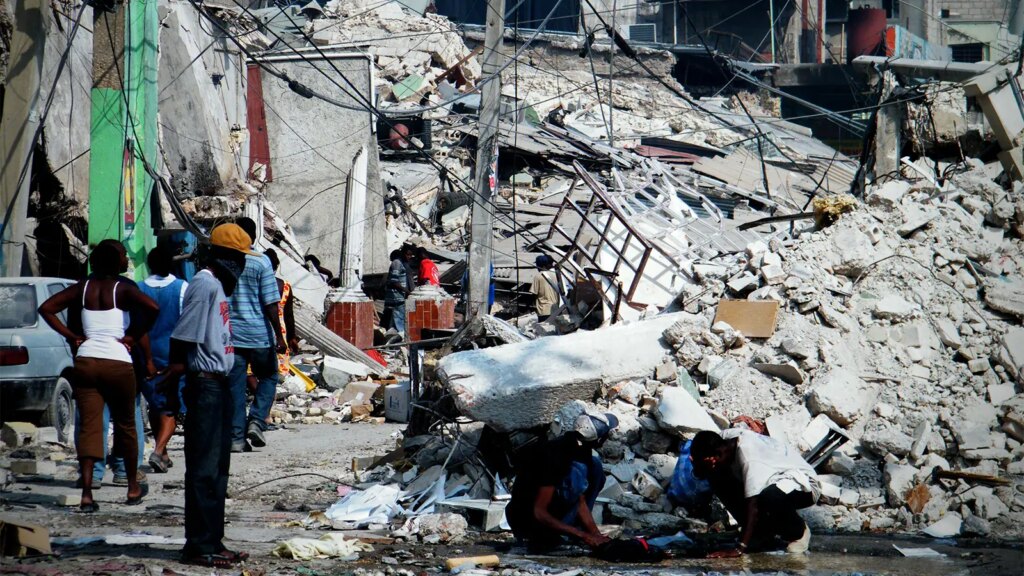
As images of devastation are displayed all over the internet, with reports indicating that several mothers died shielding their babies from collapsing buildings, it brought back memories of my traumatic experience of the devastating 2010 Haiti earthquake that killed over 220,000 people, injured 300,000, and destroyed hundreds of schools and the country’s economy.
I was a junior mental health practitioner at the time, but the experience had a profound influence on my future career path. In the aftermath of this natural disaster, I returned to the U.S. with my baby to restore my illusion of security. But within 2 months, I felt the urge to return to Haiti to join the first psychotrauma center established in Port-au-Prince. I had the opportunity to work as a junior counselor providing psychological support to Haitian children and adult survivors in schools, refugee camps, and other settings. This led me to become a traumatic stress researcher and a sleep health equity theorist, addressing unique stress responses among families, women, and children in the U.S. and globally.
Now, 16 years later, my research examines how traumatic stress adversely affects health outcomes, mainly mental health and sleep health, among disaster-exposed communities, including mother-offspring dyads. These same dynamics show up in U.S. clinics among survivors of hurricanes, wildfires, and other domestic disasters.
What Clinicians Should Know
Epidemiological data suggest that post-traumatic stress disorder (PTSD) and depression are among the main trauma-related outcomes reported after earthquakes; their prevalence is substantial but highly variable. Sleep problems are at least as common as, and in some samples more common than, other problems. For example, 9-to-12 months after a major earthquake in Türkiye, a link between earthquake anxiety and sleep quality was demonstrated among adolescents. My own research, 2 years after the 2010 Haiti earthquake, found extremely high rates of sleep disturbance among survivors, with 94% reporting insomnia symptoms and significant rates of PTSD (42%) and depression (22%). Sleep disturbances were strongly linked to trauma symptoms and peritraumatic distress, but unlike other outcomes, resilience did not protect against poor sleep.
Where Does This Fit Into Clinical Practice?
My team’s theoretical framework highlights the importance of sleep health equity: equal opportunities given to each individual and/or community based on their need, to obtain a recommended, satisfactory, and efficient amount of sleep that promotes physical and mental well-being. Our work positions sleep support as a critical, underused indicator and intervention target in disaster and humanitarian response. This is a framework U.S. health systems, emergency departments, and disaster medicine programs can adopt directly, not just observe from abroad.
Across the internet, there are images of Venezuelan survivors sleeping on the streets on thin sheets due to displacement, property losses, and poverty. Problems in sleep quality, duration, and satisfaction due to noise and air pollution and overcrowded shelters are to be expected. Consequently, sleep, a vital physiological and psychological process, emerges as a key component of earthquake and all disaster relief efforts to mitigate short- and long-term mental and physical health consequences among survivors and first responders.
As rescue teams from all over the world, including the U.S., work to find survivors in Venezuela, I suggest the following measures that build on lessons learned while providing psychosocial support after the Haiti 2010 earthquake and in other humanitarian contexts. I also believe U.S. healthcare professionals and health systems are well positioned to implement these in their own disaster preparedness and response protocols. My recommendations include:
- Add a brief insomnia/sleep-quality screen to standard post-disaster and post-trauma intake protocols.
- Include sleep health training in disaster medicine and psychological first aid curricula, alongside existing PTSD and depression modules.
- Where possible, treat basic sleep provisions (bedding, eye masks, earplugs, thermal protection) as a public health supply, not an amenity, in shelter and clinic disaster kits.
- Build referral pathways so sleep complaints identified in acute settings route to follow-up behavioral sleep care, rather than dead-ending at “that should improve once things settle down.”
None of this requires new infrastructure. It requires recognizing sleep as what the data already show it to be: one of the most consistent, measurable, and modifiable signals of trauma exposure available to clinicians and one we are currently under-using.
Please enable JavaScript to view the comments powered by Disqus.
[ad_2]
Source link : https://www.medpagetoday.com/opinion/second-opinions/122125
Author :
Publish date : 2026-07-09 19:22:00
Copyright for syndicated content belongs to the linked Source.