[ad_1]
At ENDO 2026, the annual meeting of the Endocrine Society, findings of a large surgical series suggested that postoperative hormonal testing to help individualize surgical strategies can optimize outcomes for patients who underwent adrenalectomy for adrenal hypercortisolism.
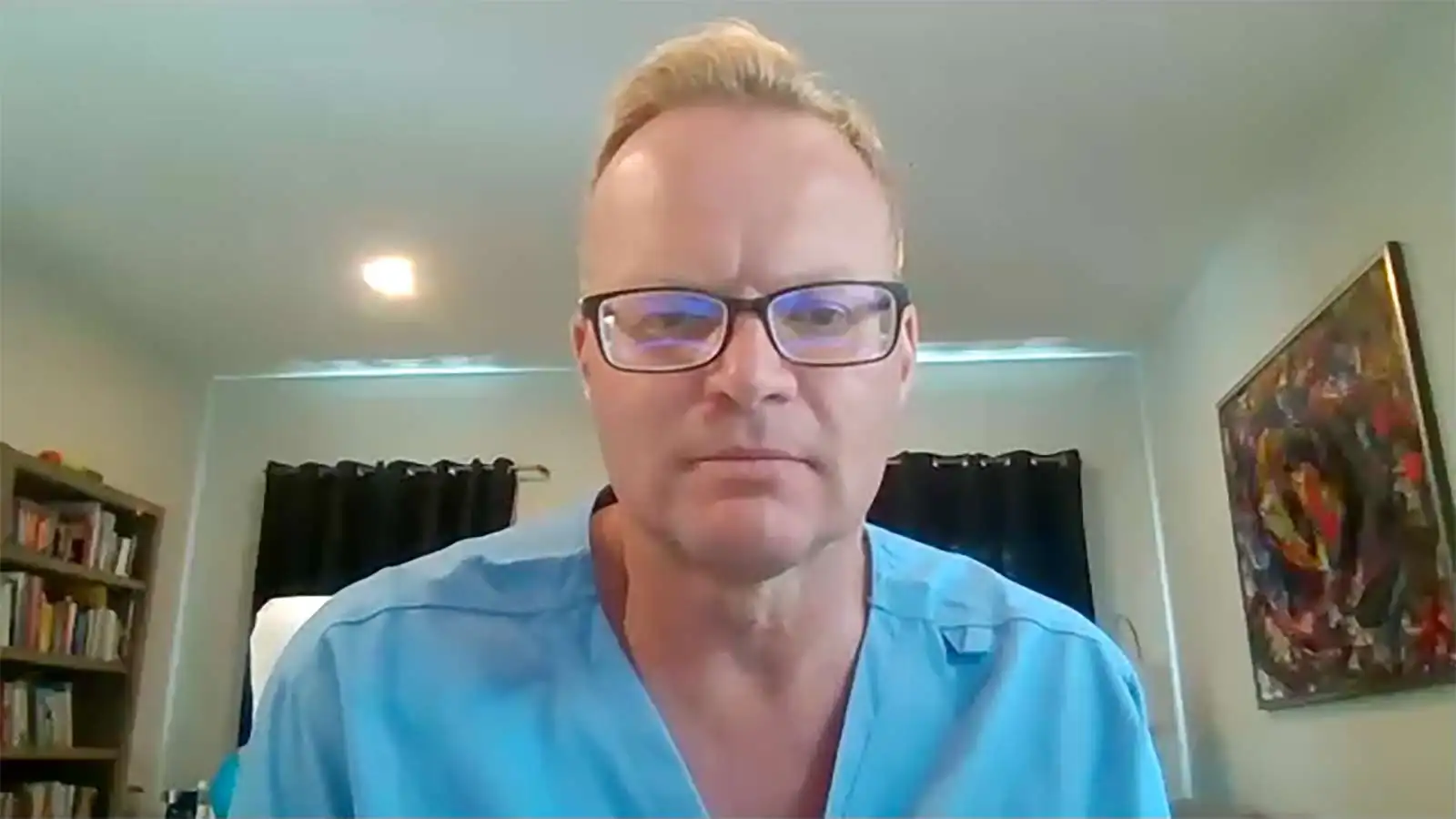
In this MedPage Today video, Tobias Carling, MD, PhD, of the Carling Adrenal Center and the Hospital for Endocrine Surgery in Tampa, Florida, discusses the results.
Following is a transcript of his remarks:
Surgical management for adrenal hypercortisolism — whether it ranges from mild autonomous cortisol secretion (MACS) all the way to overt Cushing syndrome — sort of has to balance between achieving biochemical remission but at the same time preserving adrenocortical function.
So what we studied is the tailored surgical approach of using unilateral adrenalectomy for unilateral disease, unilateral adrenalectomy for bilateral disease, and bilateral function-preserving adrenalectomy for bilateral disease.
We performed 1,965 consecutive adrenalectomies over 4 years and 784 of those patients had biochemically unequivocal adrenal hypercortisolism. And we performed a postoperative day 1 high-dose dexamethasone suppression test and cosyntropin stimulation test. And the purpose of that is that we can diagnose both persistent hypercortisolism as well as diagnose postoperative hypocortisolism or adrenal insufficiency. So that’s what we did in these 784 patients.
So the results were that the postoperative cosyntropin stimulation test showed a significant difference between the three groups. So group one were patients that had unilateral adrenalectomy for unilateral disease. Group two was unilateral adrenalectomy for bilateral adrenal hypercortisolism and group C was patients who had function-preserving surgery. And what we could see is that patients that had curative surgery for unilateral adrenalectomy in unilateral disease had stimulated cortisol levels that were expected, but patients that had only unilateral surgery for bilateral disease had stimulated levels that were consistent with persistent hypercortisolism. Whereas those that went on to have the second surgery on the other side came down with the cortisol levels similarly to those that only had unilateral disease.
I think our studies have a lot of implications and we need more studies to understand this disease entity with bilateral disease that can be tricky for clinicians to deal with, but number one, the surgical strategies have to be individualized based on the laterality on cross-sectional imaging and the patient’s phenotype.
And number two, using this combined high-dose dexamethasone suppression test together with cosyntropin stimulation test and those profiles help improve the decisions for which patients where unilateral surgery is sufficient but also identifying those that need a second operation on the contralateral gland. So this then translates to optimized long-term endocrine outcomes and a more individualized strategy for these patients.
[ad_2]
Source link : https://www.medpagetoday.com/meetingcoverage/endovideopearls/121985
Author :
Publish date : 2026-06-30 15:48:00
Copyright for syndicated content belongs to the linked Source.