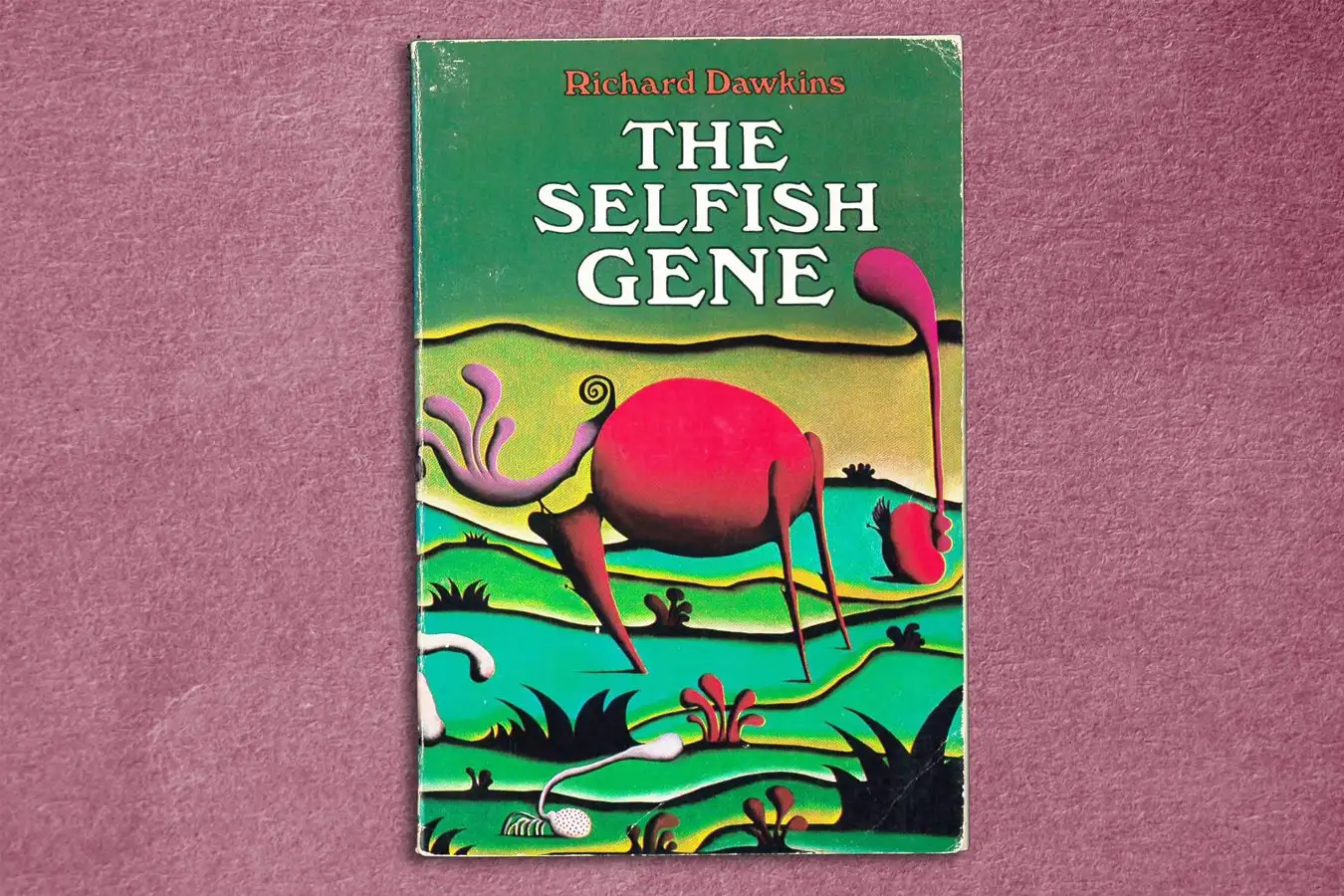
The Selfish Gene, Richard Dawkins’s first book, was published in October 1976 and 50 years on, it is still selling, in more than 30 languages. For a science book – not least one with “gene” in its title – this is truly astonishing.
For me, the story began in February 1976. I was a commissioning editor at the Oxford University Press (OUP) and in the post was a handwritten note from Roger Elliott, a physicist and one of the university academics involved with OUP. He wrote: “One of the dons here, Dr C R Dawkins, is writing a popular science book tentatively called ‘The Selfish Gene’… I have no idea whether he or it is any good but it might be worth looking into.”
Just under two weeks later, I started to read draft versions of Dawkins’s opening chapters and, with a jolt, my life changed. I knew before reaching the bottom of the first page that here was something extraordinary. It was as if the writing had reached out and grabbed me by the lapels.
By the time I had finished, the whole thing had taken a powerful hold on my imagination. But, as an editor, what was really intoxicating was feeling wholly convinced that the book was going to make waves. It was going to sell.
Later that summer, I wrote to OUP’s branch managers around the world, wanting to convince them that the book was special. The words I used capture the excitement I felt at the time.
“This is not some worthy attempt to try and popularise an area of science. Forget about science, popular or otherwise, and just think of this as a book that is so readable, so gripping, and so fascinating that, cliché or not, you won’t be able to put it down. And I don’t just mean you. I defy you to find anyone in your building – accountants, secretaries, salesmen, packers, editors, the lot – who will not find the book fascinating.”
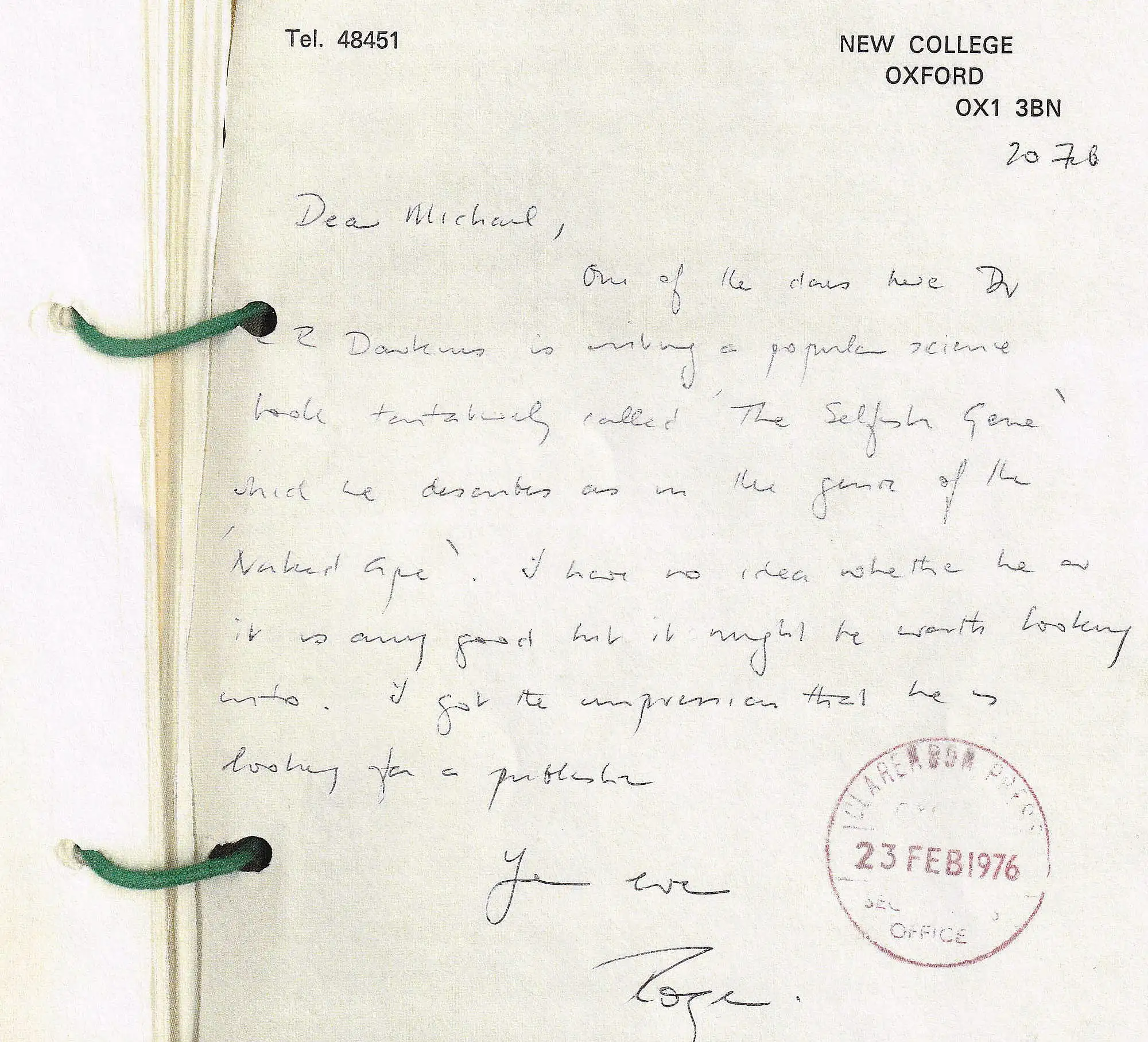
This letter from 50 years ago kick-started the journey to The Selfish Gene becoming a bestseller
Michael Rodgers
There was much agonising over the book’s title. I loved The Selfish Gene from the moment I first read it in Elliott’s note. But the trouble with having the word “gene” in the singular, argued some colleagues, is that it implies one mutant, rogue gene among a population of normal ones. One colleague suggested “Our Selfish Genes”, but Dawkins rejected this, though said he would accept the compromise “The Selfish Genes”.
Other colleagues felt strongly we should go for a suggestion from Desmond Morris, author of The Naked Ape: “The Gene Machine”. I could see the advantages, but believed it was the wrong title. It did not convey the central message of the book, that genes behave as if they were selfish. “The Gene Machine” was neutral.
In his 2013 memoir, An Appetite for Wonder, Dawkins revisited the question of his first book’s title. Describing a meeting with Tom Maschler at the publisher Jonathan Cape, he wrote: “He’d read my chapters and liked them, but urged me to change the title. ‘Selfish’, he explained to me, is a ‘down word’. Why not The Immortal Gene? With hindsight, he was very probably right. I can’t now remember why I didn’t follow his advice. I think I should have done.”
Richard is nevertheless wrong! The Immortal Gene is boring and unmemorable. The Selfish Gene is the opposite. It was the right title.
Topics:
Source link : https://www.newscientist.com/article/2525708-intoxicating-and-astonishing-why-the-selfish-gene-almost-never-was/?utm_campaign=RSS%7CNSNS&utm_source=NSNS&utm_medium=RSS&utm_content=home
Author :
Publish date : 2026-05-20 14:00:00
Copyright for syndicated content belongs to the linked Source.