[ad_1]
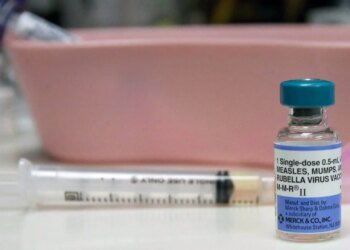
CHICAGO — An investigational individualized vaccine for surgically resected melanoma demonstrated durable benefits in reducing the risks of recurrence and distant spread, 5-year follow-up of a randomized study showed.
Adding the mRNA vaccine intismeran autogene to pembrolizumab (Keytruda) in resected stage IIIB-IV melanoma cut the risk of recurrence or death by 49% (HR 0.51, 95% CI 0.29-0.89) and the risk of distant metastasis or death by 59% (HR 0.41, 95% CI 0.20-0.84), reported Matteo Carlino, MD, PhD, of the University of Sydney.
At 4 years, absolute rates of recurrence-free survival (RFS) and distant metastasis-free survival (DMFS) with the addition of the neoantigen vaccine improved by roughly 20% compared with the PD-1 inhibitor alone:
- RFS: 72.4% vs 49.1%
- DMFS: 83.9% vs 65.4%
Differences in overall survival were not significant, but showed a favorable trend (HR 0.47, 95% CI 0.16-1.35), with 4-year rates of 92.2% and 85.6%, respectively.
“This study confirms that intismeran plus pembrolizumab demonstrates a durable benefit over pembrolizumab alone in resected high-risk melanoma,” Carlino said here at the American Society of Clinical Oncology (ASCO) annual meeting, adding that the combination had a favorable safety profile.
The updated results of the phase IIb trial were published simultaneously in the Journal of Clinical Oncology, and a phase III trial of the combination in high-risk melanoma (INTerpath-001) is now underway and has fully enrolled. (The vaccine is also being evaluated in late-stage lung cancer trials and in earlier-stage studies for other tumor types.)
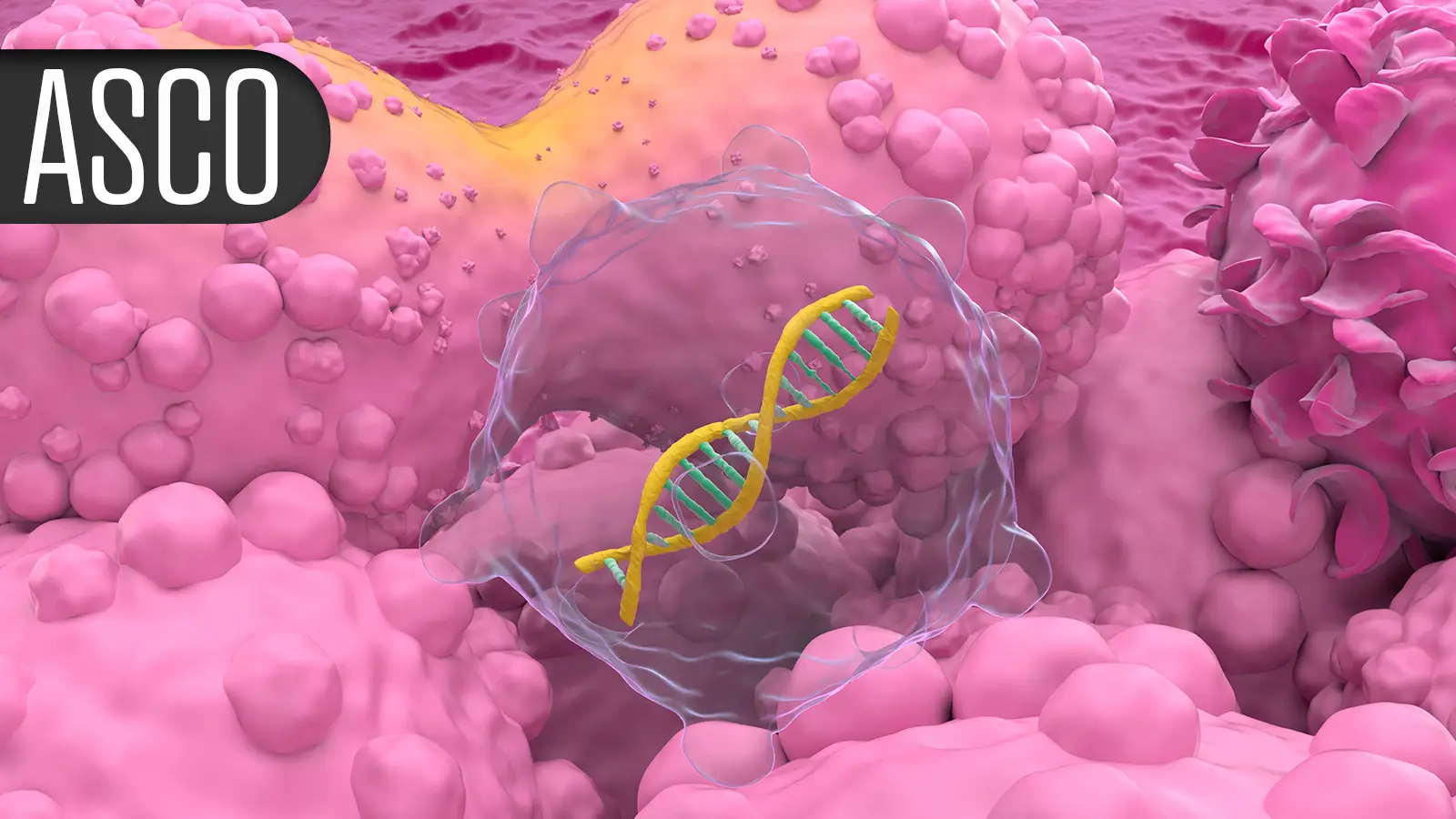
The approach with intismeran (formerly V940 or mRNA-4157) aims to strengthen existing T-cell activity and create new antitumor T-cell responses. The vaccine can encode up to 34 personalized neoantigens encapsulated within a lipid nanoparticle and for manufacturing requires a 1 mm3 tumor sample from patients for neoantigen identification via next-generation sequencing.
Translational data presented by Carlino showed that the vaccine helped generate sustained novel T-cell clones that were associated with a lower recurrence risk, suggesting durable immune surveillance.
The new findings build upon the study’s primary analysis, reported in 2023, that first demonstrated the RFS benefit.
Perhaps the most important question is not whether the vaccine works, but where it would fit into clinical practice and whether the immune response with this approach differs to a clinically relevant degree from neoadjuvant immunotherapy, said ASCO discussant Rodrigo Ramella Munhoz, MD, PhD, of Sírio Libanês Hospital in São Paulo.
“Nowadays, patients with stage IV disease are preferably treated with upfront systemic therapies for metastatic advanced disease,” he said. “Those with clinically detectable stage III disease, which comprise the majority in KEYNOTE-942, are slowly transitioning to neoadjuvant approaches.”
Controversy still exists over the long-term benefits of adjuvant therapy, Munhoz noted, given that no overall survival benefit has been documented in randomized studies since EORTC 18071 a decade ago, despite showing significant improvements in RFS and DMFS.
This “brings the inevitable question of whether the patient population naturally benefiting from adjuvant therapy overlaps with the patient population amenable to salvage therapies upon disease recurrence,” he said.
Still, patients who may benefit from an adjuvant approach could include those who fail to achieve a complete pathological response following neoadjuvant therapy and some populations that do not undergo neoadjuvant therapy, such as those with stage III microscopic disease and perhaps high-risk stage II disease, said Munhoz.
As prior combination approaches in the adjuvant setting have failed to improve outcomes, confirmation of intismeran’s benefit in INTerpath-001 will be critical, according to Munhoz, who also cautioned that operational complexity, manufacturing timelines, and costs may limit broad applicability of the personalized vaccine approach.
Carlino presented the 5-year update from KEYNOTE-942. The phase IIb trial randomized 157 patients with resected stage IIIB-IV melanoma in a 2:1 ratio to either intramuscular intismeran autogene (up to nine doses) plus IV pembrolizumab (up to 18 doses) every 3 weeks or to pembrolizumab alone, with treatments continued until progression or unacceptable toxicity.
Pembrolizumab was started within 13 weeks of surgery, and patients needed to have sufficient tumor tissue available to allow for the design of intismeran.
Participants had an average age of about 60 years, over 60% were men, and more than 85% had stage IIIC-D cancers. A slightly higher proportion in the intismeran arm were PD-L1 positive (65.4% vs 56%) while a similar number had actionable BRAF mutations (38.3% vs 40%).
The primary endpoint was RFS, while secondary endpoints included DMFS and safety.
The RFS benefit extended to all relevant subgroups, said Carlino, including tumor stage, PD-L1 expression or BRAF mutation status, and tumor mutation burden.
There were no new safety signals with longer-term follow-up. Treatment-related adverse events (AEs) were reported in all patients in the combination arm and 84% of the pembrolizumab arm. Most AEs were low-grade and included fatigue, injection-site pain, fever, and chills. Grade 3 AEs related to intismeran occurred in 10.6%.
[ad_2]
Source link : https://www.medpagetoday.com/meetingcoverage/asco/121551
Author :
Publish date : 2026-06-02 18:52:00
Copyright for syndicated content belongs to the linked Source.