[ad_1]
- Many autoimmune diseases are driven by abnormal B cells, which can produce anti-self antibodies and also dysregulate other immune system components.
- Earlier reports have indicated that the oncology drug teclistamab (Tecvayli), which targets B-cell maturation antigen (BCMA) and the CD3 protein, was helpful in a small number of autoimmune disease patients.
- These new studies, involving a total of 18 patients, confirmed that teclistamab holds substantial promise as an off-the-shelf treatment for refractory autoimmune diseases.
Prospects are growing that an approved, off-the-shelf drug can rescue patients with certain ultra-refractory autoimmune diseases, a pair of new reports suggest.
Among 18 patients with various autoimmune conditions treated with teclistamab (Tecvayli), 11 achieved “major clinical responses” and four others saw at least some improvement — and that was with their previous meds completely discontinued, according to Tobias Alexander, MD, of Charité – Universitätsmedizin Berlin in Germany, and colleagues.
Some of these patients kept their major responses for 18 months or more, with follow-up ongoing, the researchers reported in Annals of the Rheumatic Diseases. On the other hand, one of the responders — a patient with systemic lupus erythematosus (SLE) — relapsed after 8 months, and two with heart-involved systemic sclerosis (SSc) died within a few weeks of receiving teclistamab. Severe infections related to depressed antibody production were also seen.
Consequently, the authors’ conclusion highlighted both the promise of this treatment approach and the necessary caution. “[O]ur findings support further evaluation of teclistamab as a potential treatment for highly selected patients with severe, treatment-refractory connective tissue diseases,” they wrote.
“Clinically significant adverse events, including infections related to hypogammaglobulinemia and fatal events in patients with advanced cardiac involvement, underscore the need for careful patient selection and close monitoring and support the use of teclistamab only in experienced centers with established multidisciplinary teams that integrate expertise in AID [autoimmune inflammatory diseases] with hematology-driven management of immune effector toxicities,” they added.
Use of teclistamab in such disorders stems from two converging trends in recent years. One comes from basic science: improved understanding of the role played by B cells in autoimmune diseases. They produce anti-self antibodies, as has long been known, but they also interact with T cells and other immune system components to help drive organ damage in other ways besides mere antibody-binding.
The other trend started a few years ago as these discoveries came into sharper focus. Researchers at a separate German center decided to try chimeric antigen receptor (CAR) T-cell therapy in some patients with SLE, the disease best known for its association with rogue B cells. CAR T-cell therapy has been used with great success in B-cell malignancies such as lymphoma, achieving long-lasting remission in many cases. And that proved to be the case in many of those lupus patients. That group, led by Georg Schett, MD, of Friedrich Alexander University Erlangen-Nuremberg in Germany, went on to show that CAR T-cell treatment was highly effective in a broader range of autoimmune diseases.
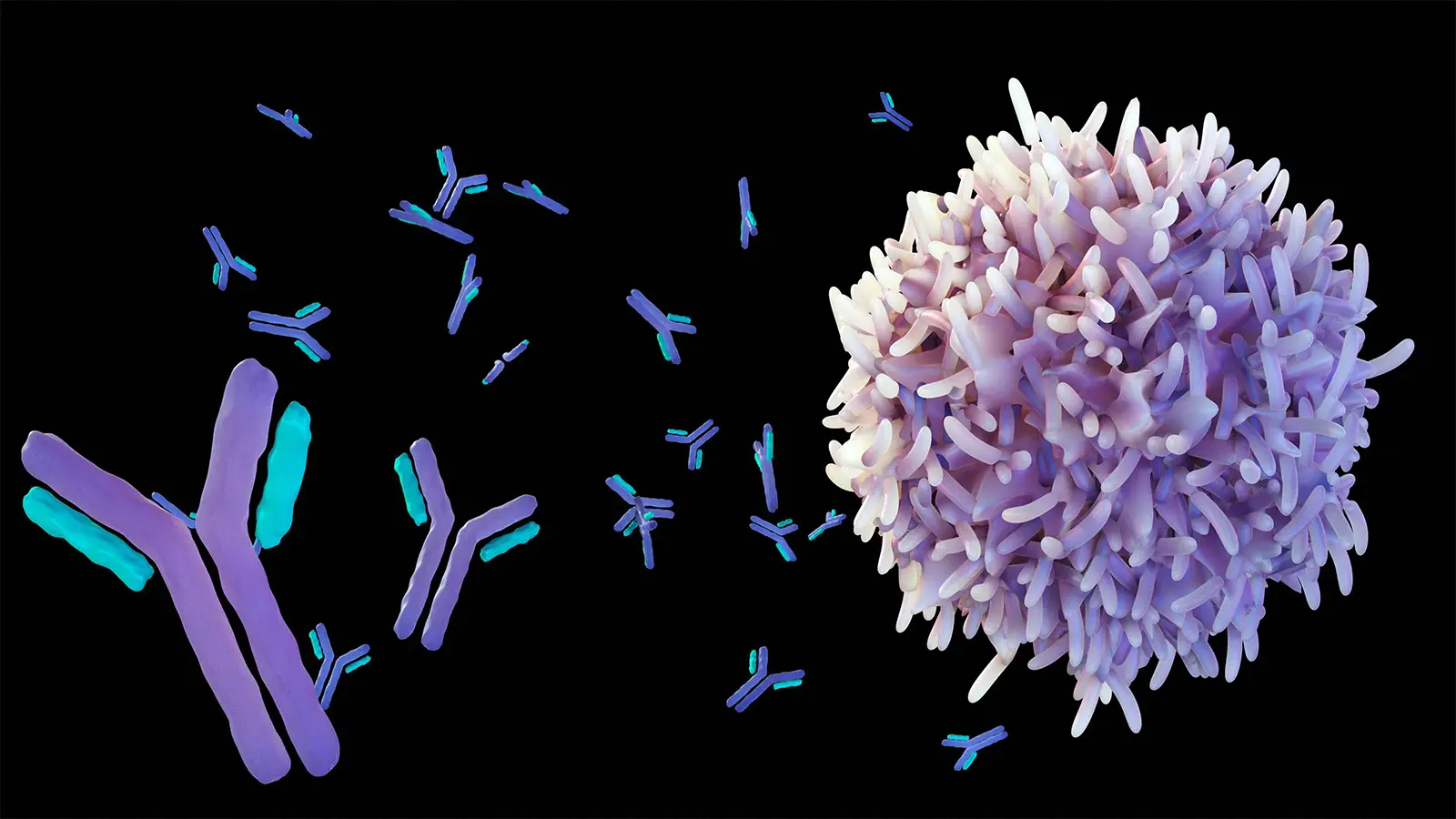
Teclistamab also depletes B cells but in a different way. It’s a bispecific antibody with two targets: B-cell maturation antigen (BCMA) and the CD3 protein. This mechanism delivers a double-whammy to B cells. Even better, it doesn’t require the harsh conditioning regimen needed to enable CAR T-cell therapies. Two years ago, Alexander’s group in Berlin reported an initial test in a young SLE patient who had previously tried virtually everything else available for the condition. The patient achieved a remission lasting 16 weeks at the time of the report.
Alexander and colleagues have now extended the effort to include 10 patients with SSc, four with idiopathic inflammatory myositis, two with SLE, one with undifferentiated connective tissue disease, and one with immunoglobulin G4-related disease. Median patient age was 49, and median follow-up was 5.1 months (ranging up to 21.2 months). These patients had received a median of five prior therapies. Before starting teclistamab, which was given in a standard step-up protocol but with varying dose numbers and intervals between doses, all patients stopped their previous therapies. Median total teclistamab dose was 6.36 mg/kg.
A companion report in Annals, with Alexander as co-author, focused on the SSc patients in greater detail. Five of them already had heart damage from their disease before starting teclistamab. Two of them succumbed within a few weeks of starting the drug, one from “multiorgan complications” (despite seeing initial clinical improvement) with heart failure and lung hemorrhage; the other had a “presumed” cardiac arrest. “[A] definite causal relationship to teclistamab could not be established,” the researchers wrote.
And the other three who survived did well, at least with regard to their cardiac involvement. Biomarkers of damage declined and cardiographic indicators including pericardial effusion, diastolic function, and heart failure showed improvement.
Overall for the SSc group, three of seven evaluable for overall response saw at least 50% improvement in symptoms.
Results for the other patients were similar. There were no deaths outside the SSc cohort. Cytokine release syndrome was nearly universal, but no episode exceeded grade 2. All patients, however, experienced severe hypogammaglobulinemia, and five of the 18 suffered severe infections. Additionally, two patients developed new-onset colitis.
Responses were categorized as minimal, moderate, or major, reflecting 10%, 25%, or 50% reduction in symptoms according to standard criteria for each disease type. Besides the two early deaths, only one patient with SSc did not achieve even a minimal response, but only about 6 weeks had elapsed when data were compiled; three patients with longer follow-up went 10 weeks or more before responses were seen, and two of those responses were major.
Limitations to the analysis included the lack of controls and the variable dosing. “Prospective controlled trials with standardized assessments, predefined safety boundaries, [pharmacokinetic] sampling, and systematic long-term follow-up” are needed, Alexander and colleagues wrote. They added that goals should include “defin[ing] the ideal patient population, optimal dosing regimens, durability of response after B and plasma cell recovery, long-term safety, and comparative effectiveness versus other advanced therapies such as CAR T cells or hematopoietic stem cell transplantation.”
[ad_2]
Source link : https://www.medpagetoday.com/rheumatology/generalrheumatology/121872
Author :
Publish date : 2026-06-22 20:18:00
Copyright for syndicated content belongs to the linked Source.