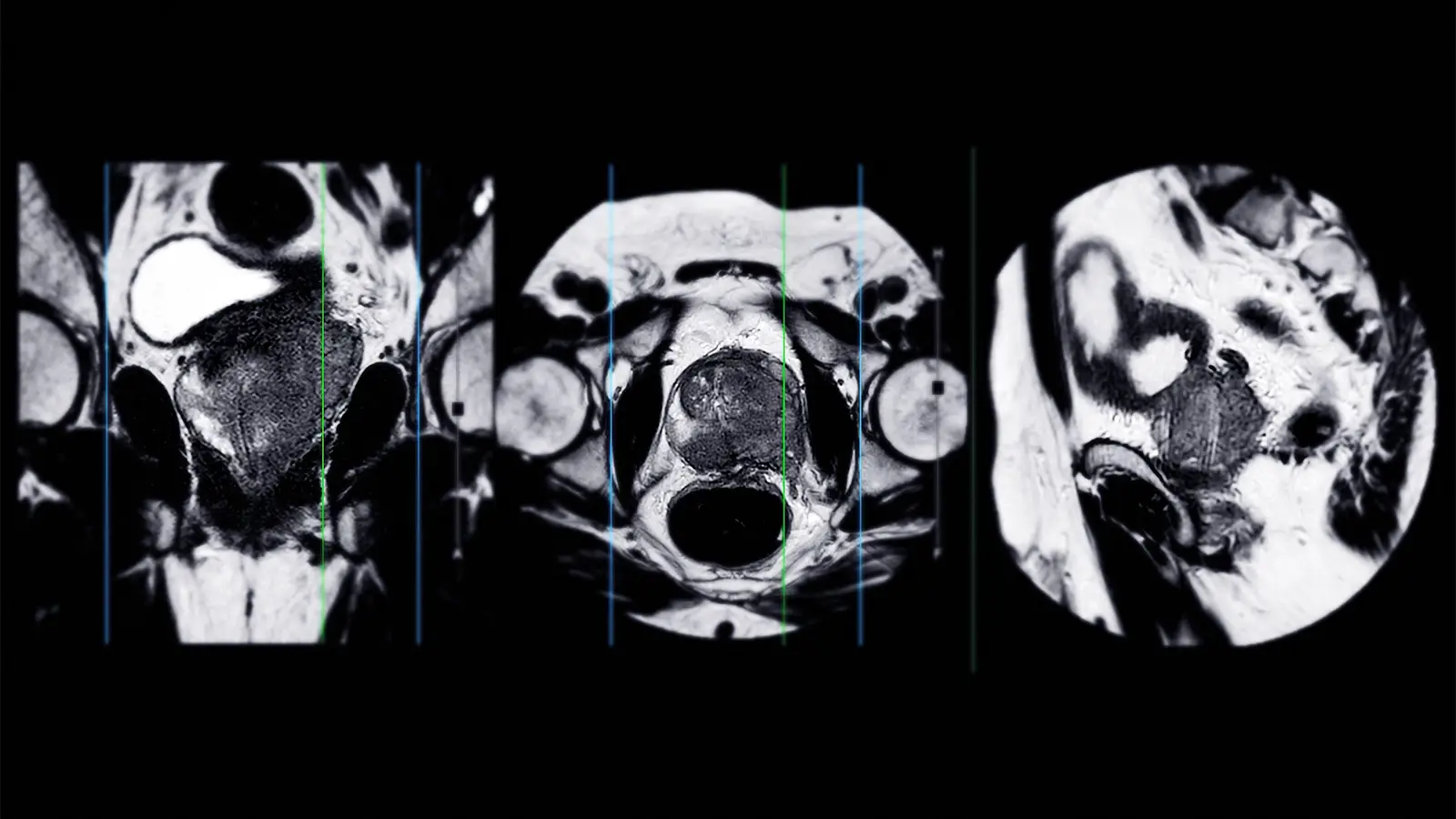
- A pretreatment MRI in men undergoing radical prostatectomy can provide independent prognostic value for oncologic outcomes, a systematic review and meta-analysis indicated.
- MRI-detected extraprostatic extension and seminal vesicle invasion were independently associated with outcomes including biochemical recurrence and metastatic failure.
- Several quantitative MRI-derived parameters were prognostic for biochemical recurrence, including Prostate Imaging Reporting and Data System scores of 4 or 5 and tumor diameter ≥20 mm.
An MRI before treatment in men undergoing radical prostatectomy can provide independent prognostic value for oncologic outcomes, according to results from a systematic review and meta-analysis.
Across 40 studies, MRI-detected extraprostatic extension was independently associated with biochemical recurrence (pooled HR 2.16, 95% CI 1.84-2.54), metastatic failure (HR 3.18, 95% CI 2.04-4.97), and prostate cancer-specific mortality (HR 10.93, 95% CI 5.05-23.65), reported Georgios Agrotis, MD, PhD, of the Netherlands Cancer Institute in Amsterdam, and colleagues.
MRI-detected seminal vesicle invasion was independently associated with biochemical recurrence (HR 2.74, 95% CI 2.06-3.65) and metastatic failure (HR 5.58, 95% CI 1.15-27.13), they wrote in JAMA Oncology.
In addition, several quantitative MRI-derived parameters were prognostic for biochemical recurrence: Prostate Imaging Reporting and Data System scores of 4 or 5 (HR 2.15, 95% CI 1.82-2.55), tumor diameter ≥20 mm (HR 2.35, 95% CI 1.71-3.24), and apparent diffusion coefficient values less than 0.9 × 10⁻³ mm2/s (HR 2.39, 95% CI 1.82-3.14).
“Incorporation of MRI-derived parameters into pretreatment risk models has the potential to refine prostate cancer management,” Agrotis and colleagues noted, adding that extraprostatic extension or seminal vesicle invasion visible on an MRI “may help to identify patients in whom treatment intensification could be considered, whereas absence of these features may support exploration of more conservative approaches.”
“Prospective studies integrating MRI-derived parameters into existing prognostic models are required to confirm that MRI-informed treatment modification improves outcomes or reduces morbidity without compromising oncological safety,” they wrote.
In a commentary accompanying the study, Nicholas A. Pickersgill, MD, of Memorial Sloan Kettering Cancer Center in New York City, pointed out that MRI already shapes surgical decision-making, “even without formal guideline endorsement as a prognostic tool.”
For instance, preoperative MRI “informs nerve-sparing, pelvic lymph node dissection templates, and, in the era of early salvage therapy, identification of patients who may warrant intensified surveillance after treatment,” he explained.
The data synthesized by the study authors “provide the strongest evidence, to date, that these clinical intuitions have some prognostic basis,” he added. “Guideline committees should now define the evidentiary threshold required for formal MRI integration into prognostic risk stratification.”
For this systematic review and meta-analysis, Agrotis and team searched Medline, Embase, and Scopus from inception through March 2025. They included 40 studies involving 24,941 men with prostate cancer who underwent pretreatment MRI and were treated with radical prostatectomy. These studies reported multivariable, time-to-event analyses for the outcomes of biochemical recurrence, metastatic failure, and prostate cancer-specific mortality.
The median follow-up duration ranged from 88 to 132 months, all of the studies were retrospective, six were multicenter, and enrollment periods ranged from 2001 to 2023.
Heterogeneity was moderate (I2 <65% for mrT3a and mrT3b disease), and no significant publication bias was detected.
Agrotis and colleagues acknowledged that the study had several limitations. For example, they suggested that institutional practice or clinical indication may have influenced the use of MRI, particularly in the earlier studies, and could have introduced selection bias toward higher-risk disease.
They also pointed out that few of the studies in the analysis assessed metastatic failure or prostate cancer-specific mortality as primary endpoints, which “further limits inference regarding long-term outcomes.”
Source link : https://www.medpagetoday.com/hematologyoncology/prostatecancer/120620
Author :
Publish date : 2026-04-02 19:59:00
Copyright for syndicated content belongs to the linked Source.