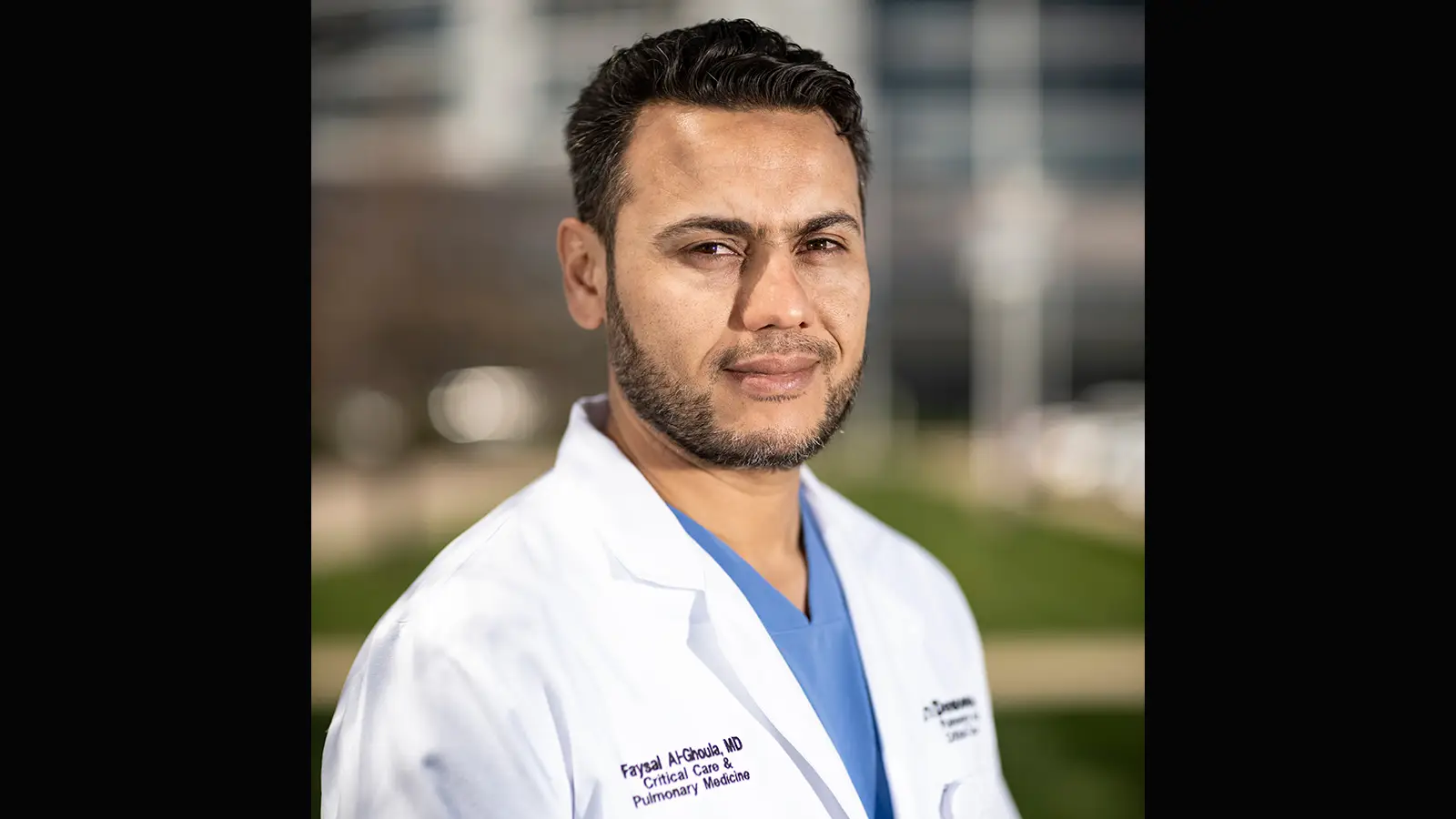
I came to the U.S. legally, trained through the proper channels, and built a career caring for patients in a community where physicians are scarce. As a Libyan pulmonologist and intensivist working in an underserved area, I assumed that if I followed the rules, I would be able to do the work I came here to do: treat patients, fill a workforce gap, and help keep a fragile healthcare system functioning. I was wrong.
With the implementation of the U.S. Citizenship and Immigration Services (USCIS) Policy Memorandum PM-602-0194, I was effectively reclassified as a “high-risk alien” based solely on my country of birth. Overnight, a policy intended to address national security concerns became something else entirely: a direct obstacle to medical care.
This is not an abstract debate about immigration. It is about whether patients in already struggling communities will continue to have access to physicians, and whether our healthcare system can afford to sideline doctors it depends on.
Who Does the Memo Affect?
In January 2026, USCIS issued Policy Memorandum PM-602-0194, titled “Hold and Review of USCIS Benefit Applications Filed by Aliens From Additional High-Risk Countries.” Under this guidance, immigration benefit applications filed by nationals of 39 designated countries were placed on indefinite hold pending additional review, regardless of how long the individual has lived in the U.S. or how established their career may be. The policy builds on Presidential Proclamation 10998, a travel ban from December that limited entry for nationals of those same 39 countries, including Libya, Sudan, Venezuela, and others, under a national security framework.
The result was immediate and destabilizing: large numbers of foreign-born physicians have been thrown into prolonged uncertainty about basic immigration benefits, including visa renewals, work authorization, and permanent residency applications. These are not hypothetical future applicants. Many are doctors, like myself, already working in hospitals, seeing patients daily, and covering call schedules that would otherwise go uncovered.
Why This Matters
In many parts of the U.S., particularly rural regions and underserved urban communities, international medical graduates are not a small piece of the workforce. They are essential to keeping clinics open and hospitals staffed.
Programs like the Conrad 30 J-1 visa waiver were created for exactly this reason: to address physician shortages by allowing foreign-trained doctors to remain in the U.S. if they commit to serving in medically underserved areas. Many physicians also enter through the H-1B pathway, filling gaps in primary care and specialties where recruiting U.S.-trained physicians has been difficult for years.
But these pathways only work when immigration processing is predictable. Hospitals cannot build stable coverage models when physicians are forced into bureaucratic limbo. Clinics cannot maintain continuity of care when a provider’s authorization to work is suddenly delayed or placed under indefinite review.
Policies like PM-602-0194 disrupt that stability at its foundation. When work authorizations are delayed and green card applications are frozen without clear timelines, physicians are left unable to plan their professional or personal lives. More importantly, patients are left without reliable access to care.
Should Healthcare Workers Be Treated as Security Threats?
Supporters of expanded vetting argue these policies are necessary for national security. But PM-602-0194 applies broadly, treating entire populations as inherently suspect and subjecting professionals to heightened scrutiny based not on individual history, but nationality.
That approach does not distinguish between risk and reality. Clinicians from so-called “high-risk” countries often practice in the U.S. for years without incident, serving in areas where staffing shortages are severe and healthcare outcomes are already poor. Many of these same clinicians played critical roles during the COVID-19 pandemic, when American hospitals relied heavily on international graduates to staff overwhelmed wards and ICUs. They were essential when the system was stretched to the brink. It is difficult to reconcile that dependence with policies that now treat these physicians as liabilities.
What This Looks Like On the Ground
In communities already designated as Health Professional Shortage Areas, the loss of even one physician has ripple effects: longer wait times, delayed diagnoses, rising emergency department utilization, and burnout among remaining staff forced to absorb growing patient volumes.
Behind every immigration case number is a physician trying to keep their practice running while navigating uncertainty. In my own practice, I care for roughly 1,000 clinic patients, in addition to covering critically ill patients in the ICU. In my region, access to pulmonary specialists is already limited, with patients often waiting months for appointments. Many have chronic lung disease, sleep-disordered breathing, pulmonary hypertension, or suspicious nodules that require timely evaluation.
I have had patients ask me directly, with genuine fear, whether I will still be there at their next visit. I have watched hospitals turn to expensive locum tenens coverage to fill gaps when intensivist staffing becomes uncertain. And I have seen how quickly morale deteriorates when clinicians feel that their ability to work can be disrupted by forces completely outside their control.
There is also a downstream impact that policymakers rarely acknowledge: pulling large numbers of physicians out of residency and fellowship pipelines reduces the number of graduating physicians, widening shortages for years to come.
What Clinicians and Health Systems Should Understand
This is not a niche issue affecting only foreign-born doctors. It is a workforce crisis that will affect millions of Americans, particularly those living in underserved communities. Healthcare leaders should recognize how immigration delays translate directly into operational strain. When immigration benefits are held indefinitely, health systems face:
- Interrupted clinical services and canceled appointments
- Rising recruitment costs
- Increased reliance on temporary staffing
- Worsening clinician burnout
Policy Solutions
If the U.S. is serious about addressing physician shortages, immigration policy cannot operate in isolation from healthcare workforce needs. There are reasonable solutions that would protect both security interests and care access:
- Prioritize adjudication of immigration benefits for physicians serving shortage areas, with clear timelines
- Exempt essential healthcare workers from broad “hold” directives, while still allowing individualized security review
- Increase transparency in the review process, so physicians and hospitals can plan responsibly
These are not radical demands. They are practical steps to prevent unnecessary harm to patient care.
My experience as a Libyan physician, and that of many colleagues from other countries labeled “high risk,” highlights a difficult truth: immigration policy, even when framed as neutral and security-oriented, can create direct harm in the healthcare system. Physicians are not simply workers filling shifts. We are caretakers of communities. When immigration restrictions prevent us from practicing in underserved areas, the real cost is paid by patients.
Faysal Al Ghoula, MD, is a pulmonologist from Libya who treats patients in an underserved area in Indiana.
Source link : https://www.medpagetoday.com/opinion/second-opinions/120816
Author :
Publish date : 2026-04-16 17:28:00
Copyright for syndicated content belongs to the linked Source.