[ad_1]
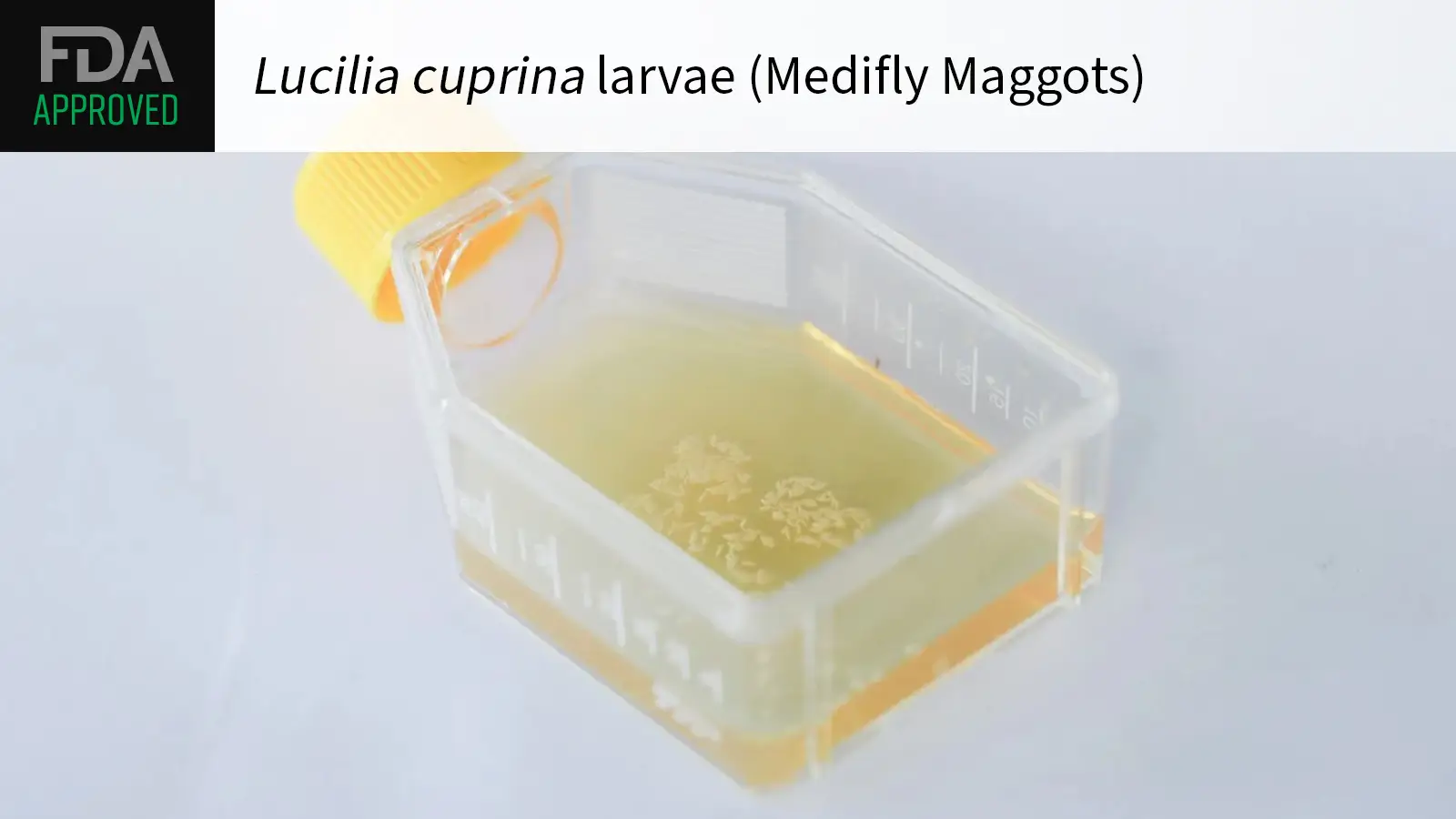
The FDA cleared medical-grade Australian sheep blowfly (Lucilia cuprina) larvae in what maker Cuprina Holdings believes marks the first debridement product to use this particular species.
Dubbed Medifly Maggots, the product is indicated for removing dead or infected tissue from non-healing necrotic skin and soft tissue wounds — such as pressure or neuropathic foot ulcers — and non-healing traumatic or post-surgical wounds.
A healthcare worker is required to oversee the application of the prescription maggot product, which was cleared based on demonstration of equivalence to the previously cleared medical-grade green bottle blowfly larvae — Lucilia sericata (Medical Maggots).
“Maggot debridement therapy has earned its place in modern wound care, and adding a second FDA-cleared species strengthens the entire field,” Ronald Sherman, MD, the company’s medical and scientific director, said in a statement.
“Lucilia cuprina has a meaningful international track record,” and the new clearance “gives clinicians and their patients more flexibility in how this therapy is delivered,” added Sherman, who has worked on the development of medical-grade maggots for decades and was instrumental in getting the first product cleared by the FDA in 2004.
According to recent estimates, anywhere from 1-2% of people in developed countries have chronic wounds, which are associated with greater risks of limb amputation and mortality.
Maggots, long used for clearing dead or non-healing tissue before the invention of antibiotics, can spare antibiotics and have also been associated with a lower risk of lower-limb amputation in diabetics with non-healing lesions.
Of note for any FDA aficionados out there, oversight of maggot products used to be reviewed by the agency’s device division, but that honor now belongs to the Center for Biologics Evaluation and Research.
[ad_2]
Source link : https://www.medpagetoday.com/publichealthpolicy/fdageneral/121763
Author :
Publish date : 2026-06-15 19:42:00
Copyright for syndicated content belongs to the linked Source.