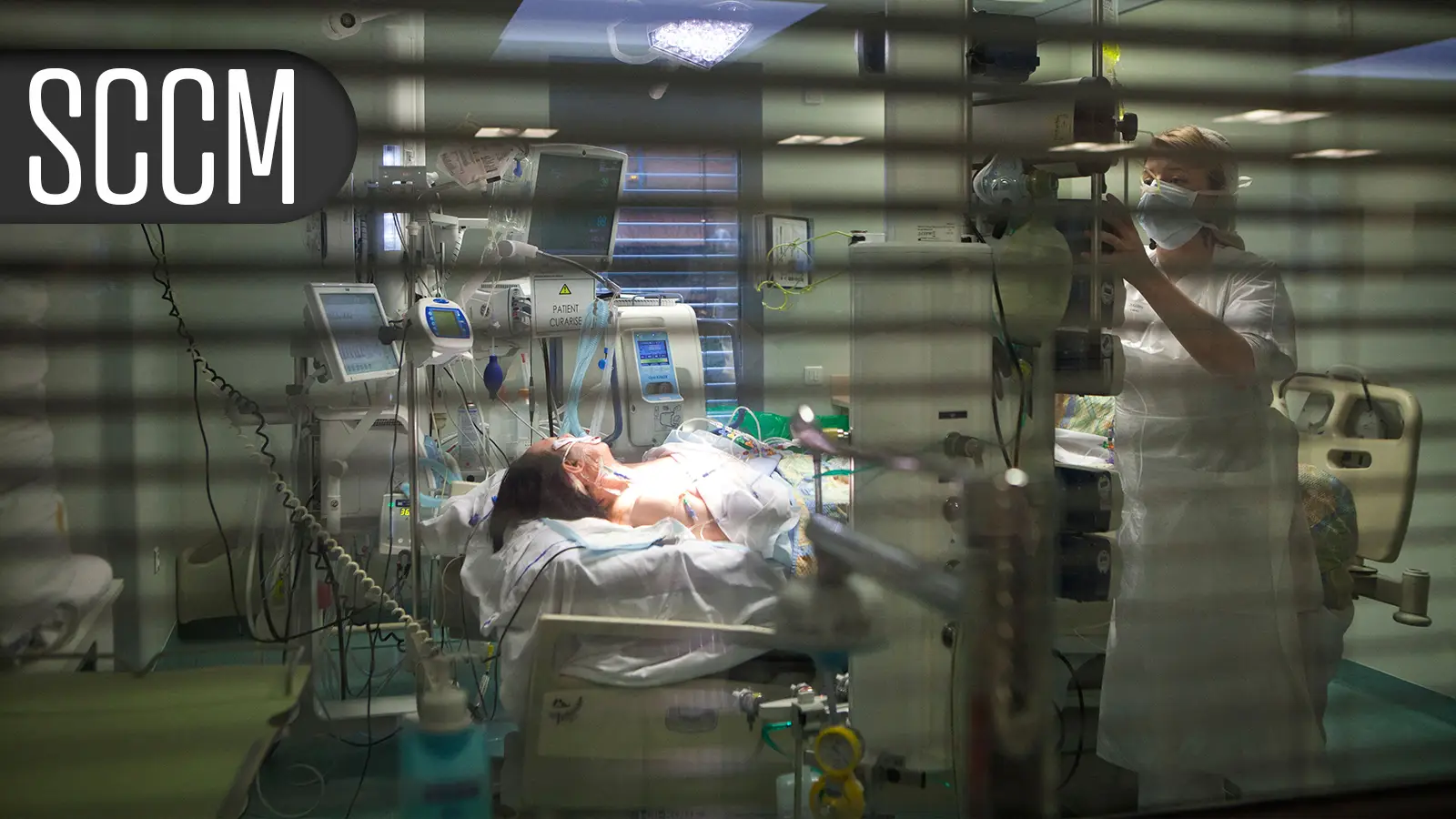
CHICAGO — Use of endotracheal poractant alfa (Curosurf) did not shorten the duration of invasive mechanical ventilation for infants with bronchiolitis, a randomized phase II trial indicated.
The median duration of invasive mechanical ventilation was 64.9 hours in the intervention group versus 62 hours in the sham group, for a geometric mean ratio of 1.02 (95% CI 0.84-1.24, P=0.86), reported John Pappachan, MBBChir, of Southampton Children’s Hospital in England, at the Society of Critical Care Medicine annual meeting.
The study was also published in Lancet Respiratory Medicine.
“Although safe, based on these findings, routine early endotracheal surfactant administration in this population at this dose cannot be recommended,” the authors wrote. “However, because surfactant administration did not increase adverse events, it remains a potential rescue therapy in specific clinical scenarios, such as proven severe surfactant deficiency or when conventional ventilation is failing to meet oxygenation or gas exchange targets.”
Bronchiolitis, a leading cause of infant death in low- and middle-income countries, is also the most common cause of infant hospital admission in high-income countries. Though primarily due to respiratory syncytial virus (RSV) and human rhinovirus, up to a third of patients develop a viral co-infection that can exacerbate the disease course. Poractant alfa is a natural surfactant derived from porcine lungs that’s mostly composed of phosphatidylcholine and other lipids.
In an accompanying comment, Sailesh Kotecha, MD, PhD, of Cardiff University School of Medicine in Wales, noted that the study “highlights the crucial distinction between physiological plausibility and clinical efficacy.”
“Although surfactant replacement can transiently alter surface tension properties, bronchiolitis is driven by a complex interplay of airway inflammation, mucus plugging, epithelial injury, and distal air trapping,” he wrote. “Correcting a single downstream abnormality is unlikely to reverse the overall disease trajectory, particularly once respiratory failure is established.”
The study authors speculated that the timing of surfactant administration was possibly a reason that no benefit was observed, in addition to variations in etiology, disease progression, and individual responses to the intervention.
Since a meta-analysis of three smaller randomized studies had found a benefit, it’s also possible that improvements in supportive care and noninvasive ventilation methods after the publication of those studies have reduced the potential effects of surfactant therapy on invasive mechanical ventilation duration.
However, Kotecha further noted that “bronchiolitis has repeatedly illustrated how interventions that improve physiological variables fail to deliver meaningful clinical benefit,” including bronchodilators, corticosteroids, and hypertonic saline. “Collectively, these experiences argue against empirical repurposing of therapies based on superficial similarities with other diseases and highlight the need for precision approaches grounded in disease biology,” he wrote.
The trial enrolled 232 preterm and term-born infants younger than 26 gestationally corrected weeks admitted with bronchiolitis requiring invasive mechanical ventilation at any of 15 pediatric intensive care units in England, Scotland, and Northern Ireland from December 2018 through March 2024.
The infants were randomized 1:1 to receive up to three doses of endotracheal poractant alfa — first at 200 mg/kg, then 100 mg/kg every 12 hours — or a sham intervention with plain air. The groups were stratified according to receipt of invasive mechanical ventilation within 24 hours of randomization or more than 24 hours after randomization.
The infants were mostly white (87%) and male (56%), and there were slightly more preterm infants in the intervention group (57%) than in the sham group (52%). Three infants were withdrawn from the study, and none were lost to follow-up.
There were no significant differences between the intervention and sham groups for the secondary outcomes of ventilation index, oxygenation index, oxygen saturation index, the ratio of peripheral O2 saturation to fraction of inspired O2, or the time from randomization to readiness for a spontaneous breathing trial. There were also no significant differences between the groups for post-extubation noninvasive respiratory support, need for steroids, or duration of hospital stay.
Adverse events causing failure to administer the intervention occurred in 3% of infants in the poractant alfa group and none of those in the sham group, a nonsignificant difference. There were also no significant differences between the groups for other adverse events, including air leaks before discharge, replacement of the endotracheal tube, and hospital readmissions. No deaths occurred during admission or up to 90 days after randomization.
Source link : https://www.medpagetoday.com/meetingcoverage/sccm/120458
Author :
Publish date : 2026-03-24 15:51:00
Copyright for syndicated content belongs to the linked Source.