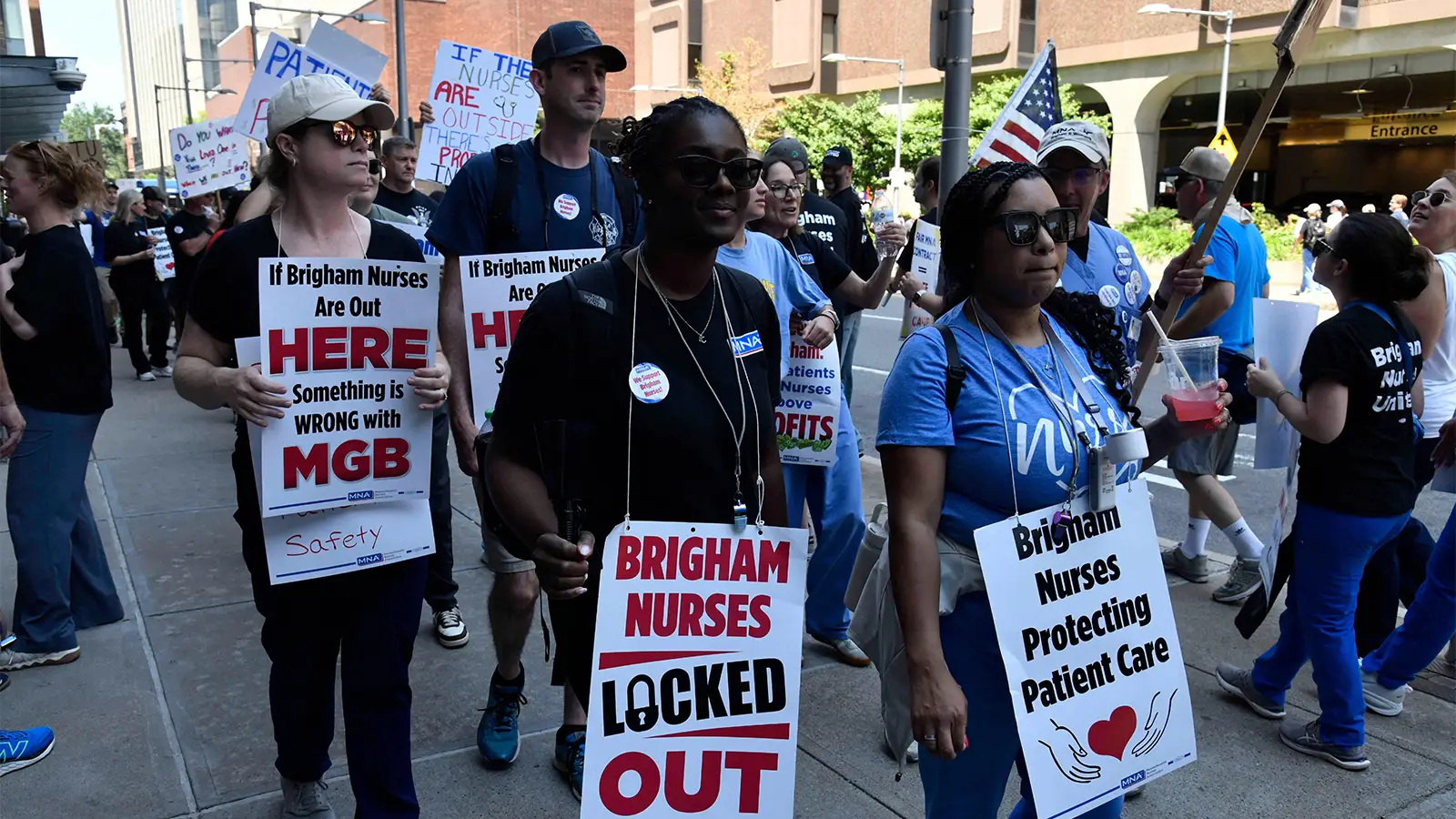
[ad_1] There is something almost too on-the-nose about our recent news cycle. On July 8, "The Pitt" -- HBO Max's unflinching, real-time portrait of a Pittsburgh emergency department (ED) -- collected 25 Emmy nominations, 13 of them for its cast. This was one of the most decorated hauls for an ensemble in the award's history. That same day, roughly 4,000 nurses at Brigham and Women's Hospital in Boston walked off the job in one of the largest nurses' strikes in Massachusetts history. Fiction was busy being celebrated for capturing the truth of emergency medicine. The truth itself was picketing outside a hospital, asking to be paid enough to keep doing the job. I don't say this to begrudge "The Pitt" its trophies. Katherine LaNasa's "Nurse Dana" is one of the most fully realized portraits of nursing that television has ever produced -- the loud, protective, bone-tired competence of it, the way she talks a grieving room down from the ledge without ever losing her own footing. Taylor Dearden, Fiona Dourif, Sepideh Moafi, the whole sprawling cast: they earned this by making an audience feel what a shift in an American ED actually costs a clinician. That's real craft, and craft deserves recognition. But there's a bitter irony in a culture that will happily hand out trophies for depicting the exhaustion, moral injury, and quiet heroism of frontline nurses while offering the actual nurses down the street a contract that amounts to, in the union's words, a 0% raise. While thousands of nurses returned to work this week, nurses said they may have to strike again if an agreement is not reached on a new contract. Brigham nurses are asking for cost-of-living increases on top of the step raises they already receive; management says its pay is already in the top 10% of the market nationally and locally. Both things can be true. Brigham nurses may be well-compensated relative to peers, and it can still be true that the hospital's own executives are paid millions while nurses are told there's no room to negotiate on wages or health insurance contributions. That contradiction is precisely what the union was pointing to: Mass General Brigham's board chair makes his living in private equity, and the system's CEO earned more than $8 million in a recent year, while the rank-and-file were reportedly being asked to accept their current pay and pay more out-of-pocket for their health coverage. That's not a Hollywood plot device. That's Wednesday morning outside 75 Francis Street. The deeper problem isn't that "The Pitt" exists or that its cast is brilliant. It's that the noble nurse, the unflappable resident, the doctor who never quite goes home on time are treated as art when it's performed; but it fails to be rewarded when it's demanded as a working condition. Noah Wyle's Dr. Robby breaking down over Baby Jane Doe wins him an Emmy nomination. A real nurse in a real NICU telling a reporter she's terrified of what an unfamiliar temporary staff member might miss in her patient gets, at best, a news mention and a hospital statement about "robust contingency plans." There is no awards show for the nurse who has given a rape kit and sat with a survivor at 3 a.m. for the fourth time that month, no red carpet for the 20-year charge nurse who trains agency staff on the fly during a lockout because 5 days of temp coverage is cheaper than a fair contract. We applaud the fictional version because it's safely contained inside 45 minutes of prestige television. We resist the real version because it costs money and shifts power. I've spent 30 years in and around emergency departments as a paramedic, a flight medic, a nurse practitioner, and an educator training the next generation of acute care providers. I have watched "The Pitt" get praised, correctly, for how accurately it renders moral injury, burnout, and the strange intimacy of trauma bays. And I have watched, in the same news cycle, hospital administrations argue that their nurses are already paid enough, even as those same nurses describe months of stalled negotiations and insufficient raises. If "The Pitt" deserves its trophies for showing America what its nurses actually carry, then the least America can do is support the actual nurses out there doing the job every day. An Emmy nomination is a fine thing. A living wage, safe staffing ratios, and affordable health insurance are better. Healthcare workers don't need Hollywood to validate their exhaustion, they need hospital systems willing to pay for it. The cameras will leave Pittsburgh eventually. The nurses in Boston still have a shift tomorrow. Editor's note: The editor-in-chief of MedPage Today is an employee of Mass General Brigham, and was therefore recused from involvement in the production of this editorial. Please enable JavaScript to view the comments powered by Disqus. [ad_2] Source link : https://www.medpagetoday.com/opinion/second-opinions/122180 Author : Publish date : 2026-07-14 17:40:00 Copyright for syndicated content belongs to the linked Source.