[ad_1]
- A study from England showed that 40% of women with ovarian cancer did not have diagnoses until after an emergency hospital admission for symptoms.
- Emergency diagnoses were associated with severe frailty, younger and older age, and socioeconomic deprivation.
- Ovarian cancers diagnosed after emergency admissions were more than three times as likely to be advanced stage.
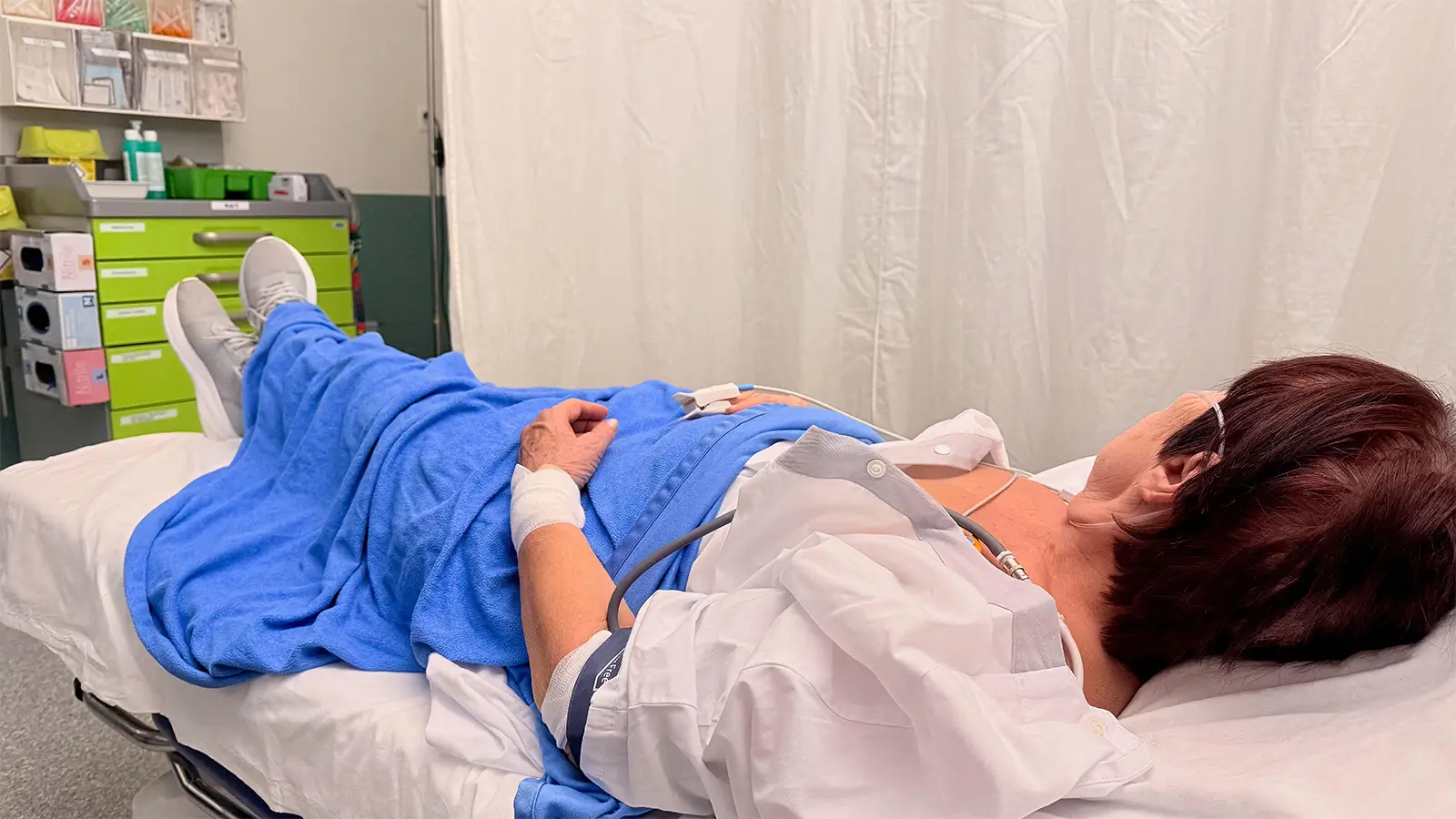
More than 40% of women with ovarian cancer did not have diagnoses until after an emergency hospital admission for symptoms, a study from England found.
National registry data showed that 11,377 of 28,204 women had ovarian cancer diagnoses within 28 days after emergency admission. Diagnosis after admission occurred more often in women with “severe frailty,” those who were younger than 30, those ages 80 and older, and those who lived in socioeconomically deprived neighborhoods.
Ovarian cancers diagnosed after emergency hospital admission were three times as likely to be in an advanced stage, reported Georgia Zachou, MD, of the London School of Hygiene & Tropical Medicine, and colleagues in BMJ Oncology. The authors emphasized that ovarian cancer diagnosis after unplanned hospital admission is a worldwide issue.
“The issue of ovarian cancer diagnosis following an emergency admission is not confined to England but also affects countries such as the USA, Australia, Denmark, Norway, Canada, and New Zealand, where the rates range from about 20% to 50%,” they wrote.
In a separate systematic review just published in the International Journal of Gynecological Cancer, Zachou and colleagues found that ovarian cancer diagnosis after evaluation in an emergency department was associated with advanced-stage disease, older age, and social deprivation. The 12 studies included in the analysis came from socioeconomically advantaged nations, suggesting an even larger problem in developing nations.
“This is a challenging issue because ovarian cancer symptoms are so vague and common,” co-author Sudha Sundar, MBBS, of the University of Birmingham in England, told MedPage Today. “About one in two women ages 45-70 will report one of these symptoms once a year. Ovarian cancer is also very rare. The average GP [general practitioner] will see one patient once in 400 patients seen. Women experiencing new symptoms of bloating, abdominal discomfort/pain, change in toilet habits, and feeling full should seek medical advice promptly. Greater GP awareness also would be very helpful.”
“GPs and general obstetrician/gynecologists, as well as geriatricians and gastroenterologists, have a huge part to play in recognizing these symptoms, promptly testing, and referring appropriately,” she added. “We definitely need more research into designing and conducting effective symptom awareness campaigns and making diagnostic pathways more efficient in primary care as well as secondary care.”
A majority of ovarian cancers are diagnosed at advanced stages, which poses a therapeutic challenge and contributes greatly to poor prognosis, the authors noted in their introduction. Early diagnosis is complicated by the wide range of non-specific symptoms that occur in women with and without ovarian cancer. A multicenter study from England showed that 80% of postmenopausal symptomatic women referred for suspected ovarian cancer did not have primary ovarian cancer. A randomized study of screening for asymptomatic women showed no effect on ovarian cancer deaths.
Ovarian cancer diagnosis after an emergency hospital admission is associated with poor outcomes, the authors pointed out. One study showed a fourfold increased likelihood of dying within 2 months, and another showed a fivefold increased risk of death within a year, as compared with women whose ovarian cancers were diagnosed by other means. A better understanding of women whose ovarian cancers were diagnosed after emergency admission might “facilitate improving the diagnostic pathway for ovarian cancer,” Zachou and team wrote.
To explore patient characteristics associated with emergency diagnosis of ovarian cancer, the authors analyzed data from National Health Service hospitals in England to identify ovarian cancer diagnoses from 2017 through 2021. Of 28,204 ovarian cancers, 40.3% were diagnosed within 28 days of an emergency hospital admission. Diagnosis after emergency admission was more common in the following groups:
- Those ages 18-29 (42.7%), with an adjusted risk ratio (RR) versus women ages 60-69 of 1.36 (95% CI 1.22-1.52)
- Those ages 80 and older (54.9%), with an adjusted RR versus those ages 60-69 of 1.25 (95% CI 1.20-1.31)
- Those residing in the most socially deprived neighborhoods (44.2%), with an adjusted RR versus those residing in the least deprived neighborhoods of 1.11 (95% CI 1.06-1.16)
- Those with severe frailty (68.6%), with an adjusted RR versus fit women of 1.88 (95% CI 1.78-1.99)
Of the 8,438 ovarian cancer diagnoses after admission, 13.7% were early-stage cancers (stage 1/2) and 39.2% were stage 3/4.
“Our findings are relevant for many countries and therefore international concerted action is needed to develop strategies that can reduce the risk that women are only diagnosed when their symptoms are so severe that emergency admission is necessary,” Zachou and team wrote.
[ad_2]
Source link : https://www.medpagetoday.com/hematologyoncology/ovariancancer/122097
Author :
Publish date : 2026-07-08 16:04:00
Copyright for syndicated content belongs to the linked Source.