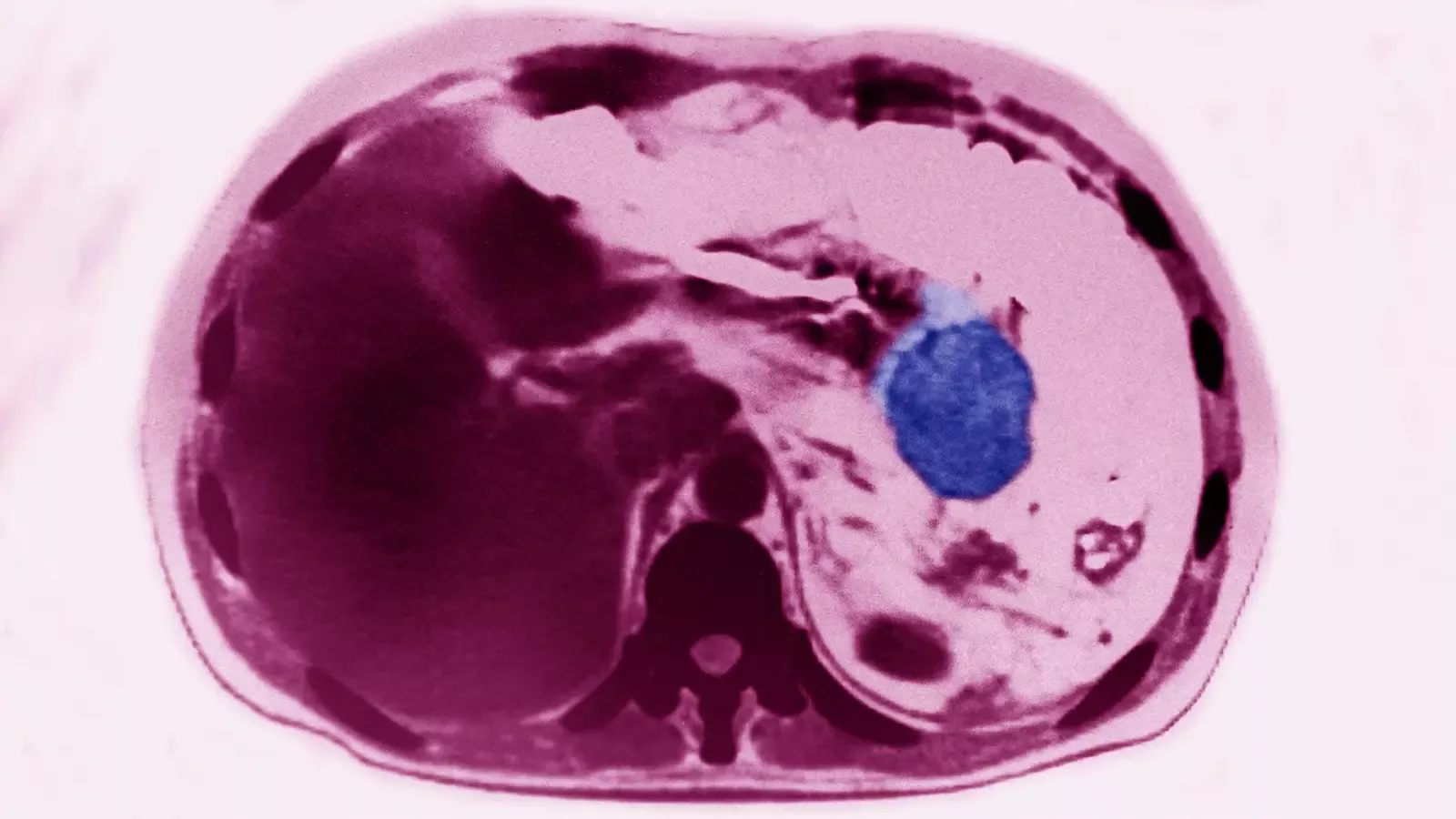
- Low-risk pancreatic cystic lesions were found to be associated with a long-term risk of pancreatic cancer in a retrospective cohort study.
- The incidence rate of pancreatic cancer among patients with pancreatic cystic lesions was higher than that of the general population (1.89 vs 0.14 per 1,000 person-years).
- Over a quarter of patients were diagnosed with pancreatic cancer more than 5 years after detection of lesions, suggesting longer-term follow-up is needed to avoid missed diagnoses.
Low-risk pancreatic cystic lesions were associated with a long-term risk of pancreatic cancer, according to a retrospective cohort study.
Among over 6,000 patients with low-risk pancreatic cystic lesions, 0.6% developed pancreatic cancer, translating into an incidence rate of 1.89 (95% CI 1.29-2.49) cases per 1,000 person-years, reported Arya Haj Mirzaian, MD, MPH, of Brigham and Women’s Hospital and Harvard Medical School in Boston, and colleagues.
This rate was higher than the previously reported general population rate of 0.14 cases per 1,000 person-years, they wrote in JAMA Network Open. “Despite the overall low incidence of pancreatic cancer, our findings suggest that patients with low-risk [pancreatic cystic lesions] may still have a 10-fold to 19-fold higher risk of pancreatic cancer compared with the general population.”
Among the 38 patients with pancreatic cancer, 23.7% were diagnosed within 1 year of the index examination, 50% were diagnosed between 1 and 5 years, and 26.3% were diagnosed after 5 years.
Mirzaian and colleagues noted that the poor outcomes associated with pancreatic cancer, which has a 5-year survival rate of less than 15%, is largely due to late-stage diagnosis.
“[W]hen the disease is detected early, the survival rate can rise to approximately 80%,” they wrote. “Therefore, early detection of pancreatic cancer or its precursors is critical and remains an important clinical goal.”
Mirzaian and team also suggested that longer follow-up after detection of pancreatic cystic lesions may be necessary to reduce missed or delayed diagnosis, given that 26% of pancreatic cancers in this study were diagnosed after 5 years.
In explaining the rationale behind the study, the authors said that while pancreatic cystic lesions are recognized as precursors of pancreatic cancer, “their exact risk of pancreatic cancer remains unclear due to the limited availability of longitudinal studies.”
They reviewed nearly 500,000 patients who underwent abdominal CT and MRI for any indication at a multi-site healthcare system in Massachusetts from January 2009 through December 2021. The 6,064 patients with low-risk pancreatic cystic lesions were included in this study and longitudinally followed (20,145 years of follow-up).
Patients had a mean age at diagnosis of 65.9 years, 59.6% were women, 82.8% were Hispanic or non-Hispanic white, 3.7% were Asian, and 3.7% were Black. The mean duration of follow-up was 3.3 years, with 45.2% followed for more than 3 years, and 16.7% followed for more than 5 years.
Most patients (97.4%) who developed pancreatic cancer had pathologically confirmed adenocarcinoma, and the remaining patient had high-grade dysplasia. Sixty-eight percent of patients developed cancer originating from the lesion site, and the rest developed cancer in a different region of the pancreas.
In multivariable analysis, larger cyst size (HR 2.24, 95% CI 1.45-3.48), main pancreatic duct ectasia (HR 2.84, 95% CI 1.18-6.84), and older age (HR 1.04, 95% CI 1.01-1.07) were associated with pancreatic cancer.
Adding age to a cyst size-based risk stratification model improved estimation of pancreatic cancer risk (net reclassification index 0.20, 95% CI 0.03-0.37).
Mirzaian and colleagues noted that their study cohort was not representative of the general population because inclusion criteria required adequate follow-up imaging.
They also acknowledged that while the size of the study cohort was large, an even larger sample size could have improved statistical power considering the low incidence of pancreatic cancer in the study.
“However, assembling a larger dataset with long-term follow-up remains challenging,” they wrote.
They suggested that more population-based cohort studies are needed to accurately identify the true risk of pancreatic cancer in patients with low-risk lesions.
Source link : https://www.medpagetoday.com/gastroenterology/pancreaticdiseases/121374
Author :
Publish date : 2026-05-20 18:47:00
Copyright for syndicated content belongs to the linked Source.