- Ischemia-reperfusion injury adds to graft dysfunction after liver transplant, but hypothermic oxygenated perfusion has been shown to improve liver function.
- A randomized trial showed that back-to-base portal-venous hypothermic oxygenated perfusion for extended-criteria donor livers improved outcomes after liver transplant compared with static cold storage alone.
- The perfusion strategy also led to shorter median hospital length of stay, an important clinical outcome.
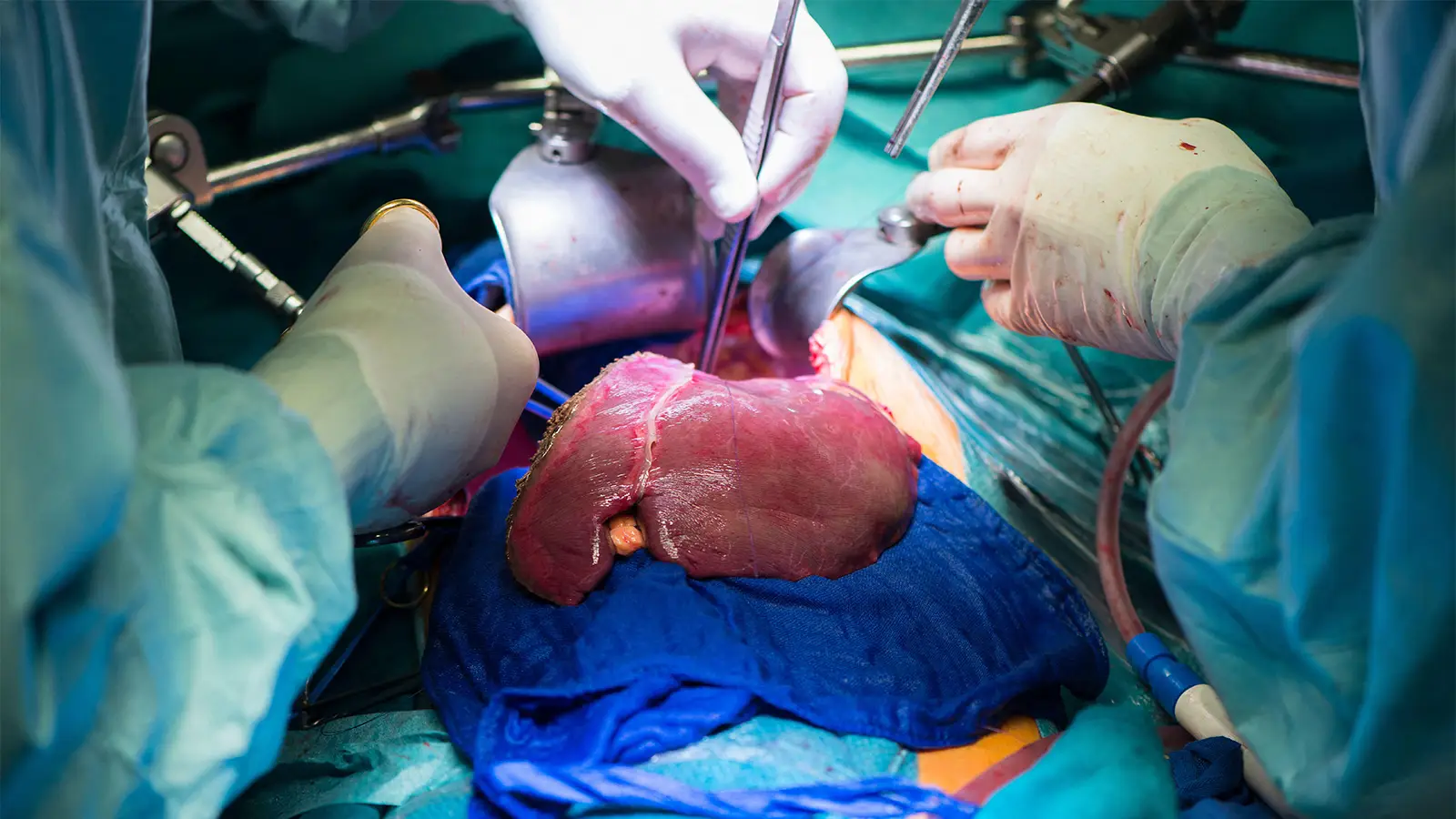
Organ preservation using back-to-base portal-venous hypothermic oxygenated perfusion (HOPE) for extended-criteria donor livers improved outcomes after liver transplant compared with static cold storage (SCS) alone, a randomized trial showed.
Incidence of early allograft dysfunction (EAD) occurred in 20.2% of patients in the HOPE group versus 37.3% in the control group (noninferiority P<0.001, superiority P=0.005), reported Andrea Schlegel, MD, of the Cleveland Clinic, and colleagues.
HOPE also led to a significantly lower model for early allograft function (MEAF) score, with mean scores of 4.28 versus 4.82 in the control group (P=0.03), as well as a shorter median hospital length of stay (8 vs 10.7 days; HR 1.32, 95% CI 1.01-1.73, P=0.04).
“The observed 17% reduction in EAD, supported by significantly lower MEAF scores, led to early trial termination at interim analysis, and it represents a clinically meaningful improvement in early graft function,” wrote Schlegel and colleagues in JAMA Surgery.
In a commentary accompanying the study, Shimul A. Shah, MD, of the Massachusetts General Hospital Transplant Center in Boston, and colleagues noted that the optimal machine perfusion strategy may differ according to donor type, and that normothermic machine perfusion and normothermic regional perfusion are both increasingly used in U.S. practice.
Thus, “head-to-head comparisons with other perfusion strategies such as these, rather than SCS, are urgently needed, acknowledging the logistical advantage of HOPE,” they observed.
Ischemia-reperfusion injury adds to graft dysfunction after liver transplant, Schlegel and colleagues said. HOPE has been shown to improve liver function, but its benefit in extended-criteria donors is uncertain.
The open-label Bridge to HOPE trial enrolled 219 participants at 15 U.S. liver transplant centers between January 2021 and May 2023. Recipients were mostly male and white, with a median age of 59 years in the HOPE group and 57.5 years in the control group.
Participants received extended-criteria donor livers after brain death and circulatory death, and were randomized to HOPE after SCS or SCS only. Control grafts proceeded directly to implant, while HOPE grafts underwent back-to-base perfusion (where the liver is transported to the recipient hospital — the “base” — using SCS, and then perfused).
Recipients were assessed daily through day 7 or discharge, and at day 14 and months 1, 3, 6, and 12, with 97% completing 12-month follow-up.
One-year graft survival was similar between the HOPE and SCS groups (95.4% vs 92.7%; OR 1.63, 95% CI 0.52-5.15), as was 1-year patient survival (97.2% vs 96.4%; OR 1.33, 95% CI 0.29-6.10).
In post-hoc analyses, 36.7% of patients in the HOPE group stayed in the hospital for longer than 10 days versus 50.9% in the control group (OR 0.56, 95% CI 0.33-0.96), while 4.6% and 14.5%, respectively, stayed in the hospital for longer than 20 days (OR 0.28, 95% CI 0.10-0.80).
The rate of moderate to severe acute cellular rejection (ACR) was numerically lower with HOPE (5.5% vs 10.9%), while the rate of steroid-resistant ACR was significantly lower (0.9% vs 8.2%).
Clinically relevant non-anastomotic biliary strictures (NAS) were also numerically less frequent with HOPE, with only one graft loss due to NAS compared with four after SCS alone. In addition, there were fewer major complications (Clavien-Dindo grade ≥IIIa) with HOPE.
Schlegel and colleagues acknowledged the study had limitations, including the fact that, as an endpoint, EAD “may incompletely represent posttransplant morbidity and could be influenced by enzyme washout during perfusion.”
However, they also pointed out that reduced EAD coincided with shorter hospital stays and fewer complications in the trial, “indicating that the biochemical differences reflect clinically meaningful effects rather than laboratory artifact alone.”
The editorialists agreed that enzyme washout during perfusion may have lowered transaminase levels that define EAD and potentially inflated the treatment effect.
But, “while one may argue about whether transaminase dependent EAD is clinically significant, clinical outcomes, such as length of stay and steroid-resistant acute cellular rejection, were also statistically significantly lower with HOPE and have profound clinical and economic impact,” Shah and co-authors wrote.
Source link : https://www.medpagetoday.com/gastroenterology/livertransplantation/121462
Author :
Publish date : 2026-05-27 20:50:00
Copyright for syndicated content belongs to the linked Source.