[ad_1]
- In a target emulation trial of veterans on insulin for type 2 diabetes, those adding a GLP-1 agonist did not have higher basal insulin discontinuation rates compared with those starting another diabetes drug.
- Roughly 17% of the veterans stopped insulin over 3 years of starting a glucose-lowering drug.
- Future studies should assess whether dual- or triple-incretin agonists offer an advantage, according to the researchers.
Adding a GLP-1 receptor agonist was not associated with a lower likelihood of discontinuing existing basal insulin therapy among veterans with type 2 diabetes compared with other glucose-lowering agents, a target emulation trial found.
Over a 3-year follow-up, insulin therapy was discontinued by 16.7% of GLP-1 drug initiators, 17.9% of SGLT2 inhibitor initiators, and 17.1% of DPP-4 inhibitor initiators in an intention-to-treat analysis, according to researchers led by Kasia Lipska, MD, MHS, of the Veterans Affairs Connecticut Healthcare System in West Haven.
Neither difference in insulin discontinuation reached statistical significance, with risk ratios of 0.93 (95% CI 0.86-1.01) for GLP-1 drugs versus SGLT2 inhibitors and 0.98 (95% CI 0.87-1.09) for GLP-1 drugs versus DPP-4 inhibitors.
The findings held true in a modified per-protocol analysis as well, and GLP-1 receptor agonists showed no comparative advantage over the other two drug classes in any specific patient subgroup.
“Although GLP-1 receptor agonists remain valuable for their cardiovascular, renal, and weight benefits, their initiation alone does not seem to drive basal insulin discontinuation beyond that observed with other glucose-lowering agents,” Lipska and co-authors concluded in Annals of Internal Medicine.
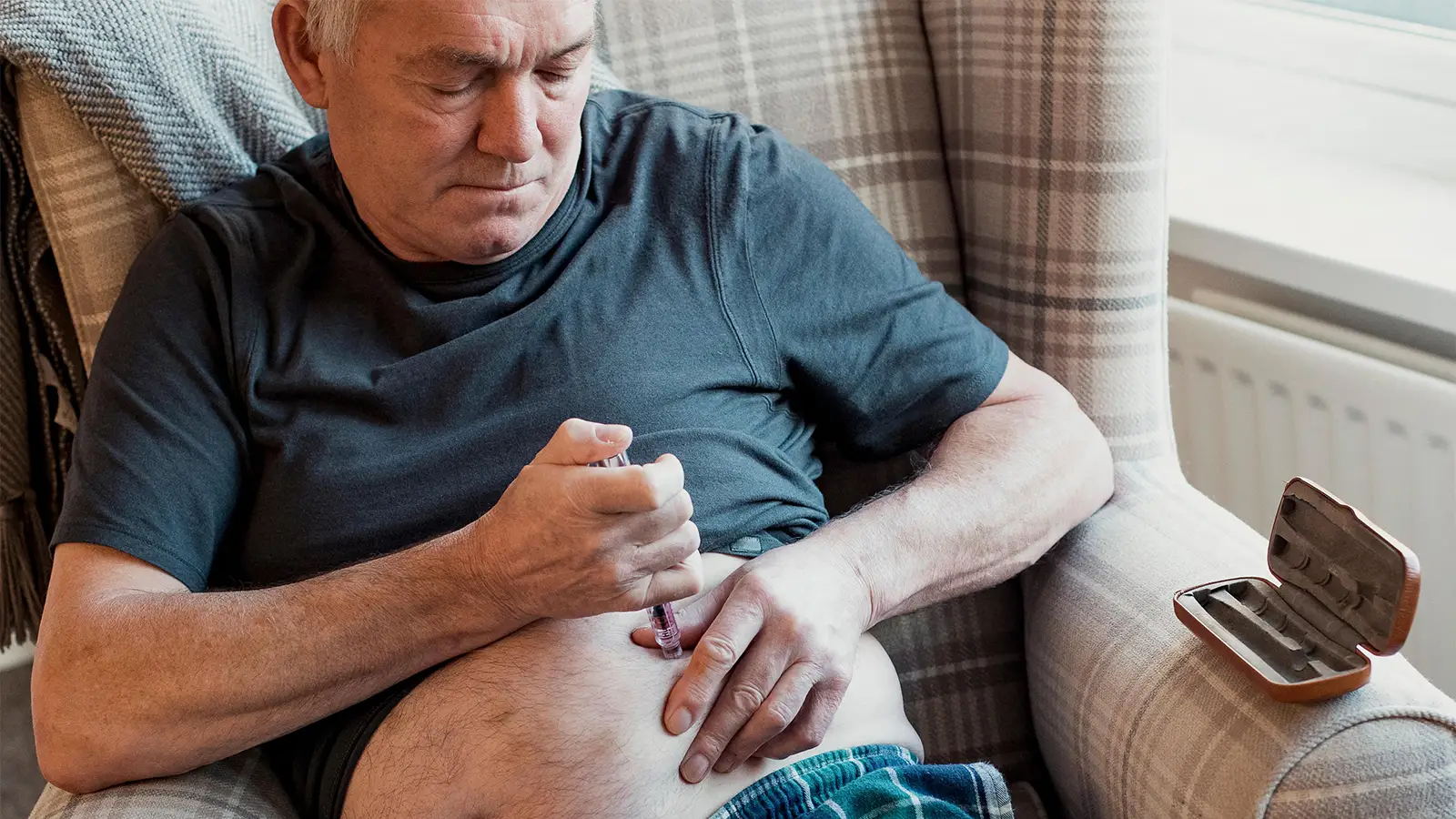
About 20-30% of people with type 2 diabetes require insulin therapy to maintain glycemic control. However, insulin regimens can be “complex and burdensome,” the authors noted, requiring multiple daily injections, ongoing dose adjustments, and frequent monitoring. Insulin also carries risks for hypoglycemia and weight gain.
“With the growing use of GLP-1 receptor agonists, questions have emerged about whether their addition enables safe and effective discontinuation of insulin therapy for people with type 2 diabetes,” Lipska and colleagues explained.
Some prior studies have shown a substantial reduction in total daily insulin doses when GLP-1 drugs are added to the regimen. For example, the SUSTAIN-5 trial found that once-weekly 1-mg semaglutide (Ozempic) led to a 15% reduction in insulin dose compared with placebo.
Mechanistically, GLP-1 drugs might reduce insulin requirements by enhancing glucose-dependent insulin secretion, suppressing glucagon release, delaying gastric emptying, and curbing appetite, leading to substantial weight loss and improved insulin sensitivity. Additionally, the blockbuster class of agents has been shown to reduce postprandial glucose excursions, which may allow for basal insulin dose reductions.
However, these physiologic effects might be insufficient to permit full discontinuation of insulin, particularly in patients with long-standing disease or limited residual beta-cell function, Lipska and co-authors noted.
“Understanding how often insulin can be withdrawn after initiating a GLP-1 receptor agonist has important implications for clinical guidelines, treatment burden, cost, and long-term outcomes,” they wrote.
To address this, the research team designed a target trial emulation to evaluate the effects of GLP-1 drug initiation on rates of insulin discontinuation using U.S. Veterans Health Administration electronic health record data.
They compiled 8,869 matched sets of GLP-1 receptor agonist initiators (76.6% semaglutide, 15.2% dulaglutide [Trulicity], 7.9% liraglutide [Victoza], and 0.3% exenatide [Byetta, Bydureon]), SGLT2 inhibitor initiators (99.7% empagliflozin [Jardiance]), and DPP-4 inhibitor initiators (95.9% alogliptin [Nesina]). All participants initiated treatment from 2020 to 2022. The cohort was 93% male, 63% were 65 or older, 70% were white, and 48% had an HbA1c of 9% or higher.
The researchers pointed to several real-world factors that might explain the minimal differences in insulin discontinuation rates across the treatment groups.
First, the efficacy of GLP-1 drugs observed in clinical trials might not fully translate to real-world settings, where patient selection, medication adherence, step therapy, and formulary restrictions all play a role. For instance, fewer than 10% of patients in this study actually reached the maximum dose of their GLP-1 drug during the 3-year follow-up.
Additionally, there were high treatment crossover rates during follow-up, such as patients initiating an SGLT2 inhibitor but later switching to a GLP-1 agent. Other limitations of the study included a reliance on administrative and pharmacy claims data, which may misclassify medication exposure or insulin discontinuation.
Future research should look into whether dual- or triple-incretin agonists, which can produce greater glycemic and weight reductions, have a different impact on insulin discontinuation in routine clinical practice, Lipska and colleagues suggested.
[ad_2]
Source link : https://www.medpagetoday.com/endocrinology/diabetes/122167
Author :
Publish date : 2026-07-13 21:00:00
Copyright for syndicated content belongs to the linked Source.