
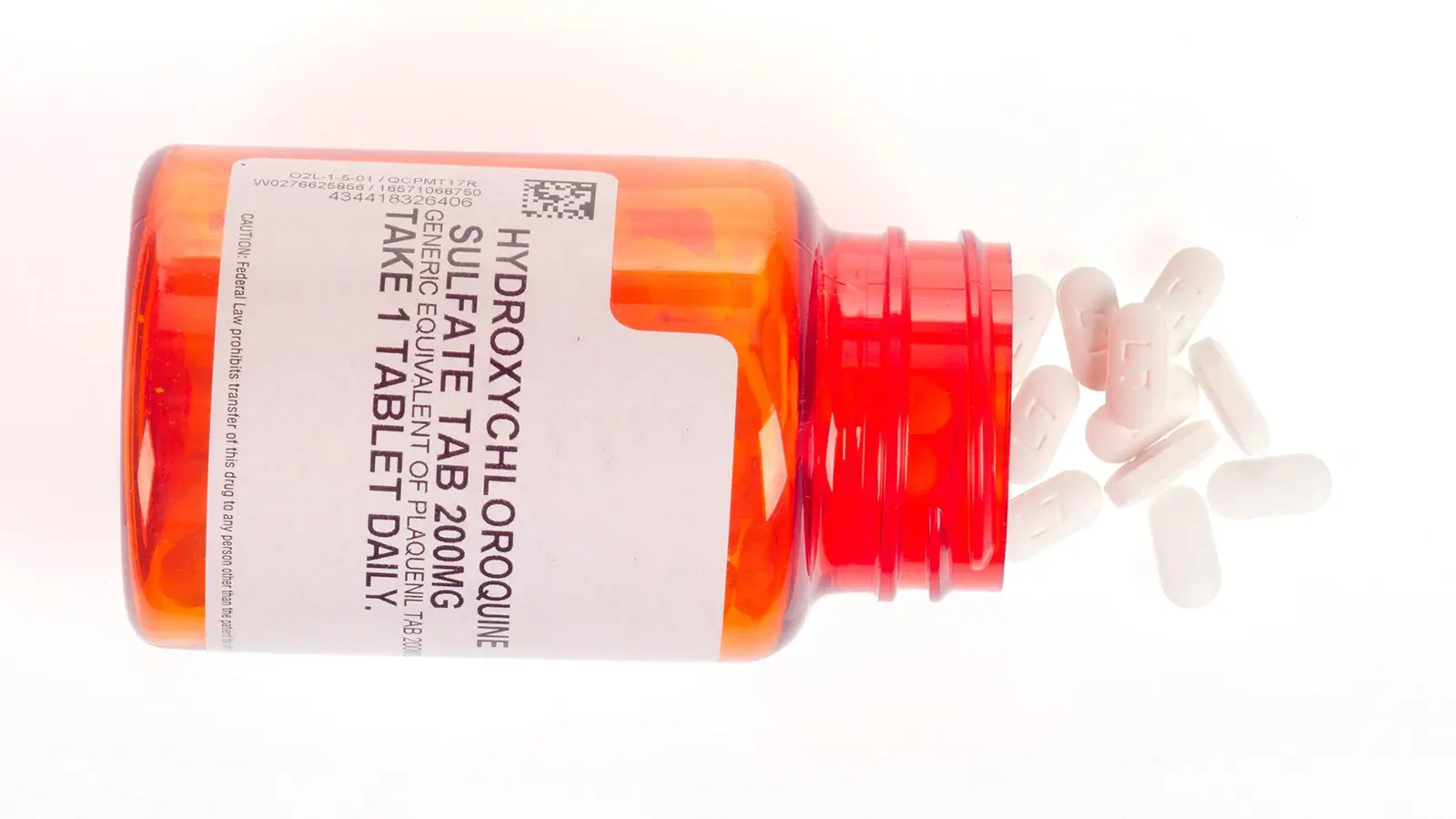

- Hydroxychloroquine (HCQ) is the backbone of therapy for most patients with systemic lupus erythematosus, but patient adherence is often suboptimal.
- This trial tested a brief intervention called HCQ-SAFE in which patients were presented with pictograms illustrating the quantitative benefits and risks associated with HCQ, hypothesized to improve adherence by reducing “decisional conflict.”
- Adherence rates increased substantially in the 3 months following delivery of HCQ-SAFE and average disease activity decreased, but longer-term follow-up is needed.
Showing lupus patients in pictures exactly how much benefit hydroxychloroquine (HCQ) is likely to provide, as well as the risks for side effects, raised adherence to their prescribed regimens in a prospective trial.
At baseline in the 200-patient study, 62% were rated as adherent to their HCQ dosing schedule (defined as taking their prescribed doses for at least 80% of days). Three months after receiving the brief pictogram-based education, called HCQ-SAFE, the figure had risen to 90% (P<0.0001), according to Shivani Garg, MD, PhD, of Yale University in New Haven, Connecticut, and colleagues.
Mean adherence (the percentage of days during which HCQ was taken as prescribed) increased from 73% at baseline to 91% after the intervention, the group reported in Arthritis & Rheumatology.
“This study provides foundational data to guide future research to validate the routine integration of shared decision-making, leveraging tools like HCQ-SAFE to improve SLE [systemic lupus erythematosus] care,” Garg and team wrote.
HCQ is the foundation of care for most lupus patients and countless studies have established that regular dosing is vital to ward off flares and prevent permanent organ damage. Yet failing to take HCQ as prescribed is unfortunately common, driven by many factors ranging from simple forgetfulness to mistaken beliefs about the drug and poor appreciation of the risks associated with spotty dosing. “Decisional conflict” is how researchers sometimes characterize the latter and the idea behind HCQ-SAFE is to reduce it.
“Patients have reported difficulty in weighing benefits and harms, misalignment of treatment goals with their expectations and values, and lack of support in decision-making as key challenges in treatment decisions,” the investigators explained. “These factors are further complicated in the presence of linguistic and literacy barriers, particularly in Spanish-speaking patients who reported going to clinic visits as a battle ‘la batalla.'”
Starting several years ago, Garg (then at the University of Wisconsin in Madison) and colleagues began to look into ways to help people do better at following their regimens. The result was the initial version of HCQ-SAFE, as described in a 2023 paper. It used cartoon-type graphics to illustrate, for example, mortality among lupus patients who take HCQ versus those who don’t, as well as the relatively small risk for retinopathy. Originally, though, it was only available in English and on paper. Garg’s group believed it would be more broadly effective if it could be adapted for Spanish speakers and be used remotely, and thus in a digital format.
After developing what they thought would be a clinically useable online version, they tested it in the present “pragmatic” trial. They recruited adult SLE patients who had active HCQ prescriptions, with a plan for 10% of the final sample to be Spanish speakers. In addition, they also rounded up 22 healthcare professionals to deliver the program, including 15 physicians, four nurses, and three pharmacists. The intervention was delivered during a regular clinic visit.
Patients averaged 44 years old and about 90% were women. Although 13.5% identified as Hispanic, only about half of them had Spanish as their primary language, falling short of the initial goal. Half had education beyond high school. Median time since SLE onset was 10 years; in line with a goal to include a wide spread of disease duration, the interquartile range was 5 to 17 years.
Participants moved quickly through the pictograms and discussion: the mean time spent was 6.2 minutes and the median was 5 (IQR 5-7). Also, all 200 participants completed the exercise, and the clinicians delivering it rated it as very useable. All but one indicated that they were extremely or very likely to use it in routine practice.
“Decisional conflict” — participants’ perceived difficulty in weighing risks and benefits around HCQ — was also assessed through a questionnaire, and HCQ-SAFE appeared to moderate it significantly. Some 43% had baseline scores on this instrument classified as high — 25 or more on a 100-point scale — and in this group, mean scores fell by about 14 points from an initial average of 47.
The best part, of course, was that adherence improved substantially following the exercise, and disease activity was reduced as well (by an average 2.7 points on the SLE Disease Activity Index-2K scale). Garg and colleagues were especially pleased that it didn’t seem to matter whether the content was delivered by a physician versus a nurse or pharmacist.
Limitations to the study included the small number of Spanish speakers, such that more focused testing in this population is needed. Longer-term follow-up is also required, including additional patient-centered clinical outcomes. The research setting could have made both patients and clinicians more enthusiastic about the exercise than might be the case in routine care, the researchers noted. And crucially, the trial had no control group.
Source link : https://www.medpagetoday.com/rheumatology/lupus/121381
Author :
Publish date : 2026-05-20 21:06:00
Copyright for syndicated content belongs to the linked Source.