[ad_1]
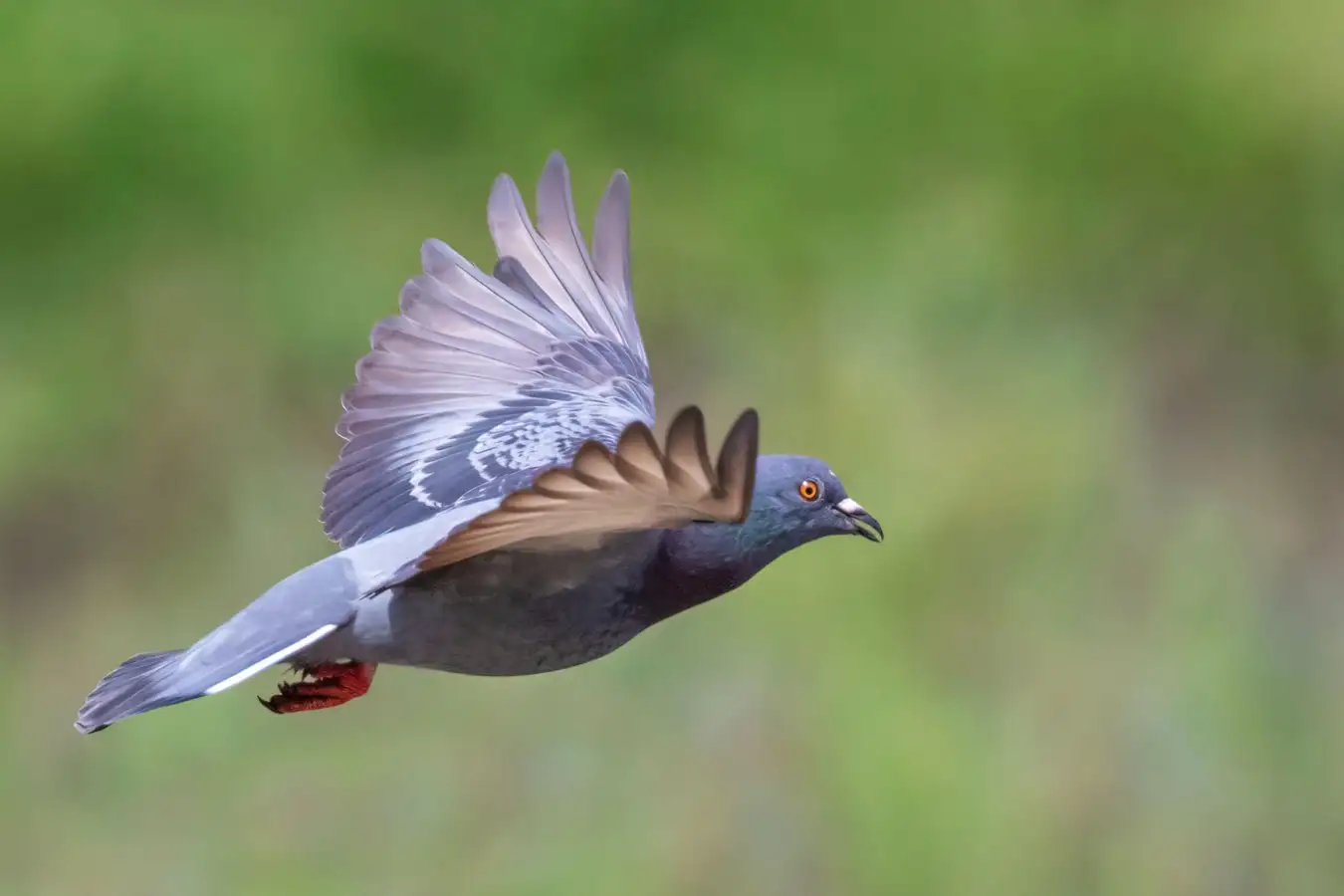
Pigeons are always looking ahead
yod67/Alamy
Scientists have tracked the eye movements of a bird in flight for the first time, revealing that pigeons in the air lock their eyes in place rather than looking around. The behaviour may help them control their flight, but it could also leave them more vulnerable to predators.
If animals on the ground want to look at something, they move their head or eyes to fix their gaze on it, then use rapid and sometimes wide-ranging movements of the pupil, known as saccades, to give a stable view of the object relative to its surroundings. But no one really knows what happens when birds are flying.
To find out, Ivo Ros at the California Institute of Technology and his colleagues designed a lightweight rig of mirrors and cameras that can be attached to the head of a common pigeon (Columba livia) as it flies, as well as a small backpack that houses a camera control board and battery.
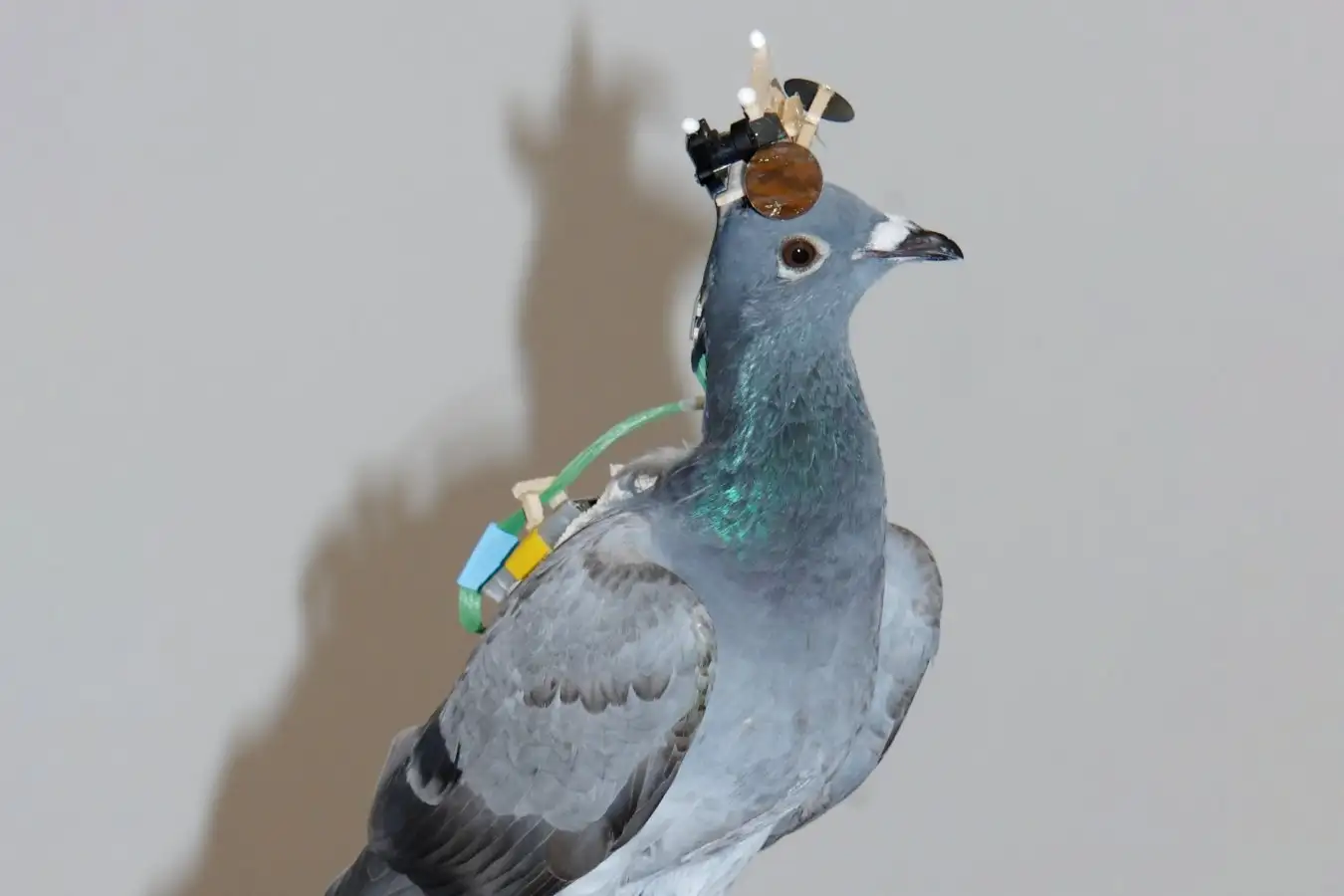
A pigeon fitted with eye-tracking equipment
Andrew Biewener
They then trained six pigeons to fly between two perches about 20 metres apart indoors, and three to fly some 25 metres outdoors to return to a coop.
During test flights in both environments, the head-mounted eye-tracking system revealed that after take-off, the birds increased their pupil size and adopted a fixed and consistent eye position in their heads, essentially locking their eyes in place.
“Whenever they start flying, the eyes rotate forward on average,” says Ros.
If their heads moved, their eyes moved in synchrony with them. The fixed eye position aligns with the primary horizontal axis of the birds’ vision and their vestibular system – the sensory network that controls balance and spatial orientation.
“Pigeons have been shown capable of moving their eyes independently and that they can be moved by a maximum amplitude of about 15 degrees,” says Graham Martin at the University of Birmingham, UK. “Therefore, to show that, during flight, eye movements are less than 1 degree does suggest that the birds are actively stabilising the position of their eyes when in flight.”
Why they are locking their eyes isn’t certain, says Ros. He thinks the alignment with the vestibular system suggests the behaviour may help pigeons distinguish their own motion from external motion – such as the movement of a tree’s branches, or a car or predator – to help them balance and navigate.
It’s also possible that reducing eye movements minimises the computational load on the brain. “The world during flight moves a lot faster than it does during non-flight,” he says.
Eye movements give pigeons a horizontal field of view of about 340 degrees, but Ros says locking their eyes into a forward-facing position is likely to reduce this, leaving a larger blind spot behind them where they couldn’t see predators.
He is curious about what pigeon eyes would do in other situations, because all the tests were done when the birds were low to the ground. “It might be different if pigeons were flying higher up, where there aren’t lots of objects rushing past,” says Ros. He also wonders what would happen when pigeons fly in flocks. “Would they look at other pigeons? At predators? Or at something on the horizon?”
Martin thinks other birds might also stabilise their eye position during flight, including predators. When in pursuit of prey, peregrine falcons fly in a curved path towards it, he says. “This presumably would require the peregrine to fix the position of their eyes rather than move them about.”
Topics:
[ad_2]
Source link : https://www.newscientist.com/article/2530749-pigeons-lock-their-eyes-in-place-when-they-are-flying/?utm_campaign=RSS%7CNSNS&utm_source=NSNS&utm_medium=RSS&utm_content=home
Author :
Publish date : 2026-06-17 16:00:00
Copyright for syndicated content belongs to the linked Source.