[ad_1]
A Republican senator criticized a proposed rule from the White House’s budget office that would substantially change how federal grants are managed, arguing that it has the potential to harm patients and set back biomedical research.
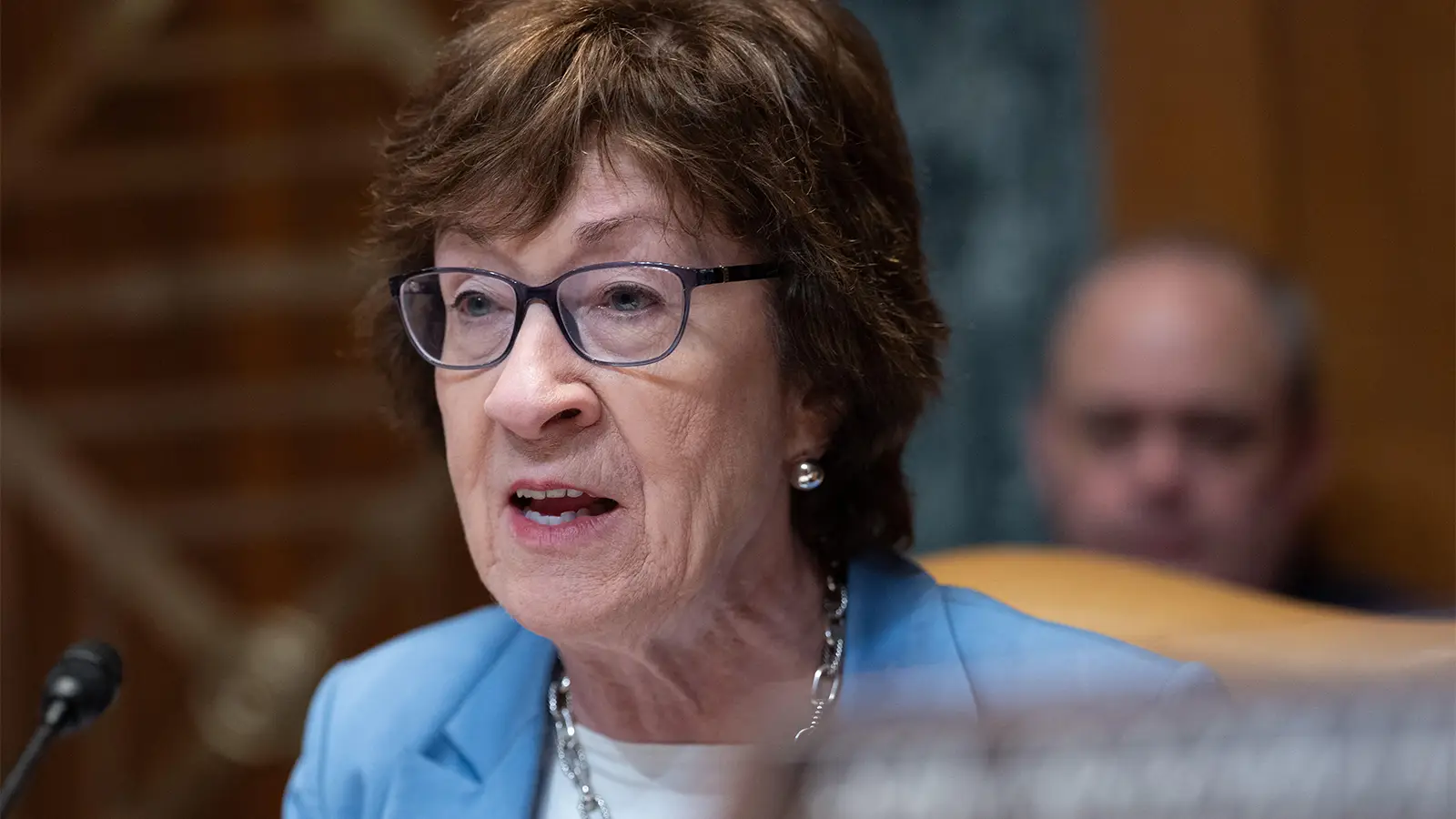
In a July 6 letter, Sen. Susan Collins (R-Maine), chair of the Senate Appropriations Committee, wrote that “the rule would impose new, burdensome requirements on award recipients that would harm small and rural communities, undermine scientific and biomedical research, and conflict with Congress’ control over the federal funding process.”
She called on Office of Management and Budget (OMB) Director Russell Vought to drop certain portions of the rule and extend the comment period by at least 90 days to allow for meaningful stakeholder engagement.
Collins particularly took issue with the rule for allowing agencies to terminate discretionary grants if the agency decides that the termination is in its best interest, including in cases where the federal award does not accomplish program goals or agency priorities.
She noted that previous versions of the same guidance included language to terminate awards that were not aligned with program goals or agency priorities, but agencies could choose whether to include such terms in their own agreements. The proposed rule not only removes this “discretion,” but it also removes the administrative hearing requirements that would have allowed an entity the ability to appeal such decisions, she added.
Allowing termination of awards with limited ability to appeal “would inject uncertainty into the federal award process, especially for awards that span multiple years and phases and make these awards more costly,” Collins wrote. “For example, the termination of clinical trials would leave patients without treatment and could well result in significant scientific and financial losses to both the recipient and the federal government. This uncertainty could disincentivize scientific researchers and institutions from seeking the federal financial assistance they need to participate in multi-year, lifesaving trials.”
The proposed rule also creates new hurdles for federal assistance awardees by requiring a senior appointee to conduct a “pre-issuance review” to determine whether the award “demonstrably advance[s] the president’s policy priorities,” even after the merit review process is completed, she added.
Creating this additional review process for awards already vetted in a peer-reviewed, merit-based process undermines the federal government’s own goal of funding scientific and biomedical research “based on scientific merit and value, rather than political ideology,” Collins argued.
She also pointed out that the draft rule “fails to address how OMB and agencies would ensure that consideration of the president’s policy priorities does not supersede congressional intent for the administration of these awards.”
Despite these revisions being “the most significant changes” to the rule since its adoption, OMB gave stakeholders only 45 days to provide feedback, with the intent of finalizing the rule by Oct. 1, noted Collins. She requested instead that OMB extend the comment period for at least 90 days, and “withdraw portions of the rule that would unduly burden scientific and biomedical research and small communities.”
In their own July 1 letter to Vought, Senate Democrats called the draft guidance a “power grab” and “unlawful.”
Senate Democratic Leader Chuck Schumer (D-N.Y.) and Sen. Patty Murray (D-Wash.), vice chair of the Senate Appropriations Committee, along with other lawmakers on behalf of the entire Senate Democratic Caucus, demanded Vought “immediately rescind” the OMB’s draft proposal.
“This proposal dramatically expands agencies’ authority to the point where the president could terminate or suspend any grant at any time for any reason and without any notice,” they wrote.
Instead of bringing “regulatory clarity,” the proposed rule would limit funding based on “undefined terms,” such as “anti-American values,” making it difficult for grant recipients to begin to know how to comply, forcing them to “play an endless guessing game, trying to determine which of their activities may or may not run afoul of OMB’s ambiguous regulations or the president’s whims,” they added.
“OMB’s proposal unlawfully seeks to substitute Congress’s role in directing federal spending with the president’s preferred priorities, and in doing so, makes it harder for every community and organization in the United States to fairly access federal funding,” they concluded.
The American Association for Cancer Research also blasted the rule in a press release, arguing that the proposal would “increase administrative complexity, create uncertainty for grant recipients, reduce transparency in funding decisions, and undermine the merit-based processes that have effectively guided federal research investments.”
“If this OMB-proposed regulation is ultimately finalized, it will severely weaken the U.S. federal research grant program that has supported American innovation and medical breakthroughs for decades,” the association noted, calling on its members to oppose the rule by submitting comments before the July 13 deadline.
A request for comment from OMB was not returned as of press time.
[ad_2]
Source link : https://www.medpagetoday.com/washington-watch/washington-watch/122110
Author :
Publish date : 2026-07-08 21:44:00
Copyright for syndicated content belongs to the linked Source.