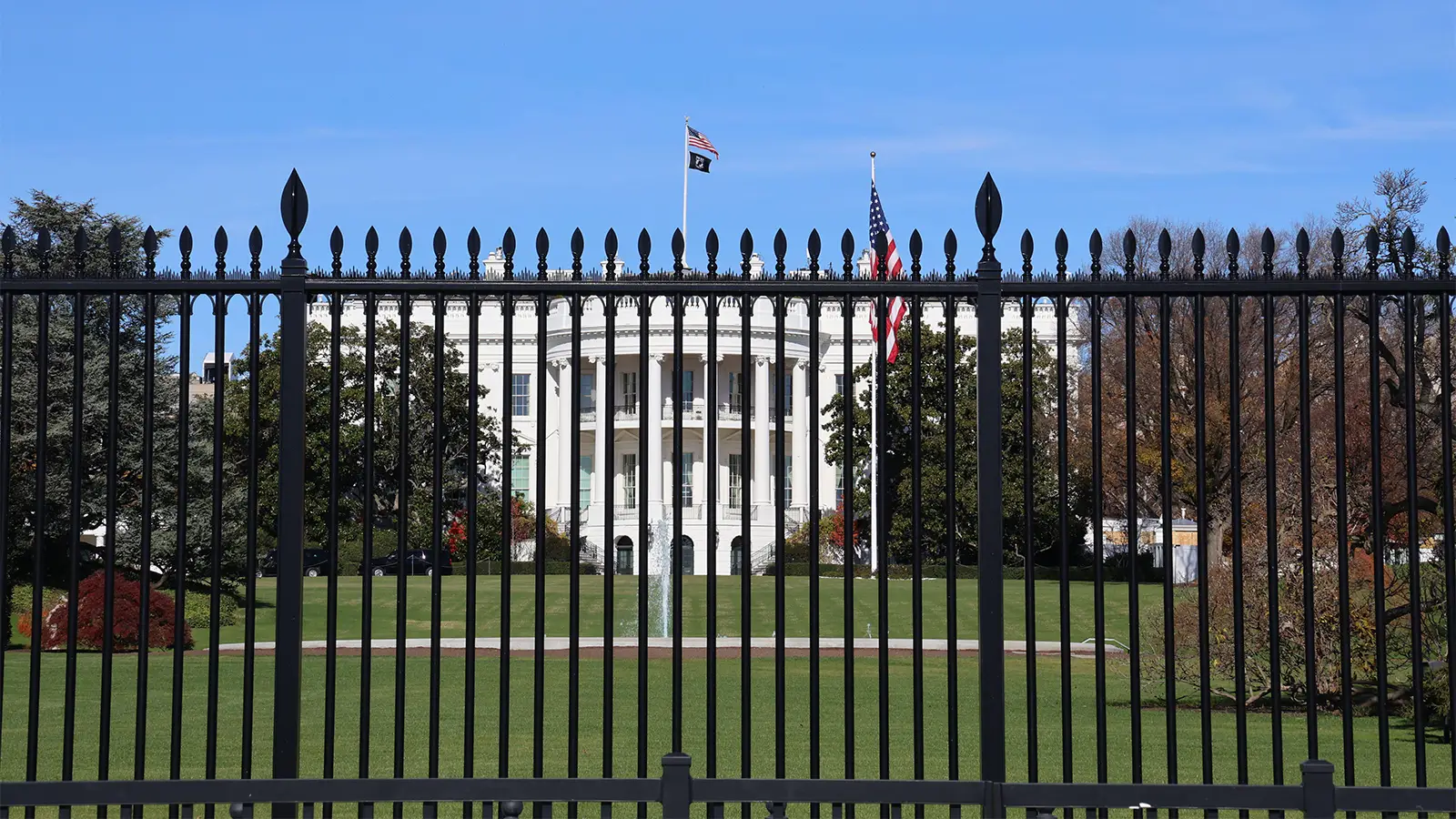
[ad_1] Science has always been political. From the people who have been allowed to dominate research and academic spaces, to the diseases we study and prioritize funding for. I am a soon to be third-year MD-PhD student. My doctoral research investigates how combining CAR-T cell therapy with radiopharmaceutical therapy can overcome immune resistance in solid tumors like prostate cancer. I am also a Black woman, a daughter of Ghanaian immigrants, and someone who has spent enough time in academic medicine to understand that the funding landscape I am entering has never been neutral. Not for me, for any that looks like me, or even the topics I am passionate about studying. So when the White House Office of Management and Budget (OMB) recently published a 412-page proposed rule that would give political appointees the power to block, terminate, or override federally funded research grants based on whether they "demonstrably advance the president's policy priorities," I had to push away my normal nihilistic response of "here we go again" and instead give in to true concern and alarm. And anyone in our field that has held their composure since the start of this administration should be alarmed as well. If this proposal takes effect, the question of whether a grant gets funded would no longer rest primarily with scientists. A new layer of "pre-issuance review" would instead give political appointees at agencies like NIH the authority to block awards before they are issued and to terminate active grants if they decide the research no longer aligns with the administration's priorities, rather than considering scientific value and positive patient outcomes. Under the proposed rule, OMB would take control of releases of government funds and the federal research grant review process would lose transparency. My research exists because people are dying from cancers that current therapies cannot reach. Radiopharmaceutical therapy combined with immunotherapy is a relatively new combination strategy and illustrates the kind of high-risk science that requires sustained federal investment. Under the proposed rule, a political appointee could pull my funding before I finish running my last experiment in our flow core, before I close the fume hood on my final in vitro assay, before my results are published, and most importantly, long before any of this work has a chance to reach an FDA-approved clinical trial or the patients waiting on the other side of it. The apolitical myth of science has never protected the scientists who most needed protection. It did not protect researchers studying HIV during the 80s when the Reagan administration laughed off questions about the epidemic and masqueraded homophobia as indifference, costing thousands of lives before President Reagan gave a single speech acknowledging the HIV/AIDS epidemic. The Dickey Amendment, passed in 1996, effectively banned federal funding for firearm injury research for nearly 25 years -- and when Congress finally restored that funding in 2019, researchers found an immediate and measurable surge in both clinical trials and publications on gun violence, a direct demonstration of how much science a political decision had buried. For minoritized scientists, the apolitical myth was never a luxury we could afford in the first place. We have always known that funding decisions encode values in the populations studied, the language used, who the primary investigator is, and so on. The proposed rule does not introduce politics into science. It makes the politics undeniable and it will render the consequences formal and even more devastating. There is still time to push back. The OMB is accepting public comments on the proposed rule until July 13. Call your senators and representatives. The American Association for the Advancement of Science, the American Society for Biochemistry and Molecular Biology, and dozens of other scientific organizations have already shared concerns. Stand Up for Science has resources to guide you through the process. My passion for scientific research came about in 2014 when my cousin was saved by rituximab, a monoclonal antibody that has transformed treatment for certain B cell cancers, multiple sclerosis, and in my cousin's case, neuromyelitis optica. I watched what it meant for a drug born from basic scientific research to reach someone I loved in time. If a political appointee had decided that studying B cell biology, or autoimmunity, or the mechanisms behind that drug was not a presidential priority, she would not be here. That is not a hypothetical. That is the precise power this rule would hand to people with potentially no scientific training and no accountability to the patients whose lives depend on the research findings. So, to the science community: now more than ever, we cannot afford silence. This proposed rule is a direct threat to the questions that brought us into research in the first place and to the patients who are waiting for the answers -- and sometimes, the cure. Please enable JavaScript to view the comments powered by Disqus. [ad_2] Source link : https://www.medpagetoday.com/opinion/second-opinions/121819 Author : Publish date : 2026-06-17 20:16:00 Copyright for syndicated content belongs to the linked Source.