[ad_1]
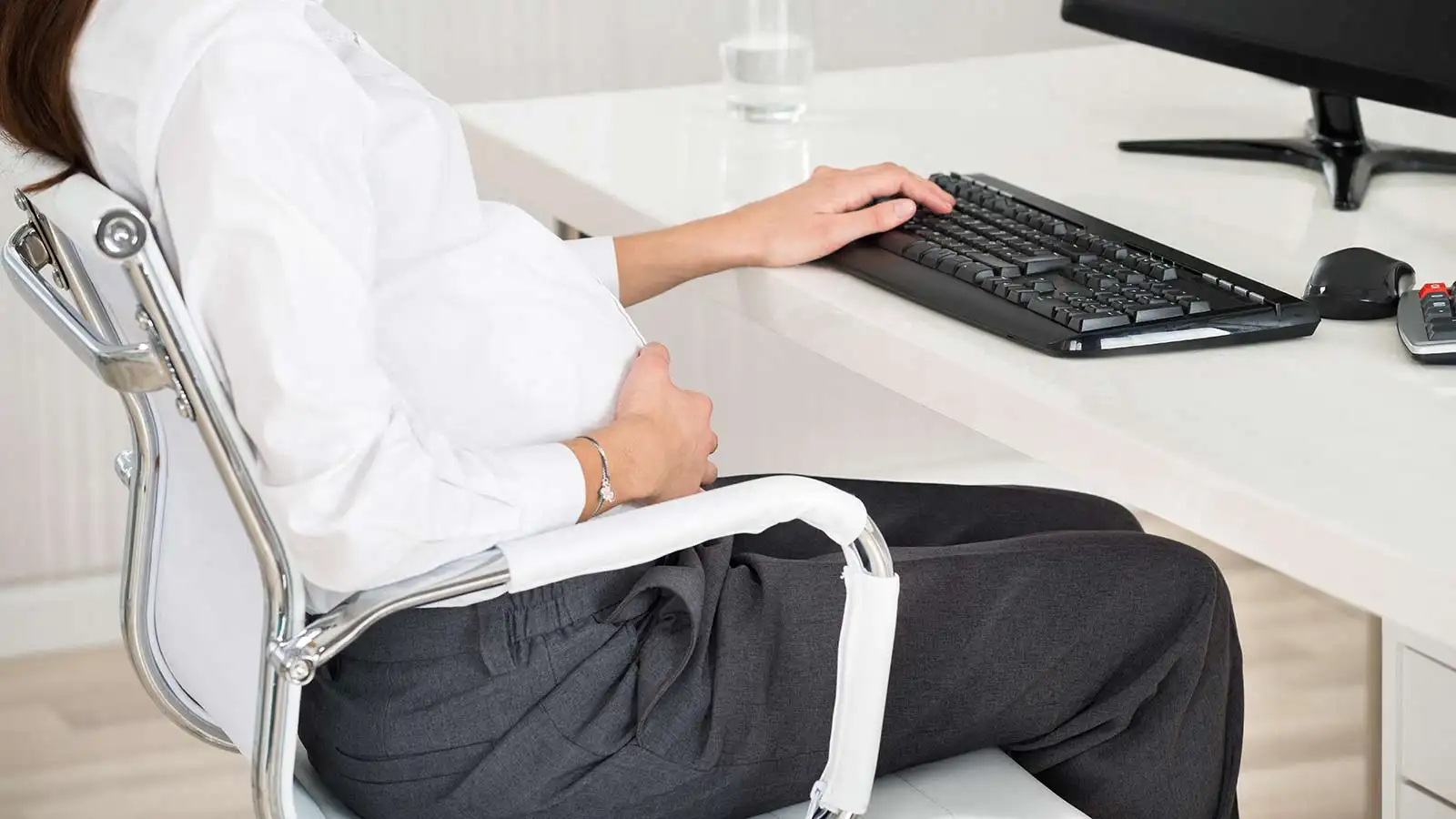
New research in JAMA found that pregnant women with sedentary behavior, low step counts, or low levels of light physician activity had higher risks of adverse pregnancy outcomes.
In this MedPage Today video, Bethany Barone Gibbs, PhD, of West Virginia University School of Public Health in Morgantown, discusses why prolonged sitting may carry greater risks during pregnancy.
The following is a transcript of her remarks:
As a society and our culture through technology and societal shifts, and especially since COVID, we have been engineering other physical activity out of our life. If you’ve ever seen the movie “Wall-E,” where those people are sort of on that little scooter, we’re almost there.
We are spending a lot more of the time sitting — online shopping, video streaming, remote work. There’s so many reasons that we do not get that all-day physical activity that people just a couple of decades ago got.
And so that’s kind of the big idea behind the article was to see, is that going on? How much are pregnant women sitting and is it being related to what we call a group of adverse pregnancy outcomes? And they are hypertensive disorders of pregnancy — which is preeclampsia and gestational hypertension — gestational diabetes, preterm birth, and small for gestational age.
And especially hypertensive disorders of pregnancy are rising in the past few decades. We don’t really know why, and they’re really risky during pregnancy for mom and baby. But also if a woman experiences an adverse pregnancy outcome, she has two to four times the lifetime risk of developing cardiovascular disease later. So we really need to figure out why these are increasing, how to prevent them, and we sort of hypothesize that a lot of sitting during pregnancy might be one of the contributors.
And so we measured it really precisely, putting an accelerometer on the thigh. And we have a volunteer cohort study across three sites, which is really great, so we got a big range of women in the study. But still, usually healthier people volunteer for studies because they’re interested in their health. And even so, even in this somewhat healthy group, more than 50% of the women had this very, what I call a very-high-sitting phenotype, which was more than 10 hours a day. And those women who were sitting for more than 10 hours a day had twice the risk of having one of these adverse pregnancy outcomes.
So in that high-sitting group, two in five women had an adverse pregnancy outcome, that group of outcomes I mentioned. And in the very-low-sitting group, only one in five women had one of these outcomes. So it was a doubling of the risk and that is huge. We were not expecting to see an association that strong.
In the general population, when we look at sedentary behavior interventions or associations, they’re usually not that big. So we think there’s probably something there particularly about pregnancy where either sitting is more extreme and causing more problems or potentially just the fact that there’s so many physiological changes during pregnancy causing something about the pregnancy to not go as well.
There’s very unlikely to be a downside to getting up and moving more. And that can be easy things like standing up at your kid’s soccer game, or getting up and putting away a load of laundry in between watching shows, or taking a stroll around the block. It didn’t have to be intense. It could just be standing.
The next step that we are trying to do is to test this in clinical trials, which we’ve already done in a small way and the results look good, but we haven’t done it in a definitive trial next. So that’s kind of the next thing before we can really have a concrete guideline.
Of course, we want to reduce adverse pregnancy outcomes, but that also improves people’s mood, makes them feel better, makes them feel less tired, eases musculoskeletal discomfort — even in our trial — helped people gain a little less weight over time.
So I would say that it’s probably OK to encourage people to sit less and move more, which is already just a general guideline that’s out there. And hopefully we’ll have a little more concrete data about what that looks like. How much less? What’s a maximal number of sitting? We don’t have that as exact numbers yet, but hopefully we’ll get them.
[ad_2]
Source link : https://www.medpagetoday.com/obgyn/pregnancy/121463
Author :
Publish date : 2026-05-27 21:15:00
Copyright for syndicated content belongs to the linked Source.