[ad_1]
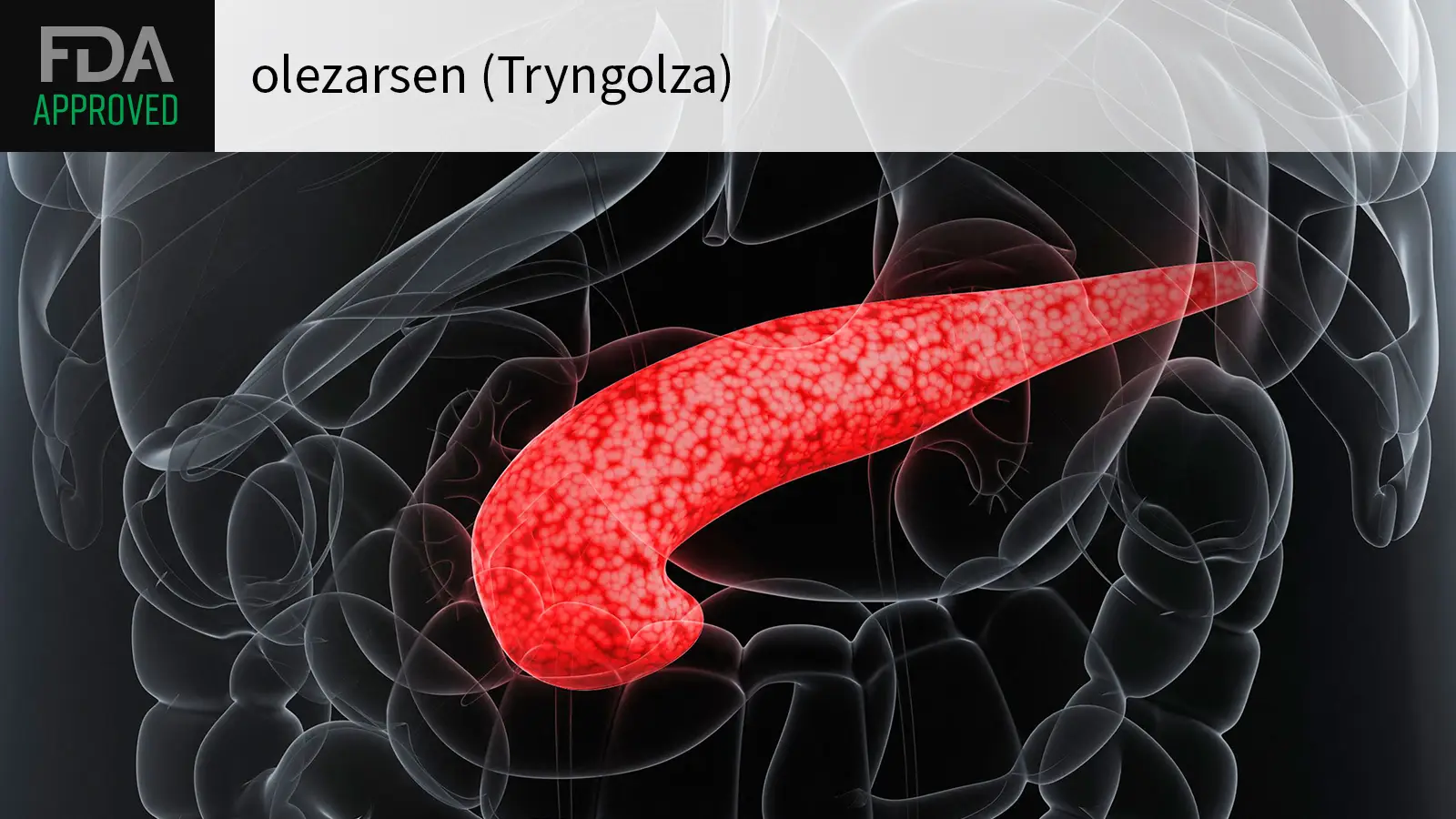
The FDA approved olezarsen (Tryngolza) to reduce triglycerides and the risk of acute pancreatitis in adults with severe hypertriglyceridemia, the agency announced on Wednesday.
Olezarsen, an mRNA-targeted antisense oligonucleotide that inhibits the production of apolipoprotein C-III, is indicated as an adjunct to diet for people with fasting triglyceride levels of at least 500 mg/dL.
The approval is a step toward answering the major unmet need of severe hypertriglyceridemia, a hard-to-treat risk factor for cardiovascular disease and acute pancreatitis. Current management usually consists of diet restriction, with traditional lipid-lowering medications showing limited effectiveness.
The FDA cited the CORE-TIMI 72a and CORE2-TIMI 72b studies for olezarsen’s expanded approval.
Together, these studies involved 1,061 participants with severe hypertriglyceridemia. Across the two studies, 47% and 37% of patients, respectively, had fasting triglycerides ≥880 mg/dL. They were randomized to receive 50 mg or 80 mg of olezarsen or placebo every 4 weeks for 12 months atop standard lipid-lowering therapy.
The drop in triglycerides was evident by month 6, with the olezarsen patients averaging a placebo-adjusted reduction in fasting triglycerides of 72% in CORE-TIMI 72a and 55% in CORE2-TIMI 72b.
Meanwhile, in an analysis of the two trials, the rate of acute pancreatitis was reduced by 85% with olezarsen — a notable finding, the FDA highlighted, as existing triglyceride-lowering medications showed no evidence of reducing the risk of acute pancreatitis in trials.
Safety and tolerability data were favorable in these studies, according to the FDA. The most common adverse reactions were injection site reactions and liver enzyme increases.
Olezarsen comes in a single-dose autoinjector, to be administered subcutaneously at 80 mg once a month.
The drug was initially approved in 2024 for a more narrow indication: as an adjunct to diet to reduce triglycerides in adults with familial chylomicronemia syndrome (FCS), a rare genetic disorder associated with high triglycerides.
Of note, a competing APOC3-targeting drug, plozasiran (Redemplo), was FDA approved last fall for the reduction of triglycerides in people with FCS.
Another therapy of interest for reducing triglycerides is an investigational long-acting triple receptor agonist from China, dubbed DR10624, which had favorable results in a phase II study released last year.
[ad_2]
Source link : https://www.medpagetoday.com/cardiology/dyslipidemia/121914
Author :
Publish date : 2026-06-24 19:23:00
Copyright for syndicated content belongs to the linked Source.