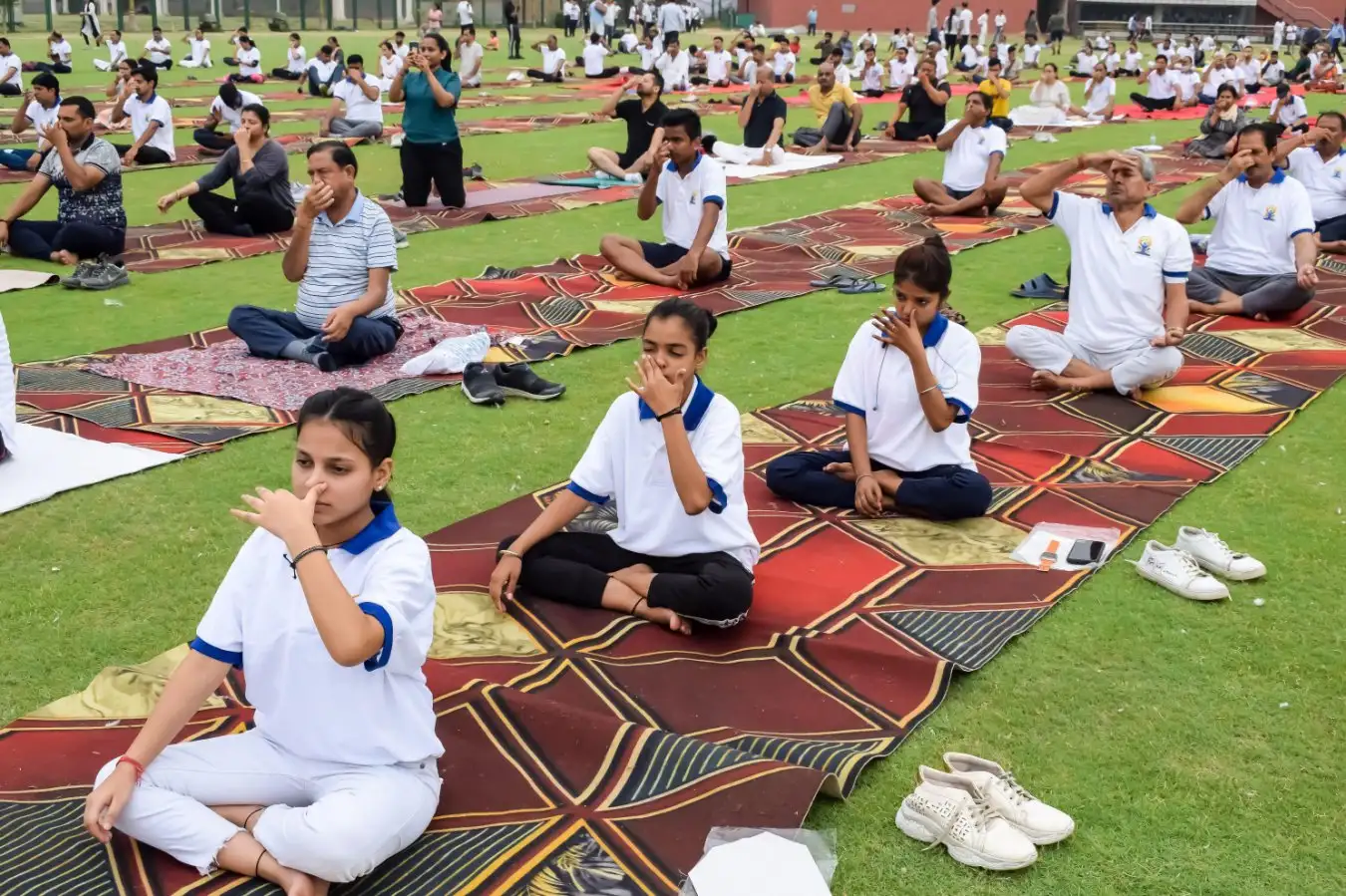
Slow breathing can calm the mind without thinking about it – but conscious breathwork probably helps
Rahul Sapra/Alamy
You don’t need to be a scientist to know that taking slow, deep breaths will calm you down. What’s less easy to explain, though, is how and why it works. The widespread expectation that a deep breath will calm you down raises the possibility that it’s at least partly a placebo effect – that it works because we expect it to, not because of any change in the body’s physiology.
Now, a study presented at the Embodied Minds Summit in Los Angeles on 3 May, has provided an answer. Jack Feldman, a neuroscientist at UCLA, showed that mice trained to slow their breathing rate displayed less fear-related behaviours in standard tests of mouse anxiety. This, says Feldman, shows that you don’t need to believe in the power of breathwork to get the benefits. “It’s not a placebo effect because the mice don’t know it’s supposed to calm them down,” he says.
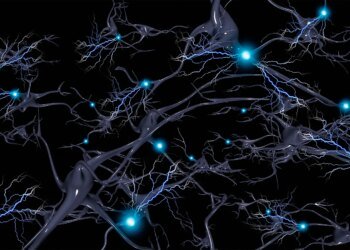
The study built on Feldman’s 1991 discovery that a small region of the brainstem, the pre-Bötzinger Complex (preBötC) is the master pacemaker of breathing rate in mammals. The preBötC mostly operates automatically, speeding and slowing the rate of breathing depending on the body’s needs. In humans, though, this region is connected to cortical brain regions involved in decision-making, allowing us to intentionally override the pacemaker to change the rhythm of our own breathing – a skill that enables us to talk, laugh and sing.
Mice don’t share the same skill set, so to manipulate their breathing rate, Feldman and his team used a technique called optogenetics, in which a light-sensitive protein is inserted into a specific set of neurons so that they can be activated with pulses of light. By targeting neurons in the preBötC that inhibit inhalation and lengthen exhalation, it was possible to use pulses of light to slow the mice’s breathing rate up to 70 per cent.
Slower breathing, less anxiety
After four weeks of daily optogenetic stimulation, the mice’s breathing rates slowed not only during the sessions but also between them, suggesting that they had been trained to breathe more slowly.
Three days after their last training bout, the mice were put through a series of experiments to measure anxiety-like behaviour. The results showed that trained mice were significantly less likely to freeze in a stressful situation than control mice. They also spent more time exploring open spaces while controls stuck to the dark corners for safety. This, says Feldman, demonstrates that slow breathing doesn’t have to be a deliberate choice to induce calm – it’s a happy side effect of the way the brain is wired.
The finding is important, says Andrea Zaccaro, a neuroscientist at the “G. d’Annunzio” University of Chieti-Pescara, in Italy because “it isolates a low-level or bottom-up component of the breathing–emotion relationship.” But, he adds, that doesn’t mean that mindful attention to the breath is a waste of time. “While slow breathing itself may have physiological effects, mindful attention to the breath could plausibly amplify, stabilize, or contextualize those effects,” he says.
So, while you don’t have to believe the meditating hype to get the benefits of slow breathing, you might find your inner calm a little faster if you do.
Topics:
Source link : https://www.newscientist.com/article/2525847-slow-breathing-can-calm-the-mind-without-any-need-for-mindfulness/?utm_campaign=RSS%7CNSNS&utm_source=NSNS&utm_medium=RSS&utm_content=home
Author :
Publish date : 2026-05-08 12:00:00
Copyright for syndicated content belongs to the linked Source.