Scientists are tweaking a powerful cancer therapy in hopes it could fight HIV instead, by supercharging patients’ own immune cells.
On Tuesday, researchers said a single dose of those revved-up cells strongly suppressed HIV in two people — one for nearly a year and the other for nearly 2 years — without requiring their usual medicines.
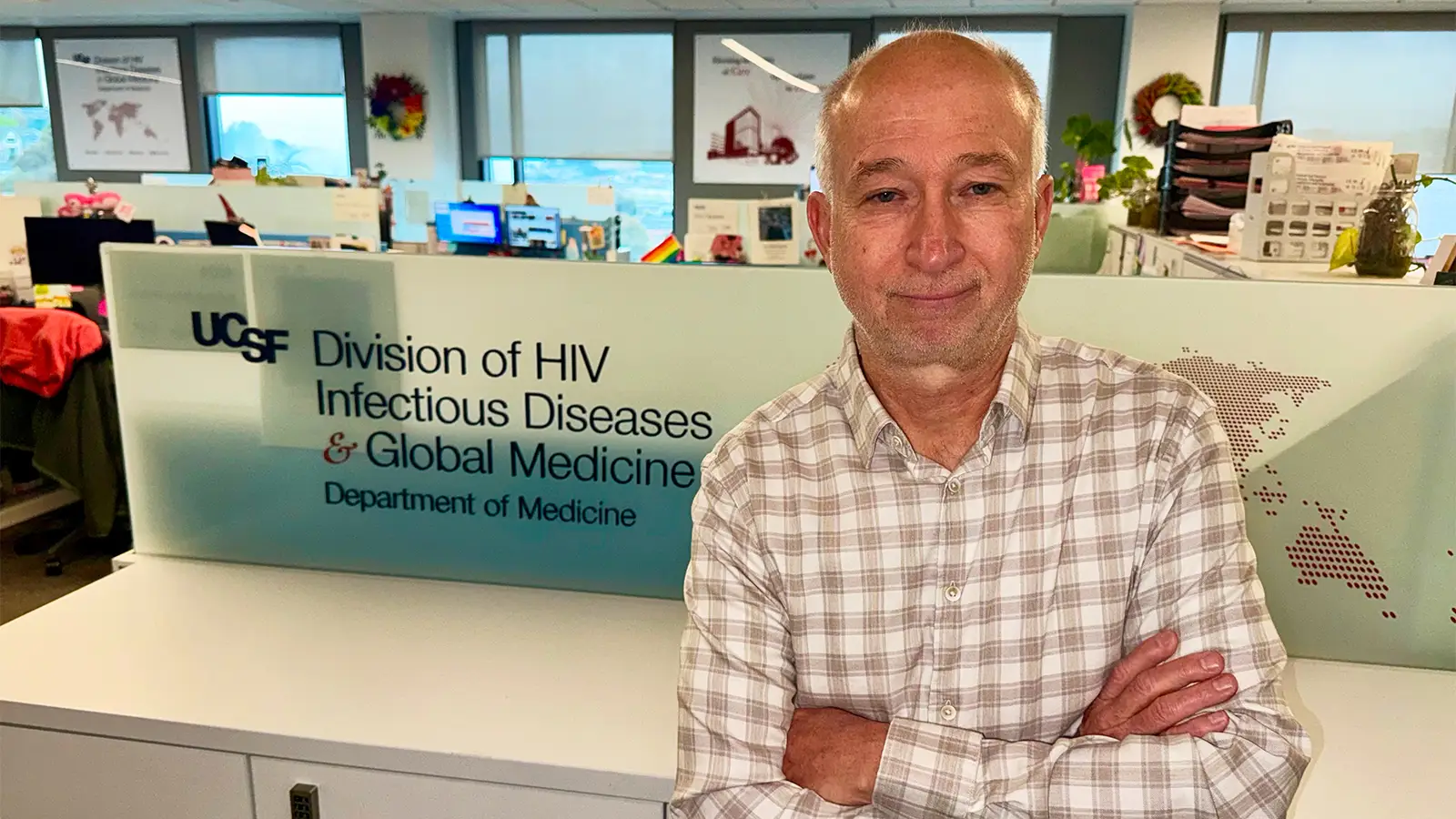
Larger and longer studies are needed to prove if chimeric antigen receptor (CAR) T-cell therapy might really offer long-lasting help for HIV, cautioned Steven Deeks, MD, of the University of California San Francisco, who led the research.
“We find the fact that two people have had such a really sustained response provocative,” he said. “There is a real need for a one-and-done, safe, and scalable cure … and this is one of the strategies that we’re pursuing.”
The data are being presented at a meeting of the American Society of Gene and Cell Therapy in Boston.
There are nearly 40 million people living with HIV around the world. Today’s medicines have turned the virus that causes AIDS from a fast killer into a manageable chronic disease, often keeping the virus at undetectable levels, but only if people can afford the drugs and stick with them. The virus hides out in reservoirs in the body and rebounds fast if people stop treatment.
Researchers have long hunted an elusive cure, pursuing such clues as a rare gene mutation that makes some people naturally resistant to HIV or how a handful of HIV patients who also had certain cancers were declared cured or in long-term remission after receiving a stem cell transplant, something too risky for most people.
CAR-T therapy involves taking T cells out of a person’s blood, genetically engineering them into “living drugs,” and infusing them back into the patient. They’re widely used to cure certain types of cancer and are being studied for other diseases.
For HIV, scientists at the nonprofit drug developer Caring Cross created CAR-T cells with dual features. They’re programmed to better find and kill HIV-infected cells — and engineered with protection against infection by the very virus they’re supposed to fight.
With that added armor, they should be able to reproduce enough to keep HIV in check, said Caring Cross executive director Boro Dropulić, PhD.
Deeks’ early-stage experiment tested different dosing strategies in people who stopped their HIV medicine the day they received their CAR-T cells. There were no serious side effects. The first three recipients showed no response and resumed their usual medicines.
Six others received a small amount of chemotherapy to make space for the new T cells. Those two strong responders saw their HIV drop to undetectable levels, inching up only occasionally when the CAR-T cells presumably got to work again. A third patient had a temporary response and resumed regular HIV treatment.
Those three patients all had started their original HIV treatment soon after they’d been infected, Deeks said. That makes sense because people treated early tend to have less HIV hiding in the body and a healthier immune system.
“This is certainly very fascinating that they’ve had this positive response,” said Hans-Peter Kiem, MD, PhD, a gene therapy expert at Seattle’s Fred Hutchinson Cancer Center who wasn’t part of the new study. He cautioned that it will take additional research to prove if CAR-T really works.
But the strategy is exciting because it’s “boosting what our body, our immune system, can already do,” said Andrea Gramatica, PhD, vice president for research at amfAR, the Foundation for AIDS Research, which is funding some work to create easier-to-use versions.
Source link : https://www.medpagetoday.com/infectiousdisease/hivaids/121227
Author :
Publish date : 2026-05-12 18:40:00
Copyright for syndicated content belongs to the linked Source.