[ad_1]
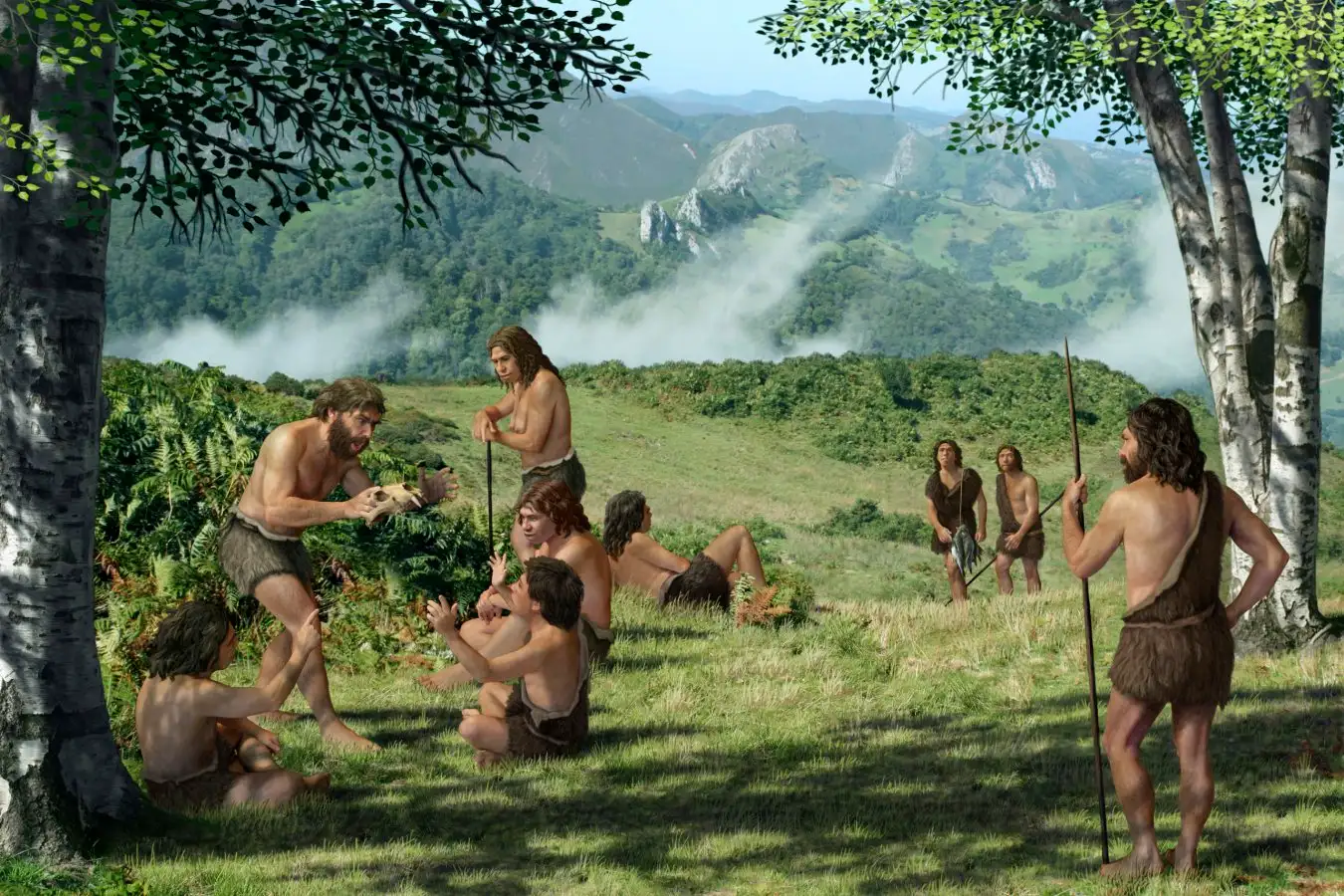
Ancient DNA can provide insights about Neanderthals’ social structure
MAURICIO ANTON/SCIENCE PHOTO LIBRARY
Some of the last surviving Neanderthals of north-western Europe may have lived in genetically diverse, well-connected groups, hinting that inbreeding wasn’t a major cause of their extinction about 40,000 years ago.
Genetic studies of Neanderthals (Homo neanderthalensis) have been limited by a lack of specimens that are preserved well enough to allow DNA analysis. Just four high-quality genomes have been available – three from the edge of the Neanderthals’ geographic range in Siberia – although there are more of lower quality. This means genetics hasn’t been able to tell us much about the social structure of their communities, but the existing genomic information did imply that as Neanderthals became fewer, they became inbred, which may have contributed to their demise.
Alba Bossoms Mesa at the Max Planck Institute for Evolutionary Anthropology in Leipzig, Germany, and her colleagues have now sequenced DNA from 27 Neanderthal remains from seven locations in Belgium and two in France, dating from 52,500 to around 40,000 years ago. One generated genome, from a woman cannibalised some 45,000 years ago in Goyet cave in Belgium, is of high quality.
“These newly analysed Neanderthal genomes are very important since they are from some of the youngest known Neanderthals and provide new insights into Neanderthal genetic diversity near the time they went physically extinct,” says Chris Stringer at the Natural History Museum in London.
Bossoms Mesa and her colleagues found that these 27 remains belonged to at least 11 individual Neanderthals. There was no evidence of an increasing burden of harmful genetic mutations or reduced genetic diversity, although all the Neanderthals had lower diversity than modern humans of the time.
This is unlike what has been seen in other Neanderthal groups, such as one in the Altai region of Siberia, where there was evidence of mating between close relatives, says Bossoms Mesa. “These Neanderthals are even closer to the Neanderthal disappearance, and they have more genetic diversity than their predecessors in the east.”
The genetic analyses also showed that these Neanderthals were more closely related to one another than to other late Neanderthal groups further east, in Croatia and southern Russia, and separated from a common ancestor with these other Neanderthals some 54,000 years ago.
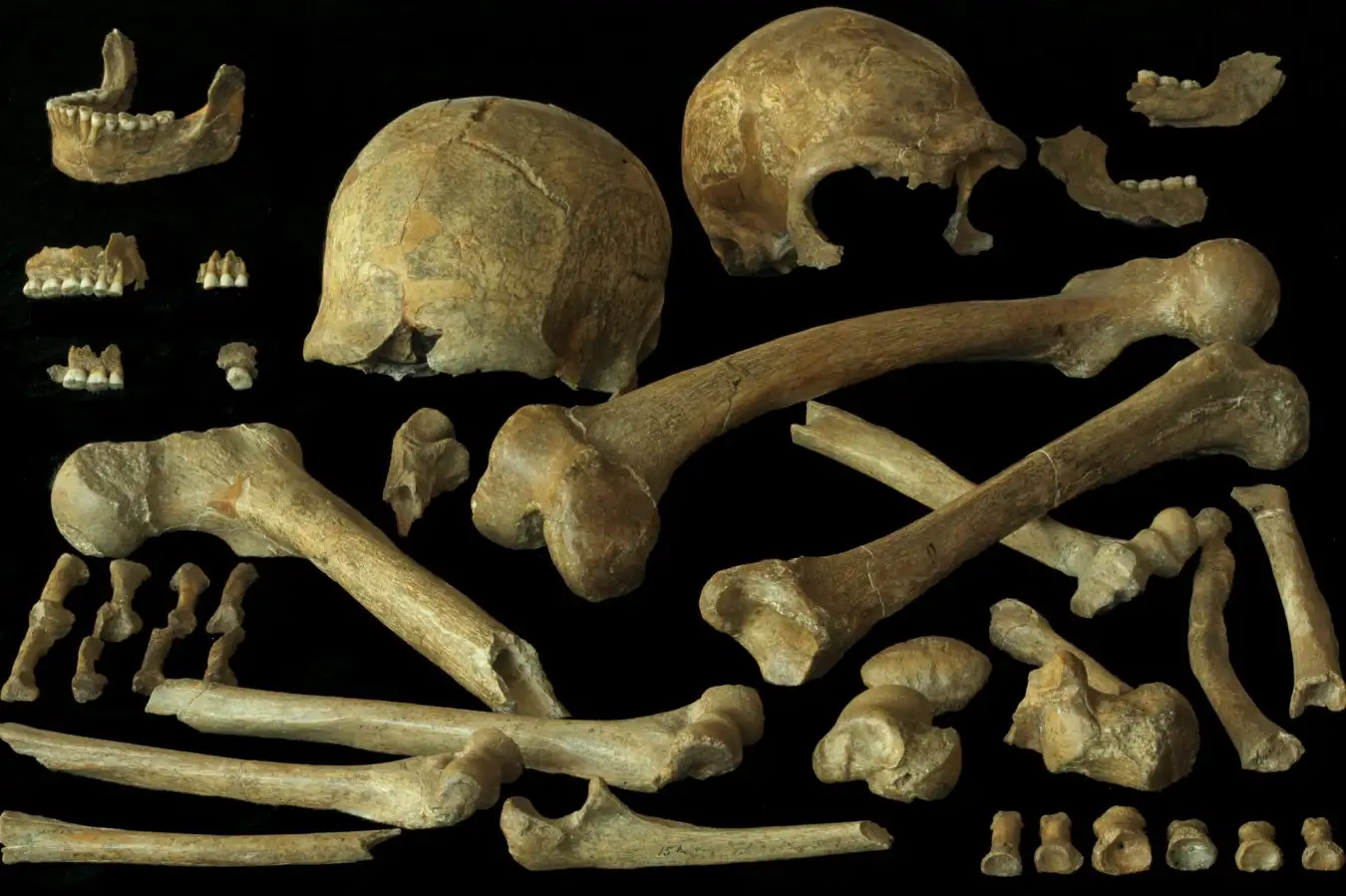
Neandertal bones from Spy Cave in Belgium
P. Semal, Royal Belgian Institute of Natural Sciences, CC-BY 4.0
The overall picture is that Altai Neanderthals might not be representative of the species, and these north-western Neanderthals, rather than being a small, isolated group, were part of a larger, well-connected population in the region, says Bossoms Mesa. Neanderthals in different regions conceivably had very different lives and population histories through a period of profound ecological and demographic change, she says.
Modern humans arrived in Europe some 47,000 years ago, so they would have overlapped with this Neanderthal group for many generations. However, despite clear evidence in modern human genomes that humans and Neanderthals interbred elsewhere, these European Neanderthal genomes showed no signs of genes from modern humans.
“This raises interesting questions about the dynamics between Neanderthals and modern humans that we still don’t fully understand,” says Tharsika Vimala at the University of California, Berkeley.
Bossoms Mesa says there are many possibilities to explain this finding. One is that interbreeding took place mainly in another region, such as the Levant, or there could have been a social aspect or hybrid incompatibility that meant babies resulting from inbreeding were viable or looked after only within human groups.
Stringer says the pattern of gene flow into modern human populations supports his idea that late Neanderthals were losing fertile individuals to Homo sapiens groups in a one-way process, which could have contributed to their demise.
Although maybe they shouldn’t be seen as going extinct at all. “They’re not really disappearing if part of them still survives in our genome,” says Bossoms Mesa.
Topics:
[ad_2]
Source link : https://www.newscientist.com/article/2531732-some-of-the-last-neanderthals-were-surprisingly-genetically-diverse/?utm_campaign=RSS%7CNSNS&utm_source=NSNS&utm_medium=RSS&utm_content=home
Author :
Publish date : 2026-06-24 16:00:00
Copyright for syndicated content belongs to the linked Source.