Tell someone you are visiting New York for work and they will be jealous. A Paris summit? Green with envy. But mention you are off to Chernobyl to cover the 40th anniversary of the world’s worst nuclear disaster and you get a different reaction.
Some people will earnestly warn you of the cancer risk, others will explain that radiation poisoning is unavoidable, all referencing sensationalist headlines, schlocky films and overly dramatic documentaries. That’s why we sought to gain access to the exclusion zone and dig up the facts. Has contamination faded, or worsened? Is nature mutated, burned and dying, or thriving? Will the area ever be repopulated? Could Russia’s invasion of Ukraine unlock further radiation?
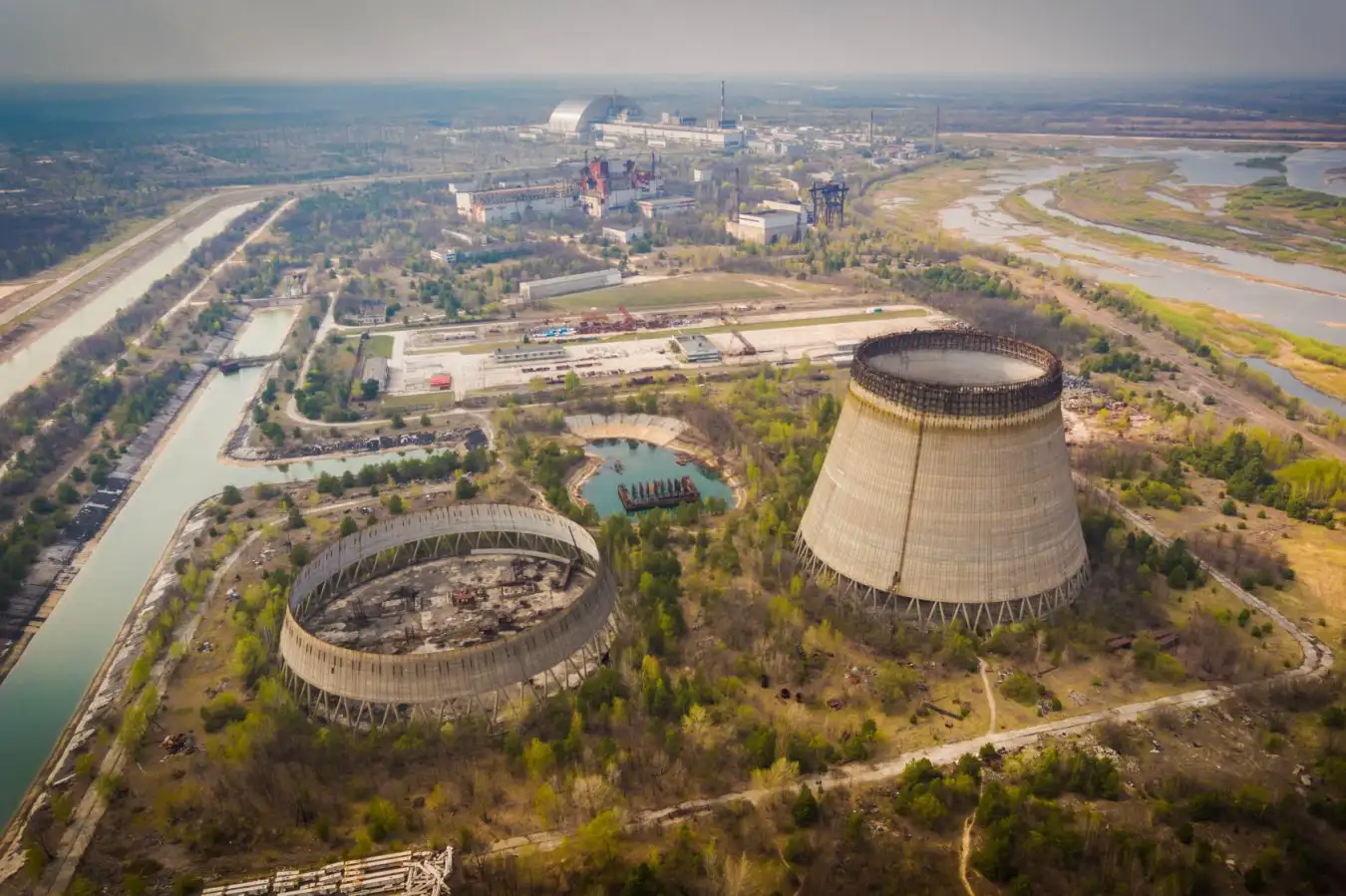
Four decades on, there is certainly a lot to explore: engineering efforts to contain radiation, environmental changes as the vast cooling ponds drain and become forest, the growing populations of rare animals, including wolves and moose. But the story is unfortunately also greatly complicated by the war, with occupation by the Russians, their widespread vandalism and the subsequent recapture and militarisation by Ukraine’s military.
“
The one-dimensional view of Chernobyl as a contaminated wasteland is wildly off the mark
“
Today, the area is a highly restricted military zone, sitting right on Ukraine’s border and a potential route for further invasions. With the help of scientists who are working there, New Scientist was given rare access. The visit, reported in depth, shows how the one-dimensional view of Chernobyl as a contaminated wasteland is so wildly off the mark: the region has a fascinating history; nature is bouncing back; contamination is largely under control; and the exclusion zone is a haunting, fascinating and beautiful place.
Now, like all of Ukraine, Chernobyl’s future hangs in the balance. The ongoing war makes managing the zone harder and doing science there infinitely more difficult. A drone attack has threatened future clean-up operations. The biggest threat to Chernobyl’s safety is perhaps no longer radiation – which can be monitored and managed with enough budget – but Russia.
Source link : https://www.newscientist.com/article/2522972-the-biggest-threat-to-chernobyl-is-no-longer-radiation/?utm_campaign=RSS%7CNSNS&utm_source=NSNS&utm_medium=RSS&utm_content=home
Author :
Publish date : 2026-04-15 18:00:00
Copyright for syndicated content belongs to the linked Source.