WASHINGTON — An investigational implantable tibial nerve stimulation (ITNS) device was associated with improved quality of life in patients with urgency urinary incontinence, commonly known as overactive bladder (OAB), data from a randomized trial showed.
More patients in the device group reported feeling “much better” or “very much better” on the Patient Global Impression of Improvement (PGI-I) scale compared with a sham control arm after 3 months (29.2% vs 13.4%, P=0.0133), reported Catherine Matthews, MD, of the Wake Forest University School of Medicine in Winston-Salem, North Carolina, at the American Urological Association annual meeting.
Any improvement in the PGI-I was reported by 57.7% of patients in the device group versus 31.3% in the control group at 3 months (P<0.01). After 3 months, patients were unblinded and sham patients had their devices turned on. At 12 months, 83% of patients reported improvements in the PGI-I.
There were also significant differences in reports of symptom bother and health-related quality of life measured by the Overactive Bladder Questionnaire Short Form (OABq-SF) in favor of the device at 3 months. At 3 and 12 months, patients who had the device met the minimally clinically important difference threshold for improvement in OAB symptoms and health-related quality of life.
The study’s co-primary endpoints of treatment response at 3 and 12 months — measured as a 50% or greater reduction in urgency urinary incontinence episodes — will be presented at a later date.
“This is the first prospective multicenter randomized double-blind sham-controlled trial of an ITNS device,” Matthews said. “And we see this really important improvement in quality of life, which is what our OAB patients care about.”
“When we look at all three of these measures together, we see that there was a meaningful and sustained and improved quality of life … in terms of PGI-I, in terms of symptom bother, and in overall measures of quality of life,” she noted. “And in a disease state that we know suffers from compliance with therapy, seeing the sustained benefit at 12 months is important.”
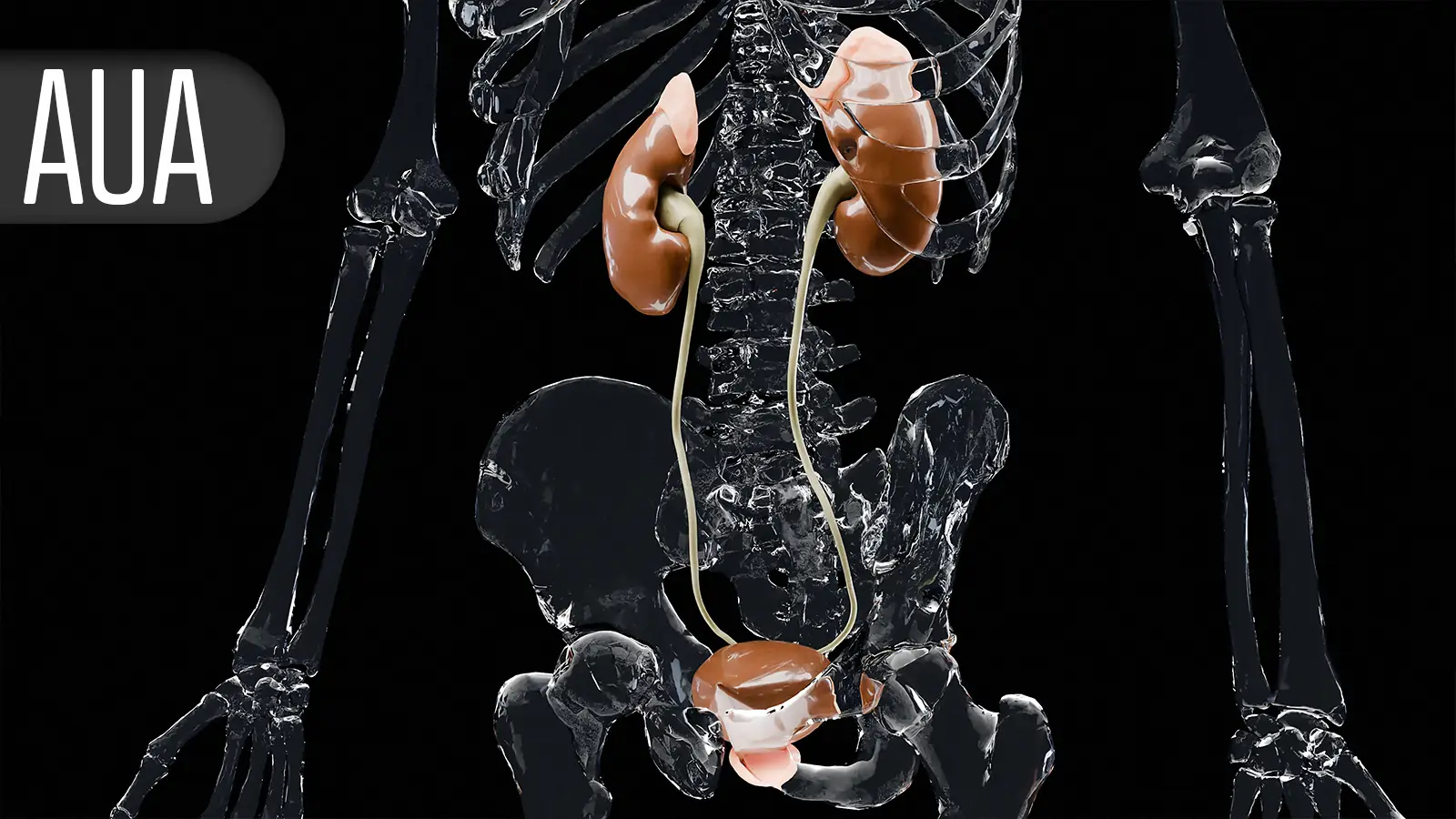
The Intibia system device is a small battery-powered nerve stimulator that is implanted just above the ankle, near the tibial nerve, through an outpatient procedure performed under local anesthesia. Once placed, the device, which has a battery life of about 8 years, delivers pulses to the nerves responsible for bladder control. The device was programmed to deliver a stimulation session for 30 minutes once a day for the first 2 weeks, and then 30 minutes weekly.
The INTIBIA pivotal study involved 208 men and women across 23 sites in the U.S. and the Netherlands who were randomized 2:1 to the ITNS device or sham. Across the two groups, mean age was 64-65, the majority were white, mean body mass index was 32, and the mean number of urgency urinary incontinence episodes per day was 4.3 to 4.5.
The device patients had a larger improvement in symptom bother as measured by the OABq-SF, with a mean change of -18.5 from baseline (based on a 100-point scale, with higher scores indicating greater symptom severity) compared with -10.2 in the sham group at 3 months (P=0.0068). This was also the case for health-related quality of life as measured by the OABq-SF (based on a 100-point scale, with higher scores indicating better quality of life), with a mean change from baseline of 17.2 versus 7.2, respectively, at 3 months (P=0.0007).
More patients in the device group versus the sham group exceeded the minimally clinically important difference for improvement in symptom bother (62.8% vs 41.8%, P=0.0046) and health-related quality of life (57.4% vs 42.4%, P=0.0463) at 3 months. In addition, 72% of patients met the minimally clinically important difference threshold for improvement in OAB symptoms at 12 months, while 74% met this difference threshold for improvement in health-related quality of life.
Matthews noted that there were no serious adverse events reported in terms of vascular or nerve injuries.
Results from this study are being presented to the FDA, she said.
Source link : https://www.medpagetoday.com/meetingcoverage/aua/121353
Author :
Publish date : 2026-05-19 21:39:00
Copyright for syndicated content belongs to the linked Source.