[ad_1]
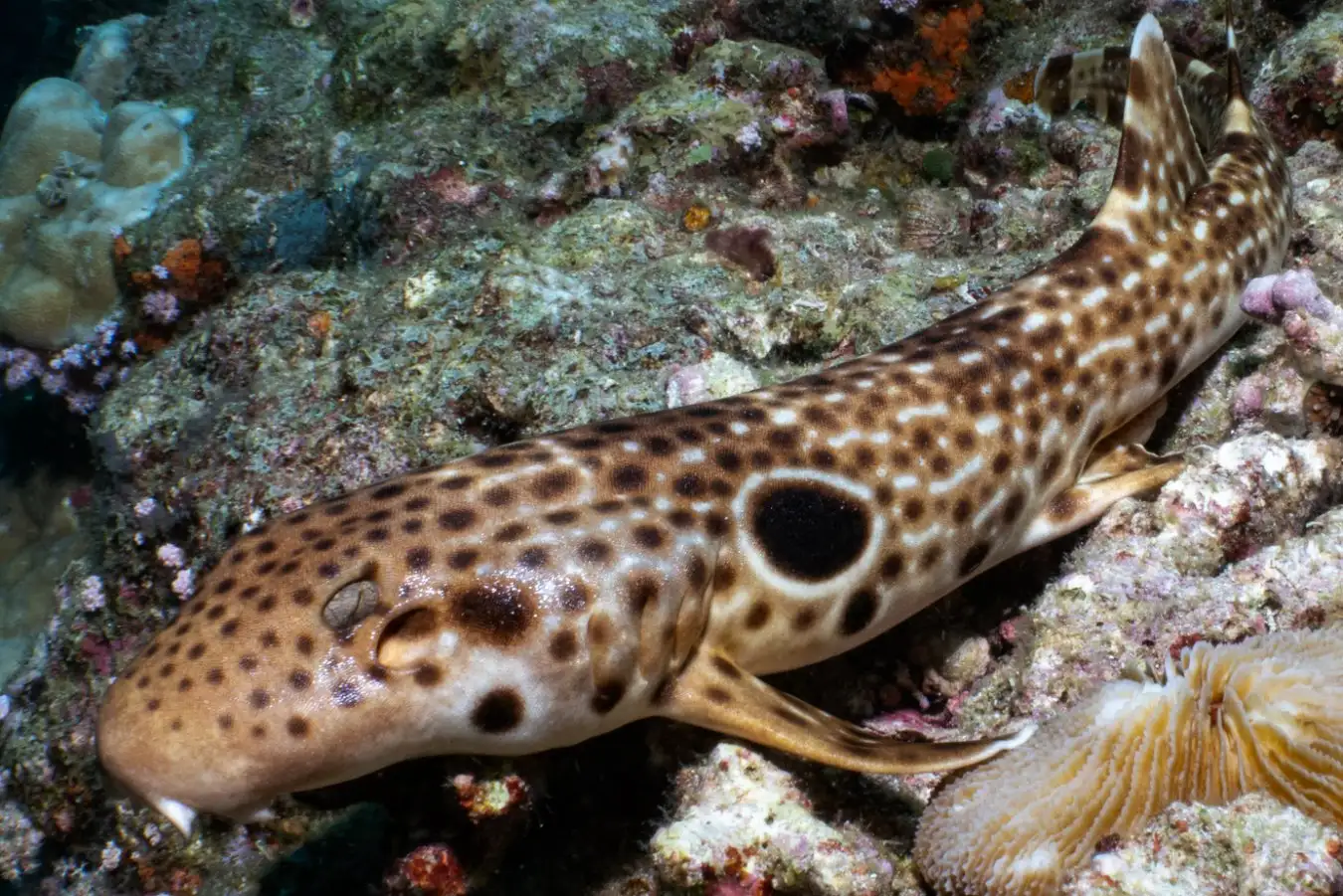
The newly identified walking shark, Hemiscyllium dudgeonae
MV Erdmann
A shark that can walk with most of its body out of the water, found on the shores of Papua New Guinea, has been identified as a new species.
Locals have long been aware of the strange fish, which they sometimes see waddling across reef flats at low tide. They call it kadedekedewa, which means “dog shark” or “lazy shark”.
Sharks in the genus Hemiscyllium, commonly known as walking sharks or epaulette sharks, use their pectoral fins like legs to move around and are only known to be in Australia and New Guinea.
The new species has been named Hemiscyllium dudgeonae after Christine Dudgeon at the University of the Sunshine Coast in Queensland, Australia, who was part of the team that formally identified it.
She first encountered the shark after midnight one day in March 2025, swimming in just a metre of water covering a meadow of seagrass in Milne Bay, Papua New Guinea.
Dudgeon was looking for a different species, Hemiscyllium michaeli, known to inhabit nearby waters. “Because it was so late and I had been in the water for a while, I was a bit over it,” she says. “Then I just saw one swimming along the bottom.”
She shone her torch in front of the shark, which was nearly three-quarters of a metre long, making it freeze as a defensive response. Then she grabbed it and gently employed a jiujitsu-like move that researchers call the “flip and tuck”. “You sort of just flip them over and tuck the tail under your armpit and it stops them from wriggling away,” she says.
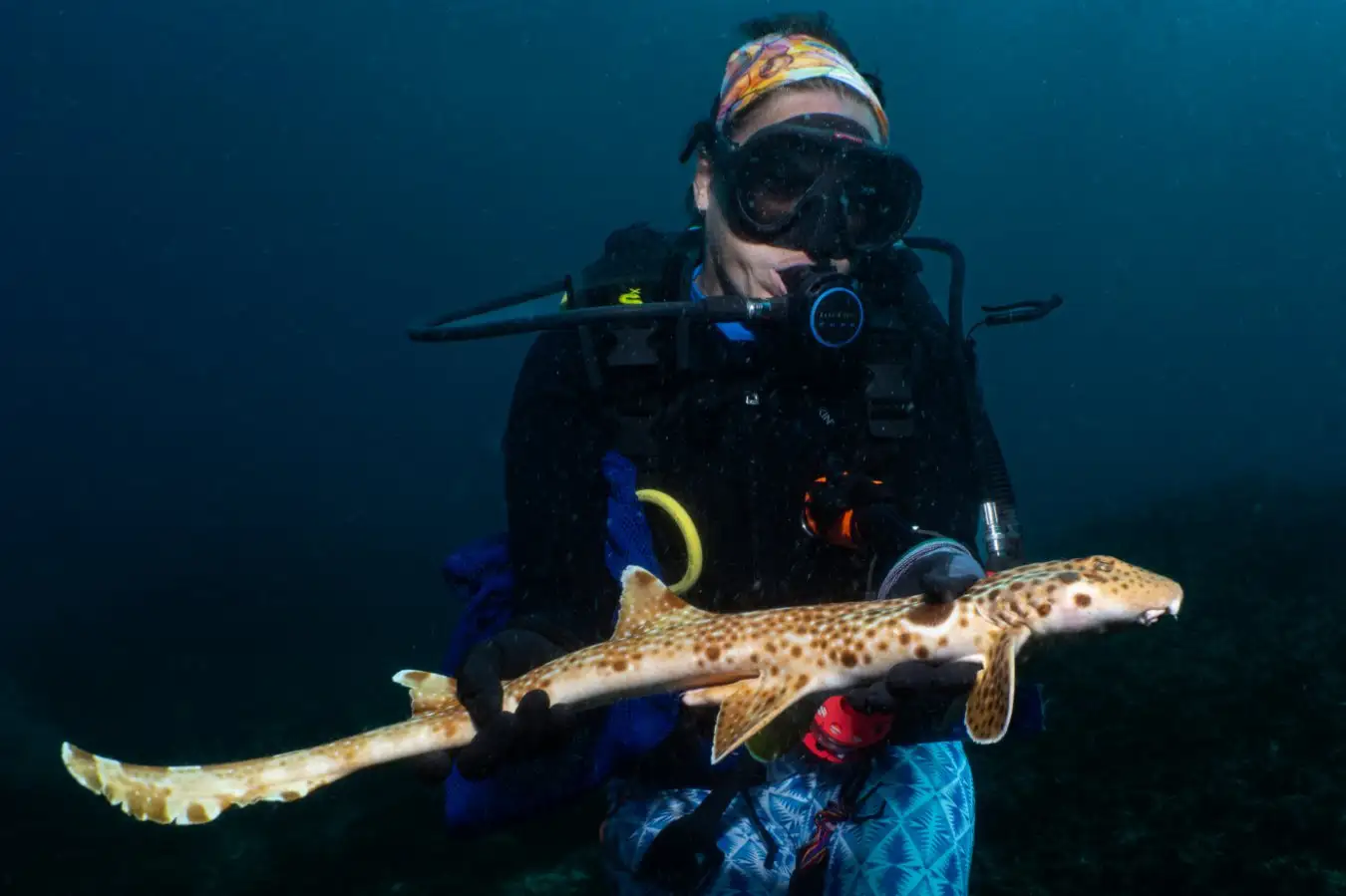
Christine Dudgeon with the shark named after her, Hemiscyllium dudgeonae
Nesha Ichida
Once the shark was secure, she handed it over to her colleague, Jess Blakeway, who was in a boat drifting nearby.
“Straight away, just from the colour pattern, I could see it was very distinctively different to the other species that we work with and the other species that we know of,” says Blakeway, who is also at the University of the Sunshine Coast.
The other nine species of walking shark we know of, which all feed on small invertebrates that live on the seafloor, are very similar in their body size and shape. They are most easily distinguished from each other by their skin patterning and colouring.
The species that the team had been expecting to find has a more leopard-like pattern. “This new one has got lots of spots and dashes that reminded me of braille or morse code,” says Blakeway.
Over the next few days at three nearby locations, the researchers caught another 11 individuals, three of which were kept for further study and nine of which had samples taken from them before being released.
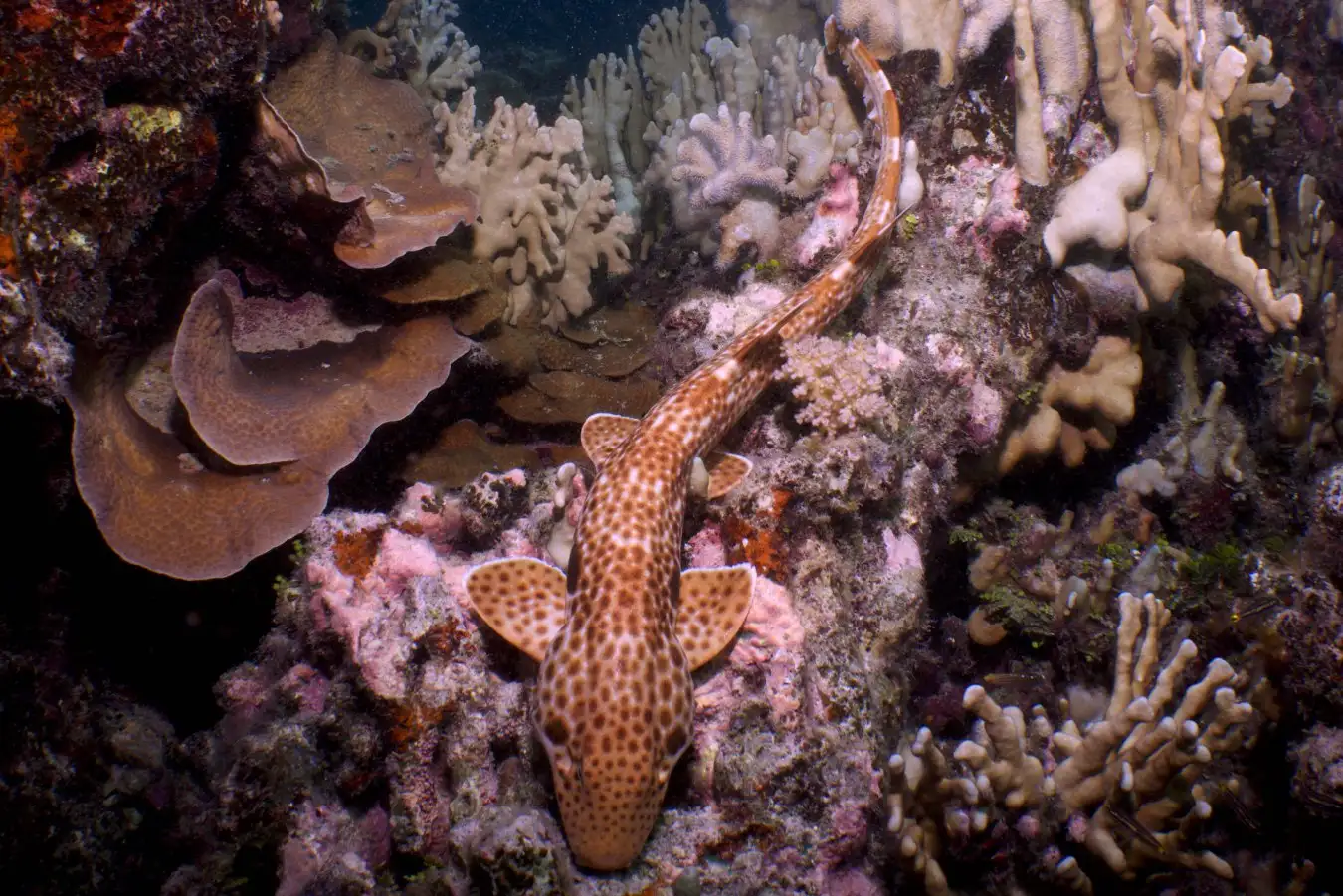
The species is thought to live only among the coral reefs of Milne Bay in Papua New Guinea
Nesha Ichida
Once back in the laboratory, the team carried out DNA tests that confirmed the new shark was genetically distinct from all the other species in the genus.
Papua New Guinea’s walking sharks face grave threats from habitat loss caused by coastal development, expansion of palm oil plantations and coral bleaching.
The researchers think H. dudgeonae is found only in Milne Bay and it is probably the most endangered of all the species in the group.
“This species adds to Papua New Guinea’s extraordinary biodiversity, yet it faces local extinction without urgent conservation action,” says Blakeway.
Topics:
[ad_2]
Source link : https://www.newscientist.com/article/2530536-walking-shark-found-in-papua-new-guinea-is-new-to-science/?utm_campaign=RSS%7CNSNS&utm_source=NSNS&utm_medium=RSS&utm_content=home
Author :
Publish date : 2026-06-16 13:00:00
Copyright for syndicated content belongs to the linked Source.