[ad_1]
The following is a transcript of the podcast episode:
Rachael Robertson: Hey everybody, welcome to MedPod Today, the podcast series where MedPage Today reporters share deeper insight into the week’s biggest healthcare stories. I’m your host, Rachael Robertson.
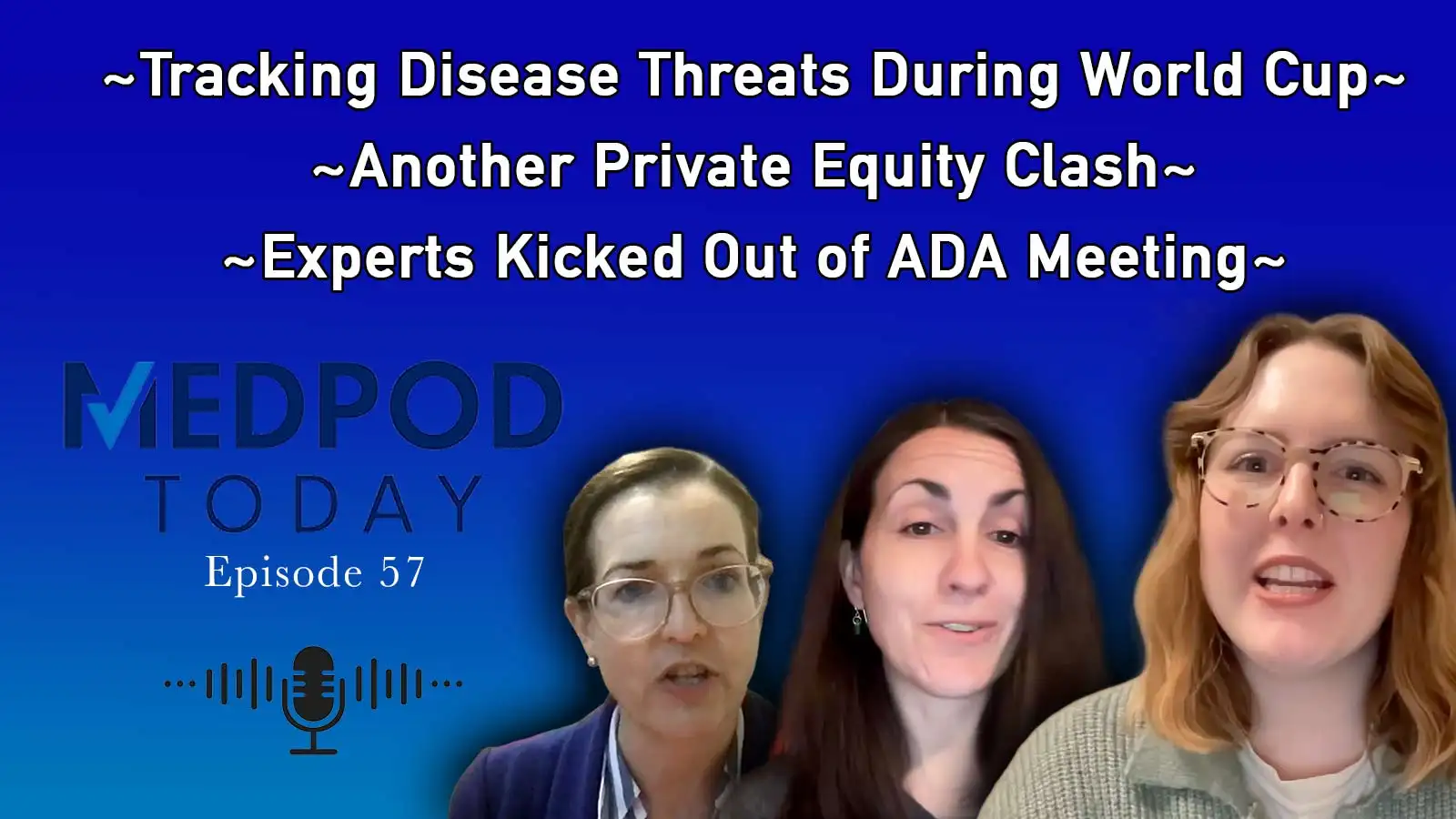
I’ll start off the episode today by telling you about how public health groups across the country are collaboratively monitoring infectious disease threats for the World Cup. Then Shannon Firth will talk about yet another clash between a physician group and private equity. Lastly, Kristina Fiore will run through how MedPage Today broke the news about the American Diabetes Association (ADA) kicking out five diabetes researchers from its annual conference, and the chaos that ensued after.
Kristina Fiore: The FIFA World Cup is in full swing, bringing millions of soccer — or football — fans from around the world to North American stadiums. As with any mass gathering event, risk of disease spread is heightened with people from around the globe mingling. A collaborative of public health groups are working together to track infectious disease threats during the World Cup. Reporter Rachael Robertson is here to tell us more.
Rachael, who is leading this collaboration?
Robertson: Efforts are being coordinated by the Health Security Operations Center, or HSOC, which is a project of Georgetown University’s National Center for Health Security and Resilience in partnership with MedStar Health. But there are more than 30 collaborators, like wastewater monitoring and health tech companies, epidemiologists, and science communicators, like Katelyn Jetelina, PhD, MPH, of Your Local Epidemiologist.
Rebecca Katz, PhD, MPH, is the director of HSOC, and she told me that when it comes to major global events like this, the onus to prepare for public health threats and conduct monitoring usually falls on the host country. Indeed, the CDC is coordinating with host cities and conducting surveillance. However, America’s public health infrastructure has been gutted in recent years, and the Trump administration removed the U.S. from the World Health Organization earlier this year. So this independent collaborative is stepping up. Katz told me that “this is really the first time we’re trying this, to see how a nongovernmental entity can work independently but in support of all of these efforts.”
Fiore: What exactly is HSOC and its collaborators doing to track public health threats?
Robertson: There’s a big network of data collection and analysis, from social listening to wastewater surveillance. It all funnels towards HSOC as the central command. HSOC is sending out daily situation reports to a list of more than 1,000 government officials, associations, and emergency managers at hospital systems. FIFA, who runs the World Cup, is not an official partner, but it’s on the distribution list.
The role of HSOC is to detect and prevent the spread of disease, to escalate concerning information, and then trigger a public health response early if threats arise. Basically, they’re helping decision-makers get a clearer picture of what pathogens are spreading as soon as possible. And, by the way, HSOC has a tiny budget, and most collaborators are contributing using their own resources, which isn’t necessarily sustainable in the long run, depending on how things go. They’d like to keep it up for the Los Angeles Olympics in 2028.
Fiore: Tell us more about wastewater surveillance and how it’s useful during the World Cup.
Robertson: For sure. Wastewater surveillance is being utilized by several HSOC collaborators. This technology became pretty popular during COVID, but the basic version has been around for decades. The gist is that wastewater samples are collected and analyzed for either specific pathogens via PCR (polymerase chain reaction) testing or with metagenomic sequencing, which can catch a wider web of pathogens by analyzing all the genetic material in a sample. PCR has like a 48-hour turnaround time, and metagenomic sequencing is more like a week, because it takes longer to analyze all of that.
Several experts compared wastewater surveillance to weather radar, where it kind of gives you a sense of what is circulating, when, and where. There are hundreds of collection sites across the country. While scarier pathogens like hantavirus and Ebola are still making headlines, HSOC doesn’t anticipate those being an issue during the tournament, but the surveillance systems would pick them up. Measles, norovirus, and the flu are all more likely to pop up. In a sense, the World Cup is kind of a bellwether for mass wastewater surveillance, and we’ll be paying attention to what kind of signals the testing picks up.
Fiore: We’ll be interested in hearing about those. Thanks so much, Rachael.
Robertson: Thanks, Kristina. I’ll take the host seat from here.
A group of emergency physicians were blindsided when the hospital system they worked with announced plans to end their contract and partner instead with a private-equity-owned practice management company. Shannon Firth is here with the story.
Shannon, start from the beginning. What happened?
Shannon Firth: So, Rachael, there’s a physician-led group called EMBR, or Emergency Medicine of Blue Ridge. It’s an independent democratic group where physicians have a voice in shaping patient care, or so they told me. Technically, the group only formed 2 years ago, but the six groups that consolidated to form EMBR actually have been around for about 25 years.
On the morning of April 2, EMBR president David Watts, MD, gets called into an emergency meeting with Valley Health. Now, Valley is the health system that EMBR partners with in West Virginia and Virginia. Valley tells Watts that there’s a clause in their contract that lets Valley terminate EMBR without cause if Valley gives them 6 months notice. So, come September 30, EMBR is out and private-equity-owned group SCP Health is in. And if EMBR physicians and their advanced practice colleagues want to keep working for Valley, they can work for SCP Health.
EMBR employees are then told the broad strokes of their contract, and that is that they would become 1099 employees, they’d lose insurance and retirement benefits. They would have malpractice insurance, but they take a pay cut and basically become independent contractors. Even more concerning, according to the doctors I spoke with, is that SCP Health plans to cut physician staffing from 90 physician hours per day to 70, and then double the number of hours per day for advanced practice providers from 30 to 60. One EMBR physician told me that was “a kick in the teeth.”
Robertson: What happened next?
Firth: So Watts set up a meeting with the American Academy of Emergency Medicine (AAEM), who recently helped another group of emergency physicians deal with a similar situation in Oregon. In that case, the Eugene Emergency Physicians sued their employer and the private equity firm that was trying to displace them. While technically the lawsuit settled, and there was no winning verdict, the employer actually backpedaled, and the Eugene emergency physicians kept their jobs. So, effectively the physicians won.
So AAEM writes a letter to Valley’s board of directors, and they highlight the importance of physicians having control over not only bedside care decisions, but hiring, firing, and staffing. In terms of fighting Valley’s actions, the first problem was the law. Two of Valley’s health hospitals are in West Virginia, which has some protections against the corporate practice of medicine. The other four are in Virginia, which has none.
The second problem was money. Even a short legal action can cost hundreds of thousands of dollars, which can be particularly frightening for younger physicians who are just paying off their medical debts, starting to build families, and trying to buy homes.
The third obstacle was time. In the 2 months that passed since Valley Health held that emergency meeting, some EMBR staff have actually found other jobs and put their homes on the market. EMBR estimates that about a quarter of their full-time staff plan to stay and work at Valley Health under this current plan, so even if EMBR filed a lawsuit and won back their contract, they would no longer be able to staff these hospitals.
Robertson: So, what will the doctors you spoke with do now?
Firth: So, one EMBR leader told me he’ll probably retire a few years early. He wants to give back, maybe work for an underserved community. But for now, he’s lobbying Congress and state lawmakers to help craft a bill to put stronger protections in place for independent physicians, so that what happened to EMBR doesn’t happen to other doctors.
Another EMBR doctor told me he’s still undecided, he doesn’t want to uproot his family, but he knows he has to put food on the table somehow, so he’ll take the summer to decide what to do next.
Robertson: Thanks, Shannon.
Firth: Thanks, Rachael.
Robertson: Five diabetes experts were kicked out of their society’s annual meeting in New Orleans earlier this month. Their offense? Handing out copies of an editorial published in the society’s flagship journal. MedPage Today broke that story, and Kristina Fiore is here to tell us about how it all unfolded.
Kristina, take us back to Friday, June 5, at the American Diabetes Association meeting in New Orleans. What happened?
Fiore: Sure, so our endocrinology reporter, Kristen Monaco, was attending the meeting, and she was outside of this keynote session where NIH Director Jay Bhattacharya, MD, PhD, was initially supposed to speak. Now, he ended up canceling at the last minute, but he sent a deputy instead.
Several diabetes experts were outside of the hall handing out copies of an editorial published in Diabetes Care, which is the flagship journal of the American Diabetes Association. One of those experts was Steven Kahn, MBChB, who is actually the editor-in-chief of that journal, and the lead author on that editorial. It criticizes the Trump administration’s changes to federal funding and the impact on diabetes research.
Kristen told me that within about 10 minutes of them handing out the editorials, convention center security began asking them to leave. Now, security is backed up by local and Louisiana state police. Kristen’s reporting instincts kicked in, and she started recording.
Her video shows one of the officers shoving one of the researchers, and it also shows meeting security ripping the stack of editorials out of Kahn’s hands. Next, the researchers are escorted out of the building, and they’re asked to hand in their badges.
We quickly wrote a story and published the video, and we sent everything out as a breaking news alert. Not long after that, a lot of other outlets had picked up the story, and it broke pretty big.
Robertson: Did those researchers end up getting their badges back?
Fiore: No, they didn’t. So, the ADA sent out an email response by the end of the next day, Saturday, June 6. And after that, Kahn said they were offered their badges back, but he said there was no apology and no attempt to bring everyone back together to talk about what happened. So, all five of the experts who were kicked out declined the offer to return. Now, one of them did pick up his badge, but just as a memento of what had happened at the meeting.
Robertson: Was there any other fallout during the meeting?
Fiore: There was. At least two ADA leaders resigned, president-elect Jennifer Green, MD, and scientific sessions planning committee chair Mark Atkinson, PhD, both gave up their positions with ADA. Sources said the resignations were in fact in protest of the ADA actions.
There was also a walkout by dozens of attendees during the presidential keynote session on Sunday morning. They held a banner that said “we stand with science.” There was a change.org petition started by renowned diabetes expert David Nathan, MD, that garnered thousands of signatures, and another very well-known diabetes expert, John Buse, MD, PhD, made a statement during a session that he chaired that Kahn was supposed to speak at. Buse noted that there were “no protests, no speeches, no placards, no bullhorns.” He called on attendees to applaud Kahn’s “standing up for science,” and that prompted a standing ovation.
Robertson: Did the ADA ever apologize?
Fiore: Yeah, so after the meeting ended, the ADA CEO issued a video apology, saying he was “very pleased to see the ADA recognizes they erred. This is a good start to healing.”
I think a lot of physicians and researchers were just stunned that their colleagues could be kicked out of a meeting for handing out copies of an editorial published in a scientific journal, and in this case, the organization’s flagship journal. We asked in our weekly survey if ADA was justified in kicking out the five attendees, and 95% of more than 300 respondents said no. Sadly, I think many people have come to expect something like this to happen, given the political attacks on science in the past year and a half.
Robertson: I’m sure you will let us know if there’s any more fallout from this story. Thanks so much, Kristina.
Fiore: We definitely will. Thanks, Rachael.
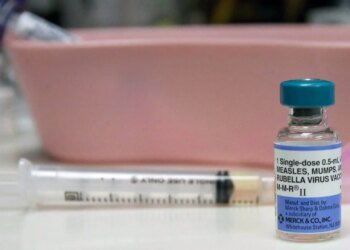
Robertson: And now, a quick measles update before we go. Last week there were 32 new measles cases. However, the World Cup just began, and nearly half of the 48 participating nations have active measles spread in their home country. The week before, there were 56 new cases. Most of the cases in the past 2 weeks were in Virginia and Pennsylvania. To see the interactive breakdown of measles spread, check out our measles map, which is updated at the top of each week.
And that is it for today. If you like what you heard, leave us a review wherever you listen to podcasts, and hit subscribe if you haven’t already. See you again soon.
This episode was hosted and produced by me, Rachael Robertson. Sound engineering by Greg Laub. Theme music by Palomar. Our guests were MedPage Today reporters Rachael Robertson, Shannon Firth, and Kristina Fiore. Links to their stories are in the show notes.
MedPod Today is a production of MedPage Today. For more information about the show, check out medpagetoday.com/podcasts.
[ad_2]
Source link : https://www.medpagetoday.com/podcasts/anamnesis/121839
Author :
Publish date : 2026-06-19 20:00:00
Copyright for syndicated content belongs to the linked Source.