
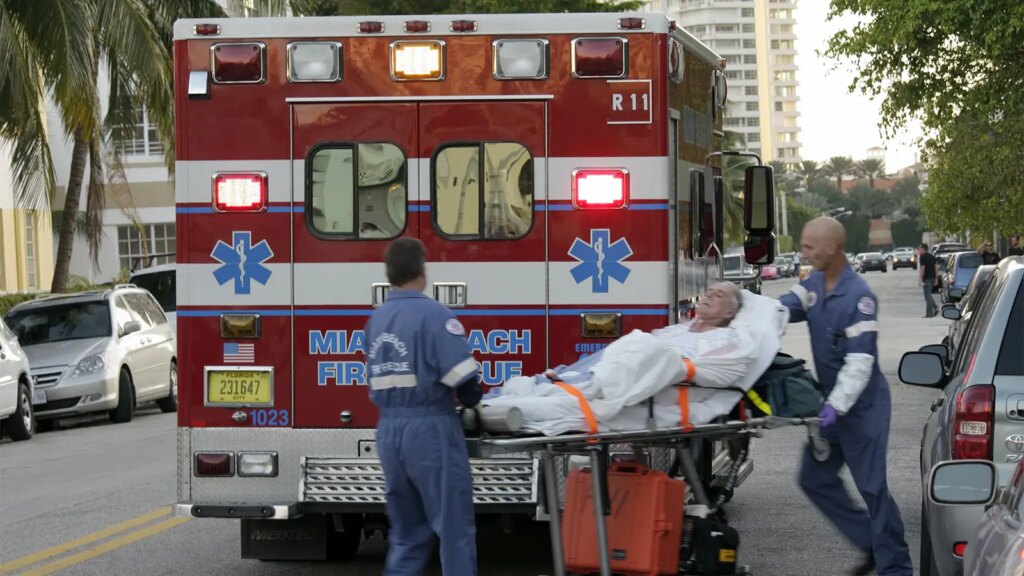
Your patient called 911. They had no say in which ambulance responded. The dispatcher chose, the system routed them, and a crew arrived. Care was delivered. Transport was completed, and weeks later, a bill arrived for $900, $1,500, $2,400, or some other absurd amount. Sure, their insurance covered part of it, but the rest landed on them. And under current federal law, every part of that scenario was entirely legal.
The No Surprises Act, which took effect in January 2022, was a landmark patient protection measure that eliminated surprise billing across most emergency and out-of-network settings. It covered air ambulances. It covered out-of-network emergency physicians, anesthesiologists, and radiologists. It explicitly did not cover ground ambulances, which are the most common form of emergency medical transport, leaving an estimated 1.5 million privately insured patients exposed to surprise bills each year.
As a paramedic who has worked within private emergency medical services (EMS) for nearly a decade, I have watched this gap widen in real time. Patients are stabilized and transported, and then they’re left to navigate a billing system that they don’t understand and that federal law has declined to regulate. This is a gap with direct clinical consequences that emergency and acute care providers should understand.
The Numbers
Approximately 85% of emergency ground ambulance rides are out-of-network. A 2020 Health Affairs analysis found that roughly half of emergency ground ambulance rides resulted in an out-of-network charge for privately insured patients, with a median surprise bill of $450. High-end cases routinely reach into the thousands.
The clinical consequence that tends to receive the least attention is that some patients are delaying or forgoing 911 calls because they fear the bill. This is not a hypothetical. It is a documented pattern of care avoidance driven by financial calculation rather than medical judgment, and it means that some of the patients not arriving in the emergency department are making that decision at home, alone, weighing the cost of the ambulance against the severity of their symptoms.
That calculation will not always go the right way.
Why the Gap Exists and Persists
The exclusion of ground ambulances from the No Surprises Act was deliberate. Congress cited the complexity of ambulance regulation, referring to the mix of private companies, municipal fire departments, hospital-based services, and volunteer squads, as a reason to defer action. The American Ambulance Association lobbied successfully for the carve-out, arguing that the No Surprises Act’s arbitration framework would be unworkable for ambulance providers. In its place, Congress created the Advisory Committee on Ground Ambulance and Patient Billing (GAPB committee) to study the issue and return with its recommendations.
The committee delivered its report in August 2024. Its recommendations were specific and actionable: prohibit balance billing for out-of-network ground ambulance services; cap patient cost-sharing at the lesser of $100 or 10% of the bill; require insurers to process payments within 30 days; and mandate billing transparency. On reimbursement rates, the committee recommended deferring to state and locally set rates with federal guardrails, which is a framework designed to protect rural and smaller agencies from rate compression while still shielding patients.
Congress has not acted on those recommendations.
Why State Solutions Aren’t Enough
Twenty-two states have enacted some form of ground ambulance billing protection. It sounds like meaningful progress, and in some cases it is. But state laws cannot reach self-funded employer-sponsored health plans, which are governed by the Employee Retirement Income Security Act of 1974 (ERISA) and explicitly preempted from state regulation. Approximately 63% of workers with employer-sponsored insurance are in self-funded plans. That means the majority of working Americans with job-based coverage remain unprotected regardless of what their state has done. A patient in a state with strong ambulance billing laws may still receive a surprise bill if their employer uses a self-funded plan, which is something that the largest employers almost uniformly do.
This is not a gap that more state legislation can close. It requires federal action.
What the Clinical Community Can Do
Physicians and other acute care providers are positioned to move this issue in ways that EMS providers alone cannot. Emergency medicine, hospital medicine, and primary care organizations carry legislative influence that individual paramedics do not. When professional societies weigh in on patient safety issues — and care avoidance driven by billing fear is a patient safety issue — Congress listens differently than when it hears only from industry stakeholders and patient advocates.
The GAPB committee has done the analytical work. The report is on Congress’s desk. What has been missing is urgency from the clinical community. This refers to the providers who see the patients who waited too long, or the family members who explain that their loved one didn’t call because they were worried about the bill.
Every month without federal action is another cycle of patients absorbing costs they had no power to prevent, for a service they had no power to choose. The No Surprises Act was a genuine achievement with one significant exception baked into it. That exception was always meant to be temporary. It has not been.
Emily James is a nationally registered paramedic with 10 years of experience in emergency medical services, including extensive work as a travel paramedic in both urban and rural systems across the U.S. She is completing a Master of Science in Emergency Management.
Please enable JavaScript to view the comments powered by Disqus.
Source link : https://www.medpagetoday.com/opinion/second-opinions/120845
Author :
Publish date : 2026-04-19 16:00:00
Copyright for syndicated content belongs to the linked Source.