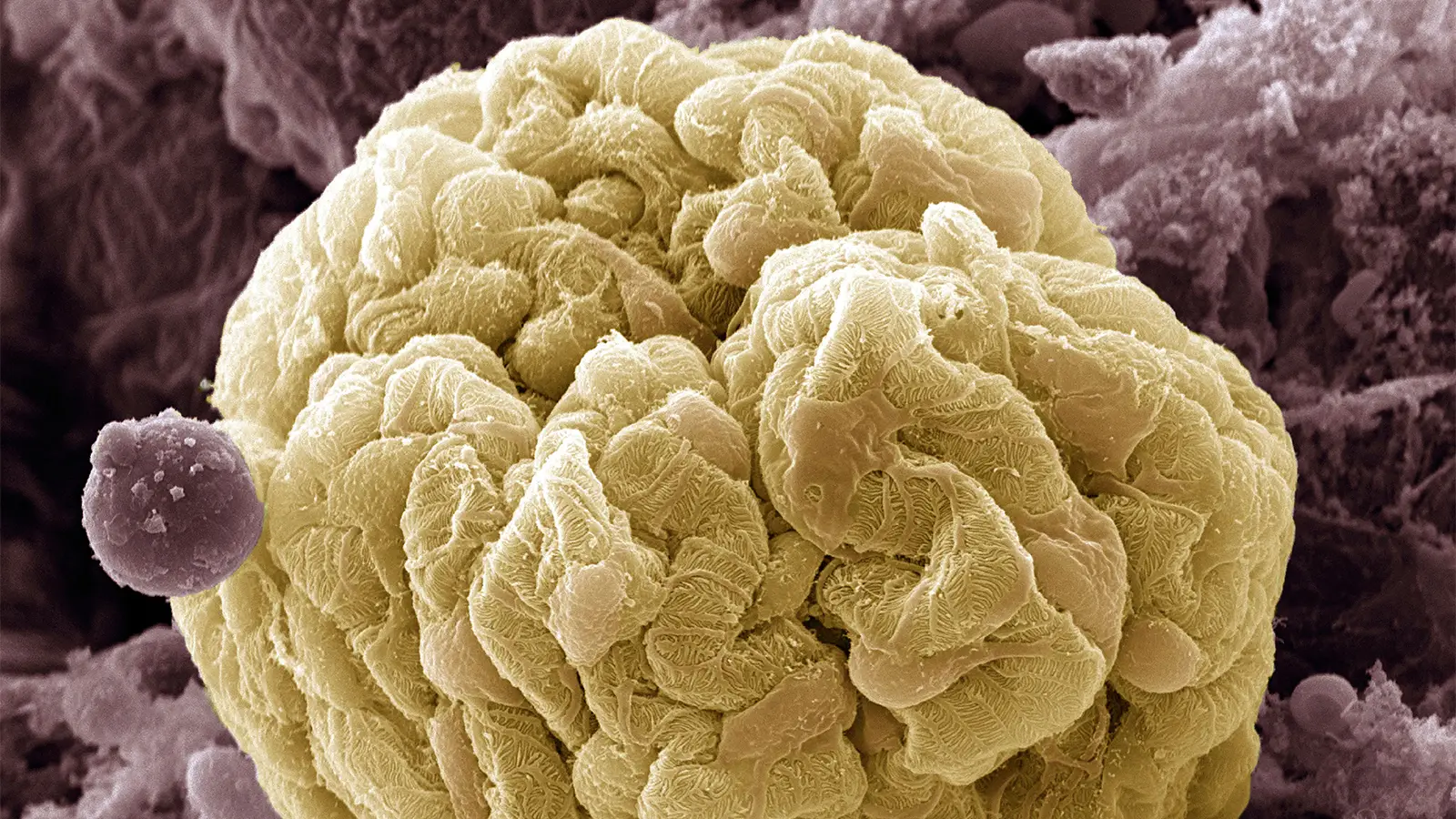
Focal segmental glomerulosclerosis (FSGS), a progressive kidney disease with an estimated global prevalence of 4%, occurs when scarring develops on the glomeruli. This scarring leads to proteinuria and, in some cases, end-stage renal disease.
Patients fall into one of three categories of FSGS during diagnosis: primary FSGS, with no known underlying reason; secondary FSGS, which is spurred by another underlying condition; or genetic FSGS. Knowing the underlying cause is key to choosing the right treatment plan.
“Distinguishing primary from secondary FSGS is essential, as secondary FSGS does not benefit from immunosuppression or steroids and may even be harmed by such treatments,” noted Krishna Baradhi, MD, of the University of Oklahoma in Tulsa, and co-authors in StatPearls.
Determining Whether It’s Primary FSGS
After an FSGS lesion turns up on a patient’s kidney biopsy, the next step is to test for the presence of nephrotic syndrome, according to Kidney Disease: Improving Global Outcomes (KDIGO) guidelines.
If the patient has a proteinuria level above 3.5 g/day plus a serum albumin below 30 g/L with or without edema — especially with diffuse podocyte foot process effacement — primary FSGS is likely. First-line treatment for primary FSGS involves immunosuppression with high-dose oral glucocorticoids, the guidelines advise.
“Primary FSGS typically progresses much faster than secondary FSGS, which is usually the result of a sustained insult,” Baradhi’s group noted.
In a 2025 cross-sectional study of 3,838 biopsy-proven FSGS patients, primary FSGS accounted for 16.6% of cases. Average standardized incidence was estimated at 1.7 per 100,000 patient-years for the entire U.S. population, with the highest incidence rates occurring in Black (3.2), Asian (2.7), and Pacific Islander (2.8) patients.
Myriad of Secondary Causes
If there is no sign of nephrotic syndrome, patients should be evaluated for a secondary cause, which occurs when kidney scarring is spurred by an underlying condition. These cases are marked by proteinuria levels below 3.5 g/day with or without hypoalbuminemia or if they have nephrotic-range proteinuria (>3.5 g/day) with a serum albumin above 30 g/L.
“Most cases of secondary FSGS are associated with increased loads on individual nephrons, a phenomenon known as maladaptive responses, which lead to glomerular hypertrophy,” noted Baradhi’s team. “Histopathologically, these cases are characterized by large glomeruli, prominent perihilar scarring, and partial foot process effacement.”
Secondary FSGS can be caused by a range of drivers, such as viral infections like cytomegalovirus, COVID-19, hepatitis B and C, and parvovirus B19. Strong evidence has also implicated HIV in FSGS.
Certain drugs can lead to secondary FSGS, such as lithium, anabolic steroids, calcineurin inhibitors, mTOR inhibitors, intravenous heroin, anthracyclines, and interferon therapy. Conditions like hypertensive nephrosclerosis, sarcoidosis, reflux nephropathy, renal dysplasia, oligomeganephronia, and sickle cell disease have been implicated in secondary FSGS as well.
Secondary FSGS can also stem from hemodynamic causes that cause glomerular hypertension, such as diabetes, obesity, high protein intake, and androgen abuse.
In secondary FSGS, immunosuppression should be skipped, and instead, supportive therapy should be initiated. Even if a secondary cause of FSGS is suspected, patients should continue to be monitored for worsening proteinuria and albumin reduction as this may indicate a primary FSGS.
When to Perform Genetic Testing
Over 40 genes have been linked with FSGS development including APOL1, NPHS1, NPHS2, WT1, ACTN4, CD2AP, TRPC6, and more. A small 2021 study found the most common genetic variants in adults with FSGS lesions were in collagen genes (52.4%, 11/21) and podocyte genes (38.1%, 8/21).
In the study, factors significantly predictive of having a causative FSGS genetic variant were family history of kidney disease (OR 13.8, 95% CI 3.7-62.4, P<0.001), absence of nephrotic syndrome (OR 8.2, 95% CI 1.9-58.1, P=0.004), and female sex (OR 5.1, 95% CI 1.5-19.9, P=0.01).
Patients with a strong family history are top contenders for genetic testing in FSGS. Genetic testing may also be considered for children with FSGS at birth or in infancy, for patients who don’t have a response to immunosuppression, or if there is a need to limit immunosuppression exposure or to determine the risk of recurrent disease after kidney transplantation, suggested Baradhi’s group.
Genetic testing may also be helpful in situations when living-related donor transplant is being considered, suggested Robert Woroniecki, MD, of Stony Brook Children’s Hospital in New York, and Jeffrey Kopp, MD, of the National Institute of Diabetes and Digestive and Kidney Diseases in Bethesda, Maryland.
“Because a substantial percentage (up to 30%) of sporadic, steroid-resistant nephrotic syndrome patients carry the specific genetic mutation causally linked to FSGS, it may be advisable that all patients who have failed steroids should be offered genetic screening for mutations at the time of or prior to starting more aggressive treatments, as those patients have been shown to unfavorably respond to immunosuppressant therapy,” they noted in a 2007 paper in Pediatric Nephrology.
Patients with genetic drivers of FSGS should be referred to specialized centers for management, KDIGO guidelines advise.
Source link : https://www.medpagetoday.com/spotlight/fsgs/121054
Author :
Publish date : 2026-05-01 13:43:00
Copyright for syndicated content belongs to the linked Source.