
Developed in partnership with the Our Partner
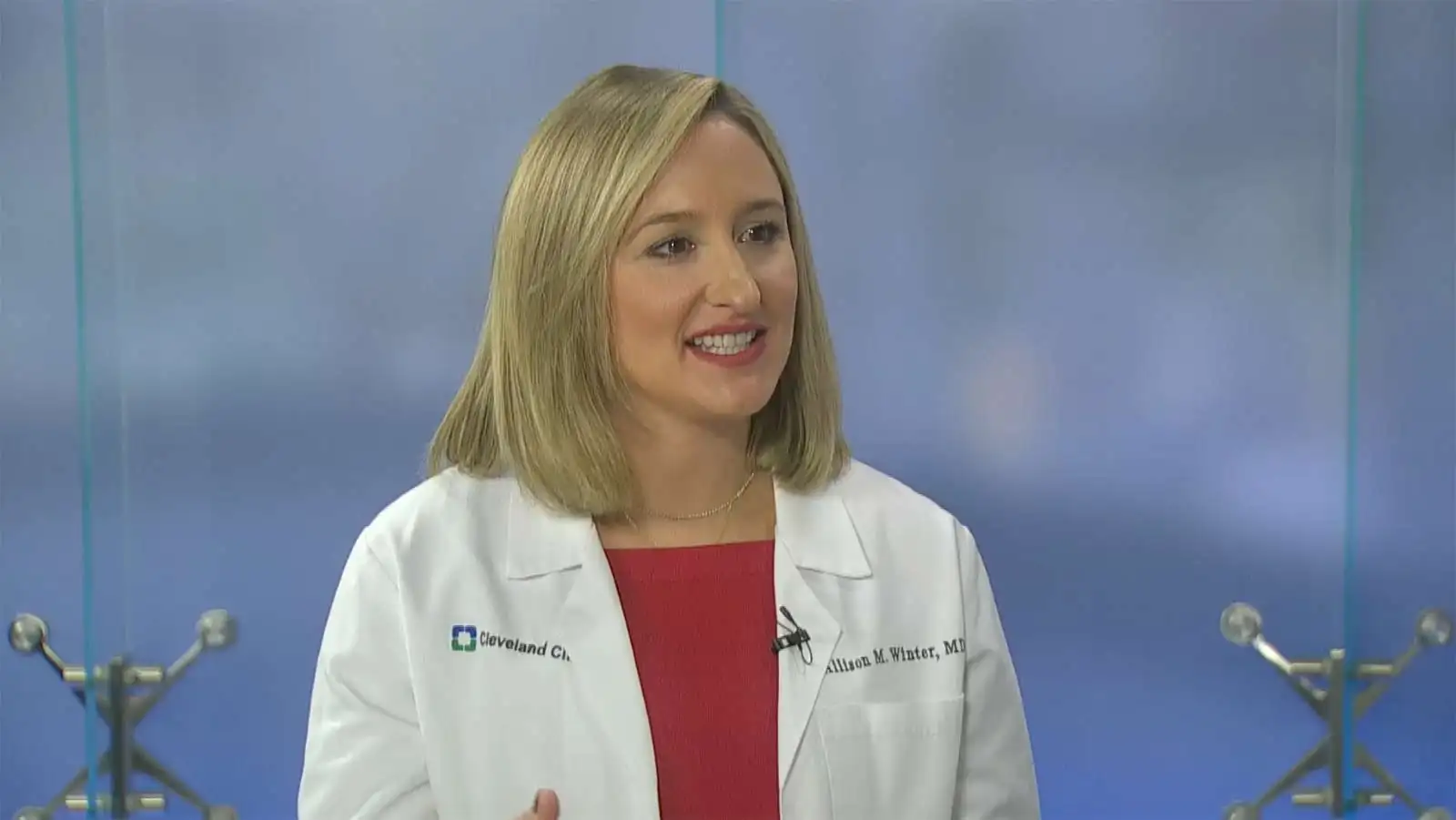
In “Beyond Diagnosis: CLL,” Cleveland Clinic hematologist/oncologist Allison Winter, MD, and host John Mangels continue their conversation on communicating effectively and empathetically with patients navigating a chronic lymphocytic leukemia (CLL) diagnosis.
Each monthly installment examines an individual aspect of these crucial discussions, including addressing misconceptions, explaining active surveillance, and supporting patients through evolving treatment decisions.
This fourth of six episodes focuses on how clinicians can discuss disease progression, introduce treatment when the time is right, and reassure patients that a change in status does not necessarily mean a crisis.
The following is a transcript of their remarks:
Mangels: Welcome to “Beyond Diagnosis,” where we talk with doctors about talking with patients. I’m your host, John Mangels. Today, we’re discussing chronic lymphocytic leukemia. It’s a serious but often slow-moving illness, which can make communicating about it more complicated. Our guest is Cleveland Clinic hematologist Dr. Allison Winter. She helps guide patients with CLL through their journey from diagnosis to watchful waiting and treatment. Dr. Winter, thanks so much for being here.
Winter: Thank you for the invitation and the opportunity to share my insights.
Mangels: So a change in a patient’s disease status can change the communication dynamic as well. When CLL moves from the stable phase to the treatment phase, what emotional changes do you see in patients?
Winter: A lot of times I actually see relief.
Mangels: Really?
Winter: I see relief because they’re so used to the active surveillance phase, when we say, “Okay, here are the labs, here’s how you’re feeling. We’re going to continue to watch.” But a lot of times when we’re getting to that period where we’re approaching treatment, patients are now symptomatic. And I think there’s some worry that I’m going to say, “Let’s continue to watch.”
But instead I say, “I can hear that you’re experiencing these symptoms and I’m combining it with this lab work or this CT scan, and I think we’re getting to that period where we need to consider treatment initiation,” and I see relief. Oh, they’re listening to me.
Mangels: That was the word that occurred to me. It must feel somewhat relieving to know that I’m having these symptoms and now you’re going to go after them.
Winter: They’re relieved that we’re going to do something about the symptoms. And usually there’s relief because I also say, “There are different options and we together can decide which is the best option for you. We’ll do that together. We’ll go over pros and cons.” There’s usually not an immediate urgency to treating CLL.
So we’ll look at symptoms and the lab work and we’ll say together we’re getting to that point we need to treat, but it doesn’t have to be tomorrow. So we can also plan around life events. Do you have a daughter’s wedding coming up? That’s okay. We can work around that.
So, another sense of relief that we can get patients feeling better, but also work with them to not just have a good option, but one that’s the most suitable for their lifestyle.
Mangels: I was going to ask you how you compassionately have that conversation, but you’ve said so much already about keywords like “together” and “we can work around things in your life.” It sounds like you really have given a lot of thought to how to do this, how to talk about the initiation of treatment in a compassionate way.
Winter: I have given a lot of thought. I have. And I don’t think it’s a one size fits all. And that’s one of the things that bothers me sometimes when I’m at these big research conferences is they simplify things down to numbers and mutation status.
And I try to say, yes, there’s data, but how can we use this data, but also know about you and your life and come up with the best situation, the best treatment based on these two things together.
Mangels: How do you differentiate between progression and crisis?
Winter: So usually there’s not crisis in CLL with the rare exception that sometimes there’s a patient who hasn’t seen a doctor in a very long time. And so when they’re diagnosed, we go right into treatment. So it’s usually the progression is slow. And that’s where I use warning signals. “Oh, I’m so glad you’re feeling well still, but I am seeing the hemoglobin going down,” and give them kind of a warning shot. “We may need to intervene on this in the coming 6 months to a year.”
Mangels: Do you find patients though kind of equate progression with crisis or have you in the conversations you’ve had before progression sort of laid the groundwork not to think that way?
Winter: I think for the most part I’ve laid the groundwork to not think that way. I use this really, I don’t know if it’s cliche or what it is, but I use this statement “when the juice is worth the squeeze.” I say it at the beginning when they first meet me, I say it along the way.
And so I’ll say, “Okay, here are your changing labs. It’s not a crisis. We’re not quite at the point where the juice is worth the squeeze, but make sure to call me if you’re feeling anything different or maybe we’re going to check the labs more frequently than we had been doing because we’re seeing changes.”
That way, it’s not a crisis. I say we’re going to swoop in when it makes sense before we get to crisis period. We don’t want to get to crisis period. We want to swoop in right when the time is right, right when the juice is worth the squeeze.
Mangels: Can you think of an example where you were able to help a patient sort of move beyond the initial fear of having progressed?
Winter: When we start to mention the word progression or changing of the blood counts, it can feel very scary. “Oh, I thought I was going to be on active surveillance longer.” And that’s when I start bringing in more details about how great our therapies are and how well I think they’re going to do on the therapies and how we’re going to minimize side effects from the therapies and it’s going to be okay.
Mangels: Thanks so much for your insights, Dr. Winter.
And thank you for joining us on “Beyond Diagnosis,” where we explore not just what physicians know, but how to effectively and compassionately share that knowledge with patients. See you next time.
Source link : https://www.medpagetoday.com/beyond-diagnosis/cll/120783
Author :
Publish date : 2026-04-14 17:18:00
Copyright for syndicated content belongs to the linked Source.