Public trust in federal health agencies is waning, especially in agency leaders, a survey showed.
Among 1,650 U.S. adults surveyed by the University of Pennsylvania’s Annenberg Public Policy Center, 43% said they had confidence in agency leaders versus 57% who said they did not, while 67% of respondents said they had confidence in career scientists at the CDC, NIH, and FDA versus 33% who did not.
“Only 5% of Americans say they are ‘very confident’ that the leaders at federal health agencies such as the CDC, NIH, and FDA are providing the public with trustworthy information about matters concerning public health, compared with 18% who are very confident in the career scientists at those agencies,” the center noted in a press release.
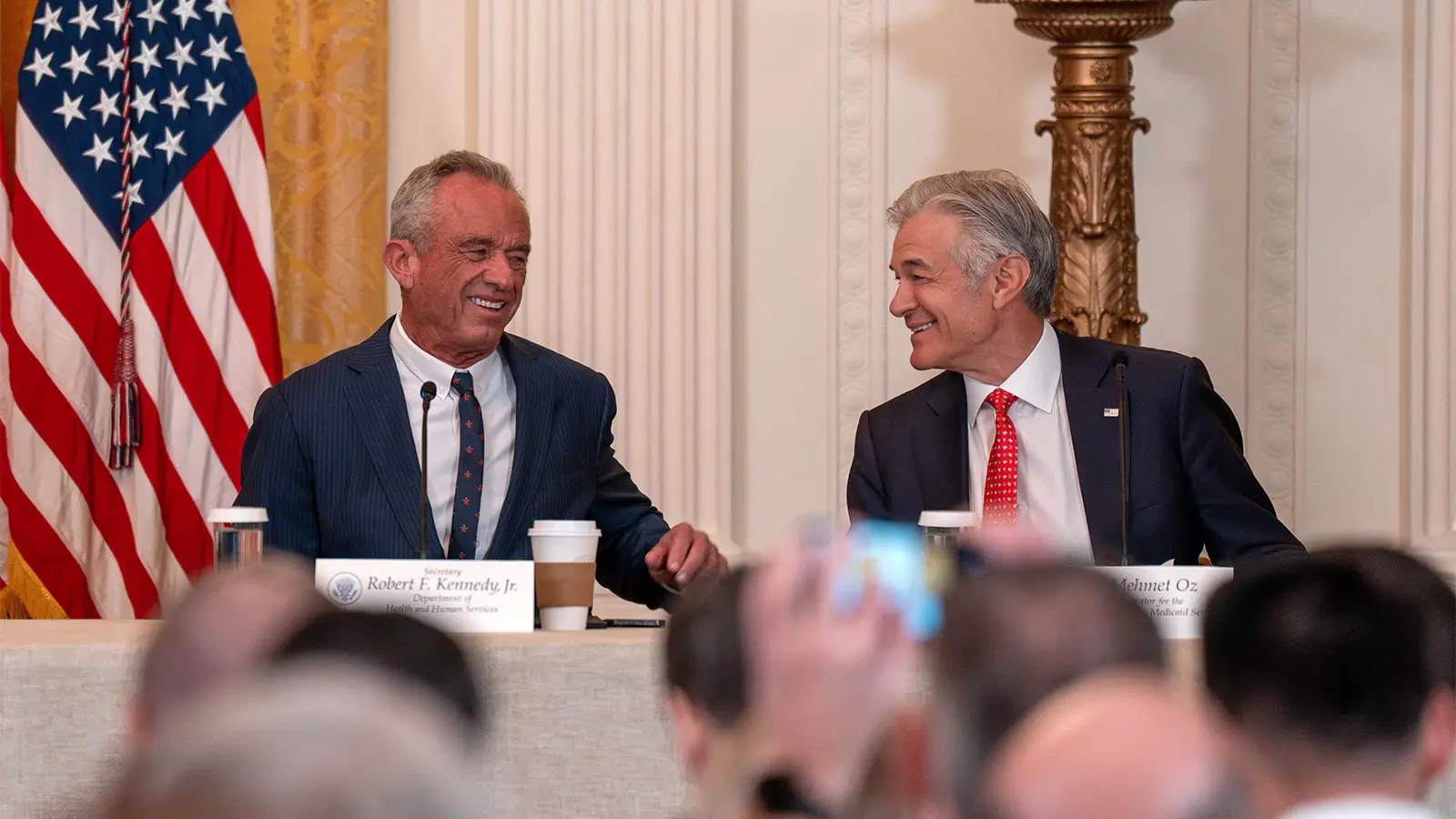
The survey also showed that fewer Americans trust HHS Secretary Robert F. Kennedy Jr. on public health issues compared with Anthony Fauci, MD, when he led the National Institute of Allergy and Infectious Diseases (38% vs 54%).
Public confidence in CMS Administrator Mehmet Oz, MD, MBA, was only slightly higher versus Kennedy — 42% vs 38% — with confidence in Oz improving since April 2025 (32%) when he began his post, while confidence in Kennedy has remained flat.
Notably, Americans trust their own primary care providers (86%) and major medical associations, such as the American Heart Association (82%), the American Academy of Pediatrics (AAP; 77%), and the American Medical Association (AMA; 73%), to share trustworthy public health information more than they do the CDC (60%), the NIH (62%), and the FDA (62%).
Asked specifically about the CDC, 59% of Americans said they are confident that the agency is providing trustworthy information on vaccine safety and effectiveness. However, where the CDC and the AMA clash on vaccine safety, Americans are more than twice as likely to follow the recommendations of the AMA over the CDC (34% vs 15%), though 34% of those surveyed said they weren’t sure whose advice to follow, and 17% said they would not take advice from either group.
“In a challenging information environment, patients need clear, evidence-based guidance they can rely on,” said AMA CEO John Whyte, MD, MPH, in a press release about the survey findings. “The AMA is dedicated to helping patients cut through the clutter and elevate the valid over the viral. Accurate, trustworthy information saves lives.”
The survey also showed that the CDC’s current recommendations are less likely to be trusted than the recommendations of the AAP.
In December, the CDC ended its universal birth dose recommendation for the hepatitis B vaccine, instead recommending vaccination for “infants born to women who tested positive for the hepatitis B virus or whose status is unknown,” and advising parents to follow “shared clinical decision-making” for infants born to mothers who test negative.
The AAP pushed back on the agency’s change, recommending that parents instead follow previous CDC guidance for universal hepatitis B vaccination for all infants, with the first dose administered within 24 hours of birth. Multiple state and local health departments also indicated that they would follow the previous recommendations.
Asked which recommendations they would follow, Americans were four times more likely to trust the advice of the AAP over the CDC — 42% vs 11%, while 32% said they were not sure, and 16% said they would not take advice from either group.
The Annenberg Science and Public Health panel survey was conducted from February 3 to 17 online and over the telephone, using a nationally representative probability sample from the independent research company SSRS’s opinion panel. The survey’s margin of error is ±3.5 percentage points. The survey has been conducted since April 2021 across 28 waves.
Source link : https://www.medpagetoday.com/publichealthpolicy/publichealth/120191
Author :
Publish date : 2026-03-06 15:03:00
Copyright for syndicated content belongs to the linked Source.