[ad_1]
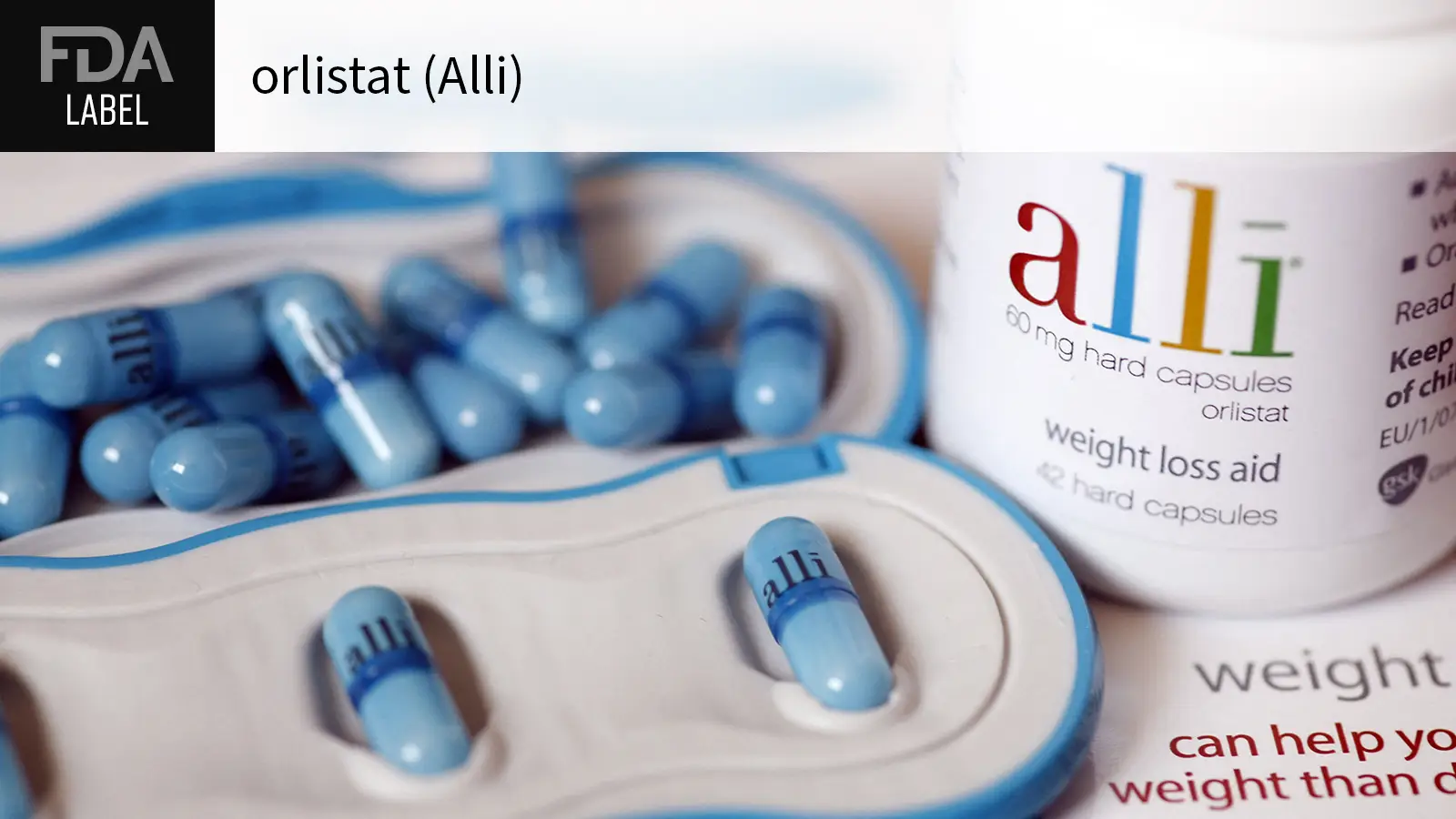
The FDA issued a drug safety communication approving a label change that warns about the risk of kidney stones or kidney injury with the over-the-counter (OTC) weight loss drug orlistat (alli), the agency said Wednesday.
The label now recommends that consumers with a history of kidney disease or kidney stones consult a healthcare provider before using the drug.
The FDA advised clinicians to inform patients about reports of acute kidney injury (AKI), hyperoxaluria, calcium oxalate nephrolithiasis, or oxalate nephropathy linked to orlistat. Patients should also stop taking the drug if they develop symptoms like back or groin pain, painful urination, blood in urine, feet or leg swelling, or less frequent urination.
These events are rare, the agency noted. Mild cases of AKI may be reversible, but untreated severe cases can be fatal.
“The risk of renal injury is now described consistently across the labeling for all FDA-approved orlistat products, including those available OTC and those available in a higher strength by prescription,” the FDA stated.
Orlistat is the only FDA-approved OTC weight-loss aid and is available in 60 mg capsules. A 120 mg version (Xenical) is available by prescription and is indicated for obesity management. The drug works as a lipase inhibitor that binds to enzymes to break down fats, leading to less dietary fat being absorbed in the digestive tract.
After receiving reports of AKI from orlistat users, the FDA reviewed its Adverse Event Monitoring System (AEMS) and medical literature for cases of AKI, oxalate nephropathy, hyperoxaluria, and calcium oxalate kidney stones spanning the drug’s approval date in February 2007 through December 2023. The review identified 12 cases of kidney complications linked to orlistat, nine from AEMS and three from medical literature.
Patients in these cases had a median age of 61. Seven cases were reported in females, and five were in males. Median exposure to orlistat was 2.5 months before kidney injury. Eight cases involved AKI, two reported acute kidney injury with oxalate nephropathy, and two had hyperoxaluria with calcium oxalate kidney stones.
Eight patients required hospitalization and five required dialysis. Seven patients improved; one had not improved when the report was made, and four reports did not describe outcomes.
Among the four patients who had available dosing information, all were taking 60 mg or 120 mg of orlistat three times daily.
“Our data analysis also suggests that orlistat-associated oxalate nephropathy and kidney injury may not be dose-dependent, as the difference in dietary fat absorption inhibition between the 120 mg (Xenical) and 60 mg (alli) doses is 5%, indicating the risk exists at both prescription and nonprescription doses,” the FDA noted.
The actual number of cases involving kidney problems after orlistat use may be higher, the FDA pointed out, as consumers and healthcare professionals don’t always report side effects to the agency.
The reports also were often incomplete, lacking details like kidney stone composition and patient medical history. Several patients had pre-existing conditions including obesity, diabetes, high blood pressure, and a history of kidney disease or kidney stones that may have contributed to kidney problems.
The FDA urged consumers and healthcare professionals to report side effects involving orlistat or other medicines to the FDA MedWatch program.
[ad_2]
Source link : https://www.medpagetoday.com/primarycare/obesity/121703
Author :
Publish date : 2026-06-10 20:57:00
Copyright for syndicated content belongs to the linked Source.