[ad_1]
- Research has suggested that consumption of sugar-sweetened beverages is linked to increased risks of certain cancers.
- A pooled analysis of 11 studies showed that sugar-sweetened beverage intake was not associated with overall liver cancer risk but was tied to increased risks of hepatocellular carcinoma and intrahepatic cholangiocarcinoma.
- Of note, there was no association between consumption of artificially sweetened beverages and liver cancer overall, or by subtype.
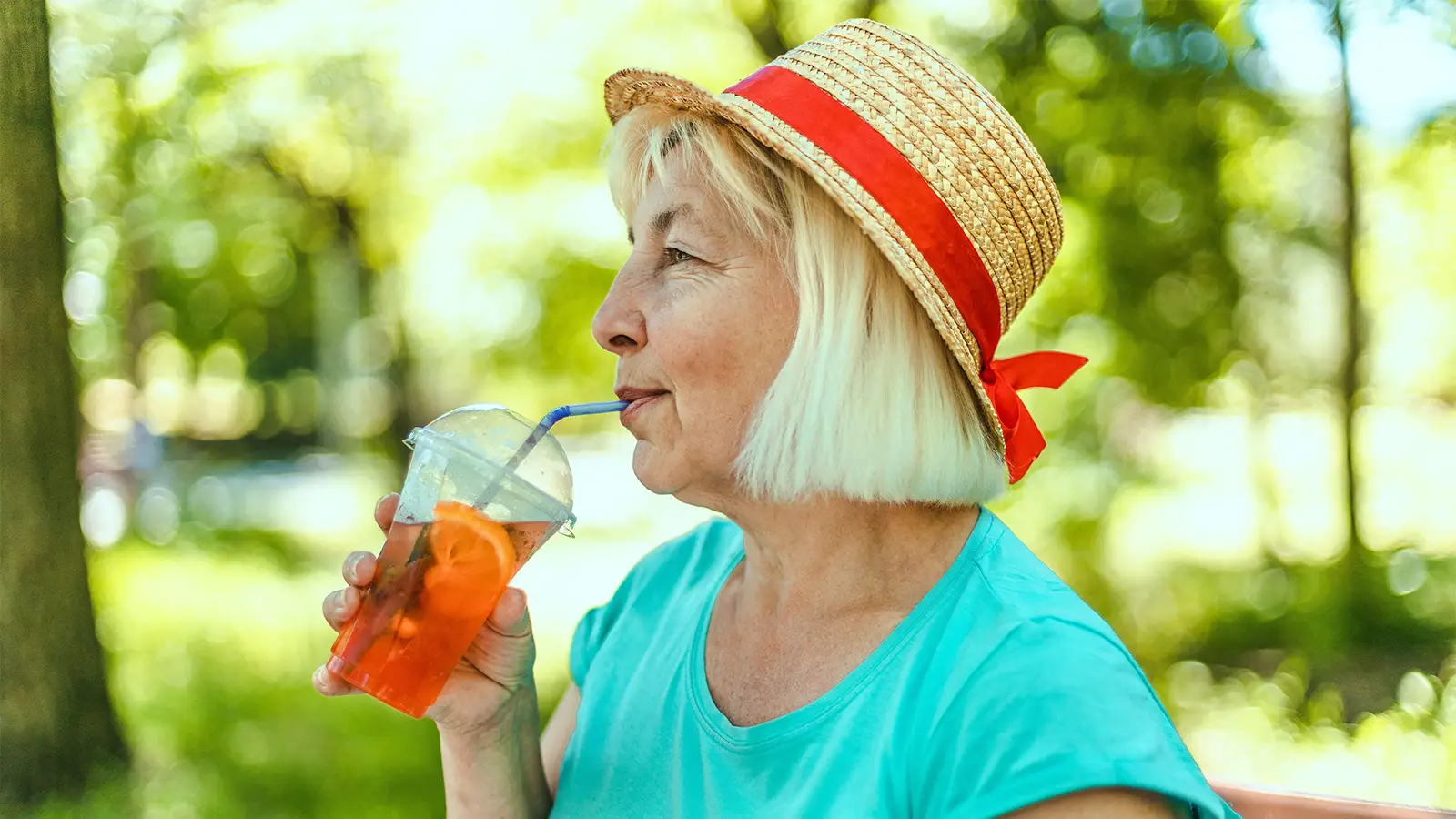
Regular consumption of sugar-sweetened beverages was associated with an increased risk of two liver cancer subtypes, according to a pooled analysis of 11 prospective cohort studies including more than 1.5 million adults.
Sugar-sweetened beverage intake per 1-beverage/day increase was not associated with overall liver cancer risk but was associated with increased risks of hepatocellular carcinoma (HCC) across 10 cohorts (HR 1.10, 95% CI 1.03-1.18) and intrahepatic cholangiocarcinoma (ICC) across six cohorts (HR 1.15, 95% CI 1.00-1.32), reported Katherine McGlynn, PhD, of the National Cancer Institute, and colleagues.
These associations persisted even with adjustment for potential mediators, including diabetes and obesity, they noted in JAMA Network Open.
Of note, there was no association between consumption of artificially sweetened beverages and liver cancer overall, or by subtype.
“Based on this study and prior research associating SSB [sugar-sweetened beverages] with adverse outcomes, individuals may benefit from reducing their intake of SSB,” McGlynn and team concluded.
In a commentary accompanying the study, Daniel Clayton-Chubb, MD, PhD, and Andrew T. Chan, MD, MPH, both of Massachusetts General Hospital and Harvard Medical School in Boston, wrote that “taken together, these data solidify the evidence base associating SSB with liver cancer, while raising the provocative possibility that the association may not be fully mediated by the association of SSB with diseases of metabolic dysregulation.”
“On the other hand, the study provides some reassurance that artificial sweeteners are likely not a major risk factor associated with liver cancer,” they added.
These results are consistent with those of previous studies.
One prospective cohort study involving nearly 100,000 postmenopausal women suggested that those who drank at least one sugar-sweetened beverage per day had significantly higher rates of liver cancer.
As in the current study, the results were different for artificially sweetened beverages, as women who consumed at least one of these beverages a day did not have significantly increased incidence of liver cancer.
Sugar-sweetened drinks have also been linked with other cancers. In a longitudinal cohort study, greater consumption of sugar-sweetened beverages was associated with an increased risk of oral cancer in women. Another observational study found a link between a high intake of sugar-sweetened beverages and an increased risk of early-onset colorectal cancer in women.
While allowing that observational studies cannot prove causality, Clayton-Chubb and Chan suggested that there are several plausible mechanisms underlying a potential association between sugar-sweetened beverages and liver cancer.
“Higher consumption of SSB has been associated with dysmetabolic changes in other large population studies,” they noted. “Mechanistically, this is likely due to a combination of increased de novo lipogenesis (via increased free fructose intake), adipokine alteration, changes to the gut microbiome, increased total and visceral adiposity, and consequently increased insulin resistance and increased hepatic steatosis. These changes, individually or aggregated, credibly predispose to liver cancer susceptibility.”
The pooled analysis involved 11 prospective cohort studies that included 1,518,411 adults (mean age 57.8 years, 58.2% women). About 7% had diabetes, and mean body mass index was 26.5.
During a median follow-up of 17.8 years, 2,811 incident liver cancer cases were identified, including 1,699 HCC and 444 ICC cases.
By comparing those with the highest category of beverage intake (>1 drink/day) with those who never or rarely drank artificially sweetened beverages, McGlynn and colleagues found there was a nonsignificant increase in liver cancer risk with increased consumption (HR 1.06, 95% CI 0.94-1.20), but no association.
The same held true when comparing the highest category of sugar-sweetened beverage intake with the lowest category — a nonsignificant increase in liver cancer risk (HR 1.06, 95% CI 0.90-1.24), but no association.
Using the same comparison of consumption patterns when limiting their analyses to liver cancer subtypes, the authors found no association between artificially sweetened beverage intake and HCC, but did see a positive association between sugar-sweetened beverage intake and HCC (HR 1.10, 95% CI 1.03-1.18).
In studies that had data on ICC, there was again no association between artificially sweetened beverage intake and ICC risk, while there was a positive association between sugar-sweetened beverage intake and risk of ICC (HR 1.15, 95% CI 1.00-1.32).
The study had several limitations. McGlynn and colleagues observed that most of the cohorts in the analysis measured consumption at only one time point, and that this could have changed over time and differed by cohort. In addition, diabetes was measured at one time in most cohorts.
They also acknowledged that they were unable to adjust for or stratify their analyses by underlying liver disease, including metabolic dysfunction-associated steatotic liver disease or cirrhosis.
“Therefore, as with all observational studies, these results may be influenced by residual and unmeasured confounding,” they wrote.
[ad_2]
Source link : https://www.medpagetoday.com/hematologyoncology/othercancers/121702
Author :
Publish date : 2026-06-10 20:48:00
Copyright for syndicated content belongs to the linked Source.