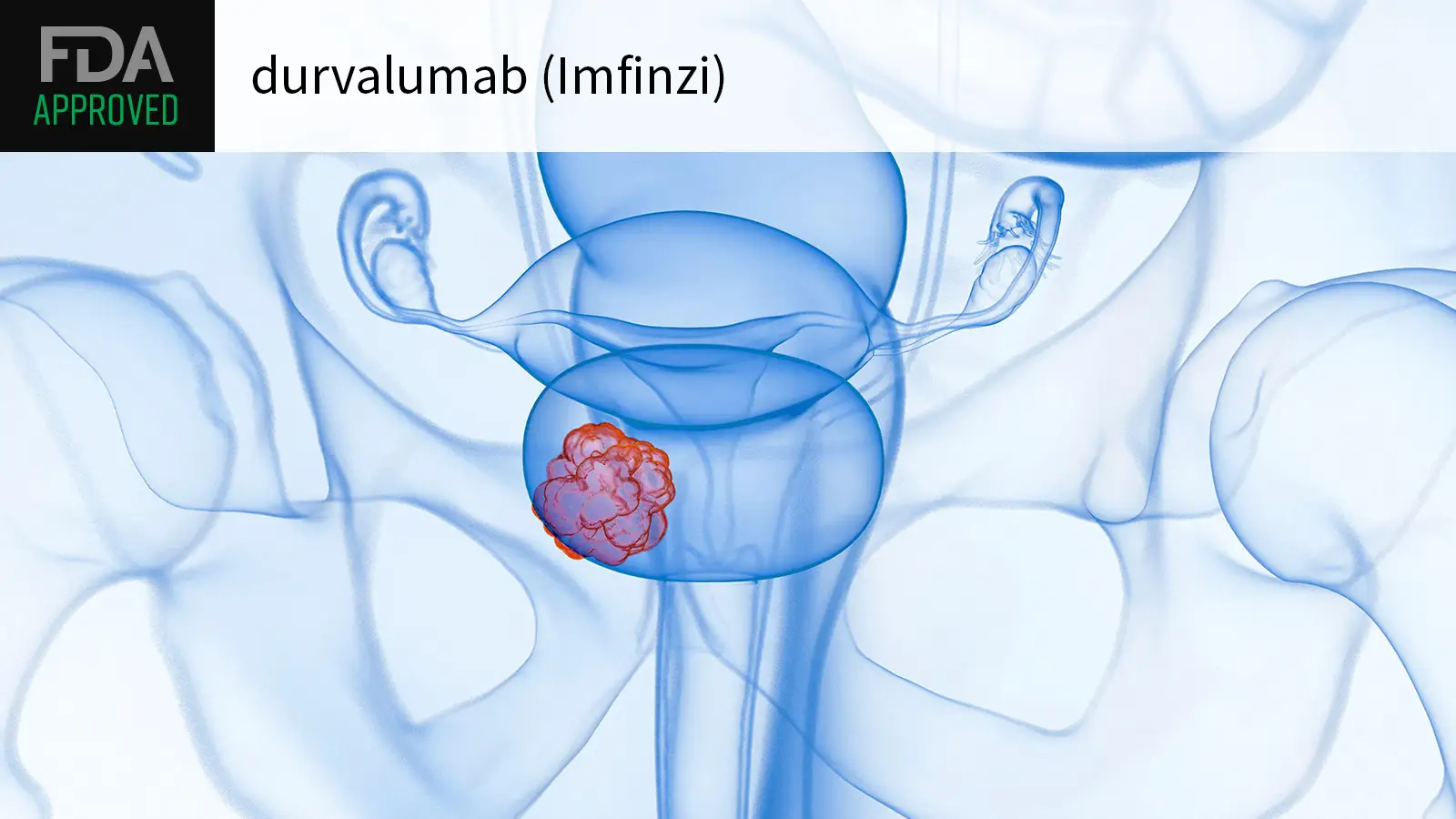
The FDA approved durvalumab (Imfinzi) in combination with bacillus Calmette-Guérin (BCG) for adults with BCG-naive, high-risk non-muscle-invasive bladder cancer (NMIBC).
The approval was based on results from the phase III POTOMAC trial, which showed that adding the immune checkpoint inhibitor to BCG induction and maintenance therapy significantly improved disease-free survival (DFS) compared with BCG therapy alone (HR 0.68, 95% CI 0.50-0.93, P=0.015) in this patient population. Median DFS had not been reached in either arm.
New analyses from the trial presented this month at the American Urological Association annual meeting showed that the regimen reduced the number of early high-risk disease recurrences within the first year compared with BCG therapy alone.
“The durvalumab plus BCG regimen is the first new therapy approved in over 30 years for patients with BCG-naive, high-risk non-muscle-invasive bladder cancer,” said investigator Neal Shore, MD, of the Carolina Urologic Research Center in Myrtle Beach, South Carolina, in a press release from drugmaker AstraZeneca.
“Unfortunately, many of these patients experience disease recurrence requiring repeated surgical procedures, as well as disease progression resulting in surgical removal of their bladder,” said Shore. “The POTOMAC trial demonstrates that the durvalumab with BCG induction and maintenance regimen reduces the risk of disease recurrence, progression, or death for patients by almost a third compared to BCG alone, heralding a marked advancement for patients with high-risk non-muscle-invasive bladder cancer.”
POTOMAC enrolled 1,018 patients with high-risk NMIBC following transurethral resection of bladder tumor, who were randomized 1:1:1 to receive durvalumab every 4 weeks for 13 cycles plus BCG induction and maintenance, BCG induction and maintenance, or an additional investigational combination regimen.
The prescribing information includes warnings and precautions for immune-mediated adverse reactions, infusion-related reactions, complications of allogeneic hematopoietic stem cell transplantation, and embryo-fetal toxicities.
Source link : https://www.medpagetoday.com/hematologyoncology/othercancers/121479
Author :
Publish date : 2026-05-28 19:50:00
Copyright for syndicated content belongs to the linked Source.