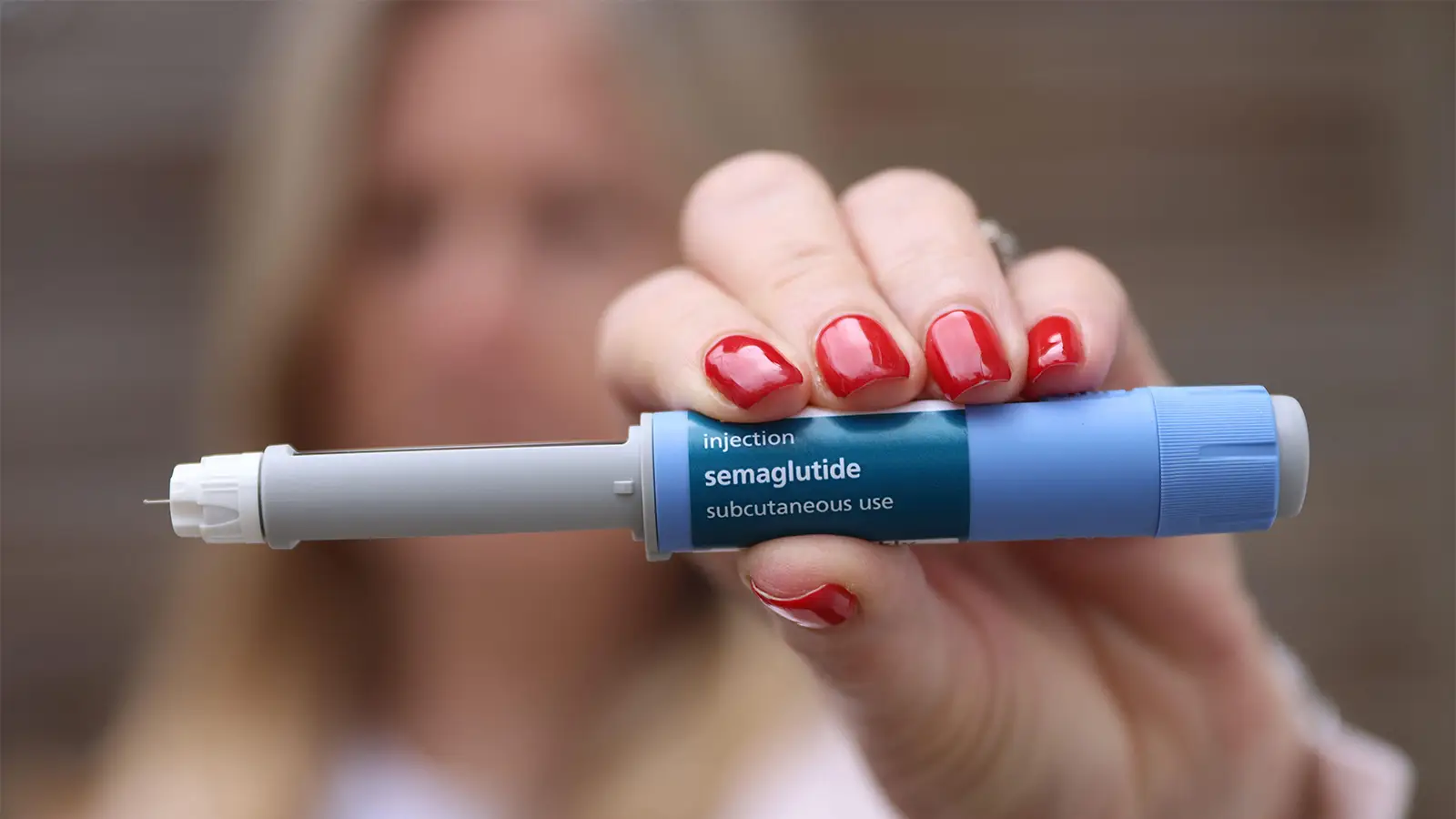
- Treatment with oral semaglutide significantly improved motivation measures in patients with major depressive disorder in a secondary analysis of a randomized trial.
- Treatments are needed for anhedonia, the reduced ability to experience pleasure, a symptom not well-treated by antidepressants.
- These findings need confirmation in larger, more rigorous studies, but they may have implications for treating multiple neuropsychiatric disorders involving reward dysfunction.
Treatment with oral semaglutide (Rybelsus) significantly improved motivation measures in patients with major depressive disorder (MDD), according to a secondary analysis of a randomized trial.
Among 72 participants with MDD and overweight or obesity, those receiving oral semaglutide 14 mg showed an increased willingness to expend physical effort when higher expected rewards were present (treatment × visit × expected value interaction χ2 = 12.024; P=0.02), reported Rodrigo B. Mansur, MD, PhD, of University Health Network at the University of Toronto, and co-authors in JAMA Psychiatry.
“Treatment with semaglutide modulated effort-based decision-making in patients with MDD by increasing the willingness to exert effort with higher expected values of reward and reducing the perceived cost of effort relative to the reward,” Mansur and team wrote. “Results from this trial reinforce the involvement of metabolic mechanisms in effort-based motivation in patients with MDD.”
Sensitivity to effort was significantly reduced by treatment with oral semaglutide (β = -1.737, P=0.03), while there was no effect on sensitivity to probability (β = -0.776, P=0.51).
The authors noted that this study is the first to assess the effects of GLP-1 receptor agonists on reward behaviors in people with MDD. GLP-1 receptors are involved in the regulation of reward-response pathways, and treatments are needed for anhedonia, the reduced ability to experience pleasure, a symptom not well-treated by antidepressants compared with other symptoms like low mood, Mansur told MedPage Today.
While it has been suggested that GLP-1 drugs can lead to dulled responses to pleasurable activities, known as “Ozempic personality,” these findings are “a point in the opposite direction,” Mansur said, indicating “at the very least, that GLP-1 drugs do not seem to harm motivation.”
The findings need confirmation in larger, more rigorous studies, he noted. However, they may have implications for treating multiple neuropsychiatric disorders involving reward dysfunction.
Nina Kraguljac, MD, chair of the American Psychiatric Association’s Council on Research, told MedPage Today that the finding of a potential signal for improving anhedonia was “encouraging,” but it would be “premature” to change clinical practice based on this one study.
More research is needed with bigger sample sizes, a broader population, and perhaps brain imaging to understand if semaglutide really helps people engage in motivated behaviors, she added.
Asked about the emotional flattening seen with GLP-1 drugs, Kraguljac said there’s only been a handful of case reports on the subject, and no systematic studies to suggest this is a common side effect. On the contrary, “reassuring” population studies out of Denmark and Sweden have shown that GLP-1 agonists do not appear to make psychiatric disorders — such as depression, anxiety or psychotic disorders — worse, she pointed out.
As Mansur noted, there is debate over whether GLP-1 drugs reduce “food noise” or “the pleasure of eating.”
Kraguljac said that while studies suggest semaglutide may reduce cravings or enjoyment of alcohol, those findings do not extend “across the board” for all pleasurable experiences. “It doesn’t seem to be impacting the sex drive or a desire to engage in social behavior,” she added.
Furthermore, “in this TikTok culture,” it can be hard to distinguish illness from a medication’s side effects, Kraguljac said.
For this 16-week, double-blind study, 72 participants with a diagnosis of MDD and a body mass index of 25 or higher were randomized to oral semaglutide 14 mg (initiated at 4 mg and titrated using a 4-week dose-escalation regimen) or placebo in addition to their usual treatment.
Participants were recruited from the Mood Disorders Psychopharmacology Unit at University Health Network and enrolled between March 2022 and July 2024. Mean age in the semaglutide arm was 38.17 and 51.4% were women. In the placebo arm, the mean age was 40.27 and 51.3% were women.
Motivation was measured by keyboard tests during which participants received greater rewards for harder versus easier tasks (for example, using the dominant versus non-dominant hand). Participants receiving semaglutide were “more motivated to do harder tasks but under more favorable conditions,” when rewards were greater, Mansur explained.
One limitation of the study was that the tasks used to assess motivation may not be generalizable to real-world patients, Kraguljac said. Mansur and colleagues noted that the study was not sufficiently powered to detect the overall antidepressive effects of semaglutide.
Source link : https://www.medpagetoday.com/psychiatry/depression/121019
Author :
Publish date : 2026-04-29 15:38:00
Copyright for syndicated content belongs to the linked Source.