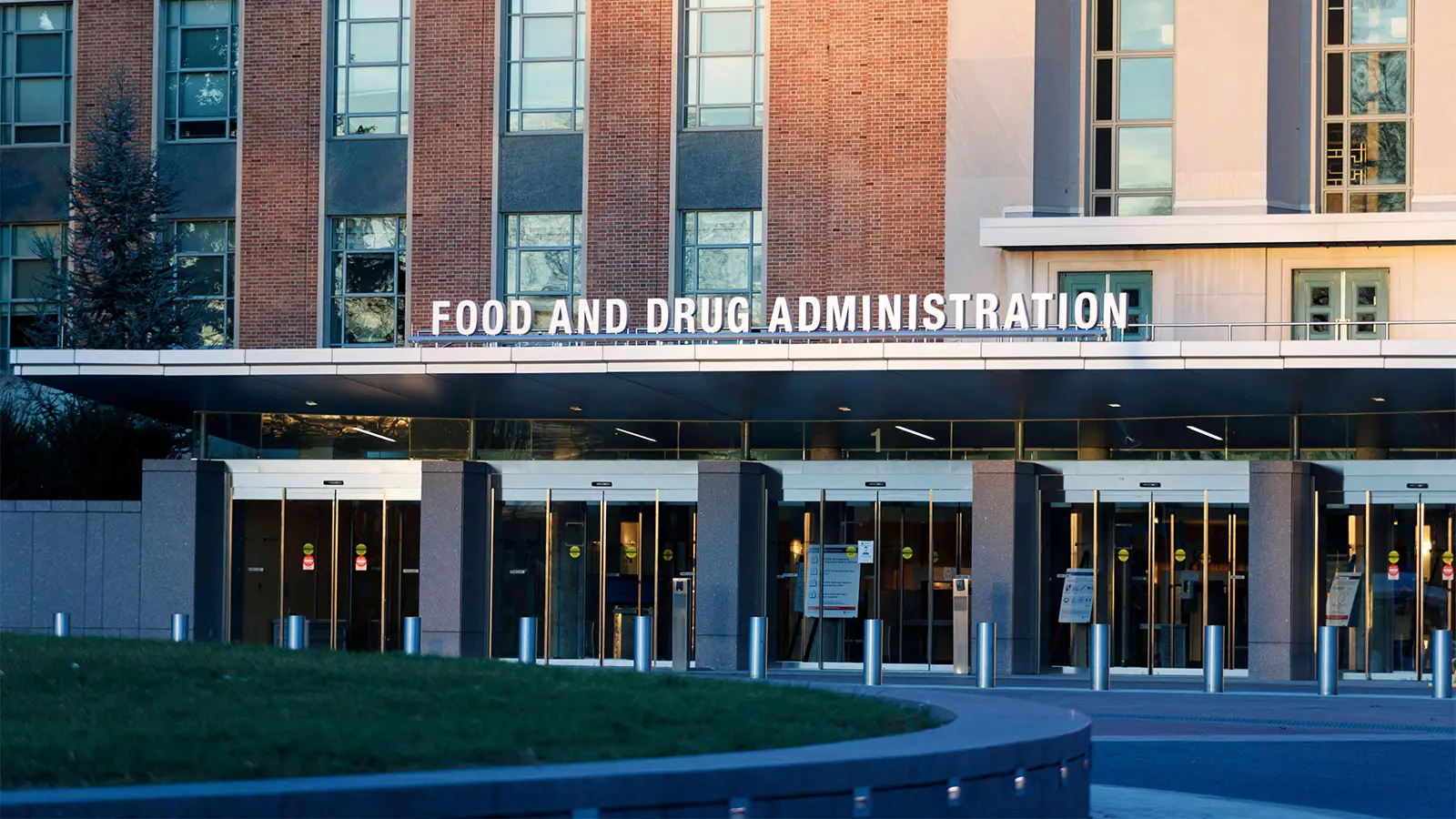
Stakeholders across the board are calling for a return to regular order at the FDA following the resignation of Commissioner Marty Makary, MD, MPH, who said he resigned in protest over the agency’s decision to authorize flavored e-cigarettes.
At a Future of Health Summit on Wednesday, Stephen J. Ubl, president and CEO of Pharmaceutical Research and Manufacturers of America, said, “I think what we really need from the next leader of the FDA is to calm the waters and re-establish that certainty and predictability.”
For innovators, he warned that the absence of those factors really “chills investment.”
Peter Lurie, MD, MPH, president and executive director of the Center for Science in the Public Interest, noted that he’d like to see operational and policy changes.
On the operational side, “they’ve got several thousand people who they need to rehire,” Lurie said, referring to the mass layoffs and encouraged resignations across HHS. He said he’d also like to see a restoration of conventional processes, in which decisions are made by staff.
“What we have 1778795306 are inconsistent scientific standards, where certain products are subject to what seem to be very high standards because they’re disfavored, and others are subject to reduced standards because they’re favored,” he pointed out, adding that vaccines are one example of the former and vapes are an example of the latter.
Of note, Makary fell on the wrong side of President Trump over a disagreement about vaping products. After Trump pressed Makary to authorize fruit-flavored vapes earlier this month, the FDA approved the products for marketing.
Lurie noted that the FDA has lately adopted a pattern of sidestepping traditional regulatory procedures. In the past, the agency allowed comment periods and held advisory committee meetings, but under Makary, there have been fewer of these meetings. Lurie said FDA “expert panels” have marginalized career staff and sidestepped public comment. There has also been a tendency to “rule from the pages of the New England Journal of Medicine,” he added.
However, the problems at the FDA cannot be viewed in a vacuum, he added.
“It’s fine to say that FDA is in disarray … but you have to look higher up at HHS in general, and they’re having a very hard time filling the most basic positions in the administration,” Lurie said, pointing to the fact that Jay Bhattacharya, MD, PhD, is now running both NIH and CDC, while Trump just announced his third nominee for Surgeon General.
In the end, it will be a “very brave person” who agrees to a post like this one, as this individual will be subject not only to the whims of Kennedy but also the president, Lurie added.
Robert Steinbrook, MD, health research group director for Public Citizen, an advocacy group that focuses extensively on healthcare, echoed many of the same sentiments.
“The next FDA commissioner should insulate career FDA staff from political pressure and industry pressure,” Steinbrook said. “The commissioner should recommit the agency to following standard regulatory processes and focusing on public health, not the wish lists of the White House or … Kennedy.”
“For the FDA to move forward, the drama and chaos that characterized the Makary era must end,” Steinbrook stressed. “The agency should be allowed to do its many jobs, including moving forward with sensible reforms to improve the agency’s efficiency and effectiveness.”
Source link : https://www.medpagetoday.com/washington-watch/fdageneral/121274
Author :
Publish date : 2026-05-14 20:51:00
Copyright for syndicated content belongs to the linked Source.