[ad_1]
The FDA should require negative studies of a new drug to be included in the product’s labeling — not just those studies with a beneficial finding — to prevent physicians and consumers from being misled about the drug’s safety and efficacy.
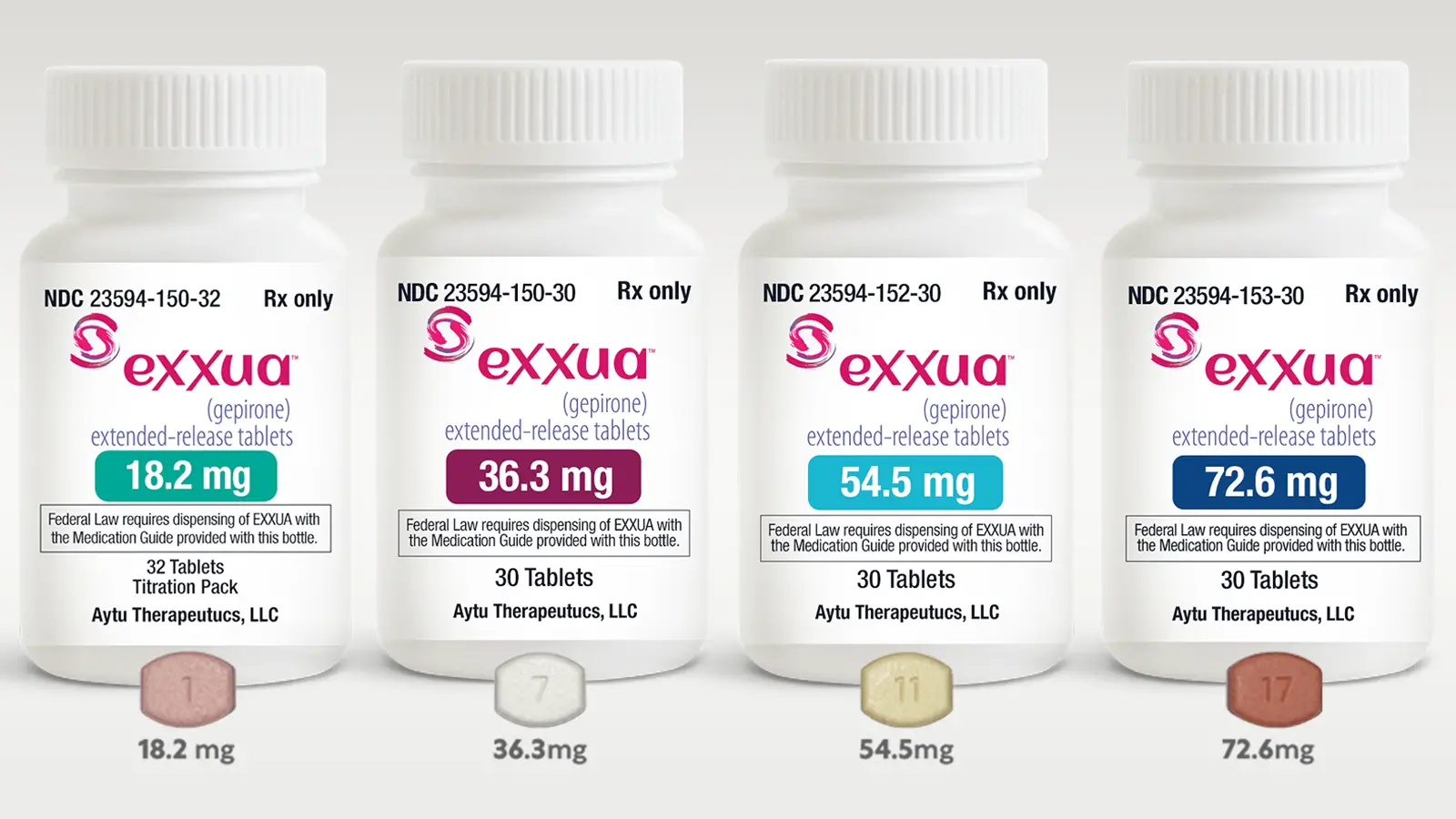
That’s the conclusion of researchers who examined the nearly decades-long journey of rejections that led up to the FDA’s final approval of gepirone extended release (Exxua) for major depressive disorder in 2023, despite scant evidence of effectiveness. The findings were published in JAMA Psychiatry.
The agency approved the drug on the basis of two trials that showed a small but statistically significant benefit, apparently disregarding 11 other studies that showed the drug was no better than placebo, reported Erick Turner, MD, of Oregon Health & Science University in Portland, and colleagues.
The gepirone labeling “represents a cherry-picked subset of studies, and for those, [the FDA] relied on statistical significance as opposed to clinical significance … with a very tiny margin of advantage over placebo: less than a half a point difference on the Hamilton Depression Rating Scale,” Turner told MedPage Today.
“Unfortunately, the gepirone ER product label mentions only the 2 statistically significant trials and excludes the 11 unsuccessful efficacy trials, and the lack of clinically meaningful effects,” they wrote. Adverse events were aggregated only from those two trials, and not from any of the others, they said.
“Product labeling should transparently report on all adequate and well-controlled trials relating to an FDA-approved indication, not just those with positive outcomes, so that clinicians can make better-informed prescribing decisions,” the researchers noted.
Gepirone is also expensive, costing $1,500 per month without insurance, and there is not yet an approved generic. One Medicare Part D plan check showed Exxua’s annual cost for the enrollee to be the 2026 year cap of $2,100.
Turner was a medical officer in the FDA’s then-named division of neuropharmacological drugs in 1999, when the approval of gepirone was rejected for the first of at least 4 times. He was not involved in discussions of gepirone and left the agency in 2001.
When gepirone won approval in 2023, Turner said he was astonished. “I said, ‘Wait a minute. Isn’t this the same drug?’… and saw how convoluted its path to approval was, how long it took.”
He likened the difference between statistical significance and clinical significance to a patient with blood pressure of 180/120 mm Hg being treated by a drug that lowers it to 175/115 mm Hg.
“It may be statistically significant, but not clinically,” he said, noting the patient is still at high risk.
The authors noted how little physicians understand about the FDA drug process. Among surveyed doctors, 70% mistakenly believe that the FDA is obligated to find clinical and statistical significance of a drug’s effectiveness before granting approval when that is not a requirement. Some 73% think new drugs must be just as effective as older ones for the same condition, and 40% think new drugs must be more effective, when neither is a prerequisite.
“This lack of insight into the data underlying FDA-approved drugs may help explain why clinicians tend to overestimate interventions’ benefits and underestimate their harms,” they wrote.
Robert Steinbrook, MD, health research group director for Public Citizen who was not involved in the study, said the gepirone process “speaks to the need for the FDA to consider this example as an impetus for revising its guidance” regarding legal and regulatory standards for approving drugs.
When the final decision was made in 2023, it came down to the FDA’s belief that gepirone’s application “had met the legal regulatory standard for approval, which was different than consideration of the totality of the evidence, and whether this is a good clinical drug,” Steinbrook told MedPage Today. “That’s the problem. The FDA seems to feel that its hands were tied.”
The researchers’ work “does make a strong case for more inclusive labeling,” he added.
Adriane Fugh-Berman, MD, of Georgetown University Medical Center and pharmaceutical industry watchdog group PharmedOut, wondered how many other drugs were approved based on “unimpressive clinical evidence but that people think are safe and effective.”
“Drug companies are invested in exaggerating benefits and minimizing perceptions of harm, and right now, the labels are helping them out. The FDA should be encouraging better information,” she told MedPage Today.
Asked whether drugs for mental health diagnoses or pain have been approved despite negative studies, and may have similar efficacy issues, Turner, an expert on publication bias, said it was hard to know.
“We do know that psychiatric drugs, particularly antidepressants and drugs for anxiety, roughly half are positive so that means you have a lot of negative studies. Thus there’s the potential for publication bias by the sponsor, who is not publishing every study,” or submitting them to the FDA for review, he told MedPage Today.
Confounding the problem is that endpoints for these studies are often subjective, like depression or pain. “You can’t really measure how much someone has,” he said.
[ad_2]
Source link : https://www.medpagetoday.com/publichealthpolicy/washington-watch/121912
Author :
Publish date : 2026-06-24 18:00:00
Copyright for syndicated content belongs to the linked Source.