[ad_1]
- Swedish infants who did not receive intramuscular vitamin K administration at birth had an increased associated risk of bleeding episodes, including intracranial hemorrhage.
- Among more than 2 million live births from 2003 through 2021, infants who went without vitamin K had 1.52-fold higher odds of bleeding and 2.91-fold higher odds of intracranial bleeding during the first 6 months of life.
- Findings come as increasing trends of parental refusal of vitamin K prophylaxis at birth have been reported by several countries, the researchers noted.
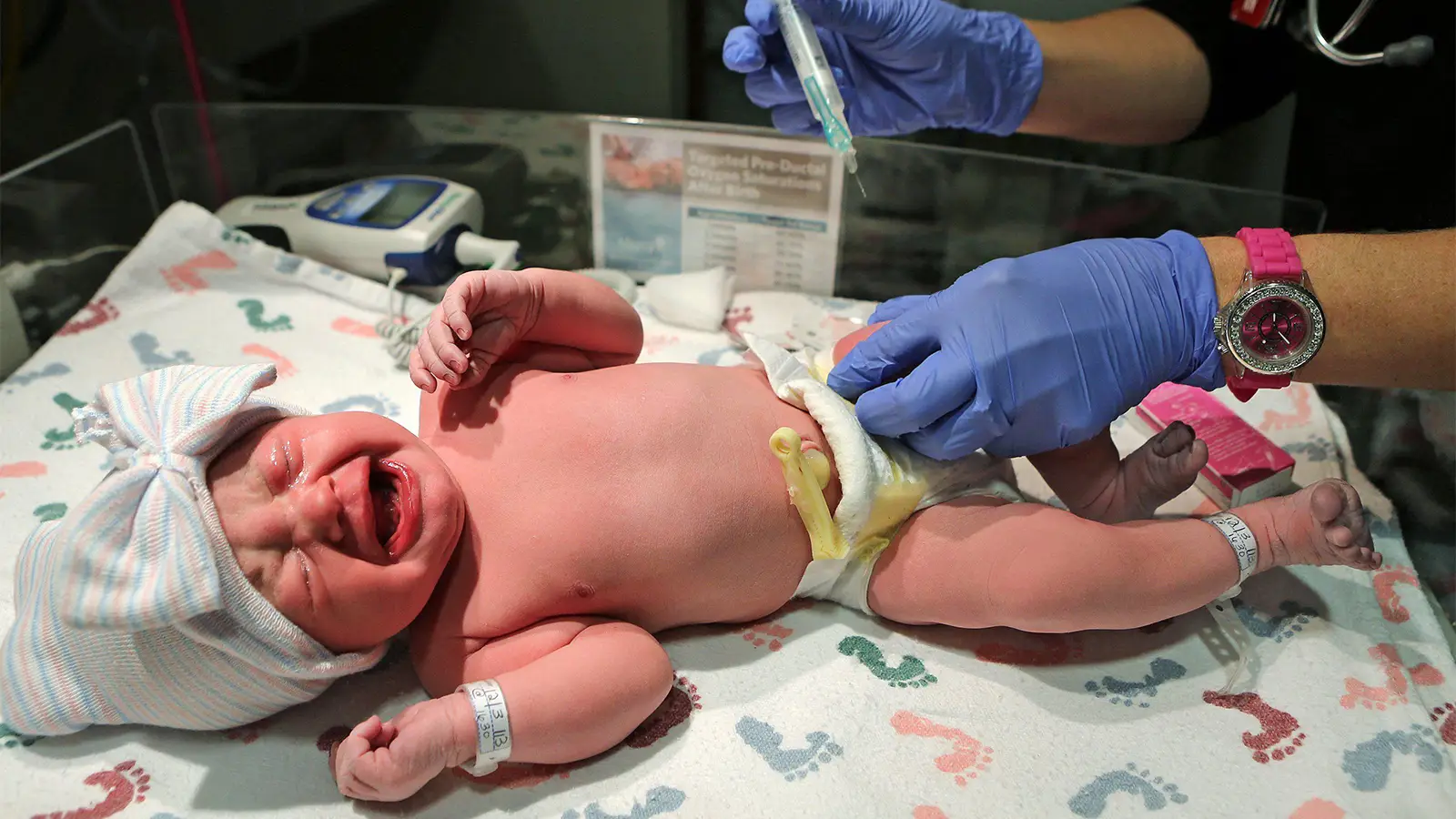
Infants in Sweden who did not receive intramuscular vitamin K administration at birth — a small but growing population — had an increased associated risk of bleeding episodes, including intracranial hemorrhage, a nationwide cohort study suggested.
Among more than 2 million live births from 2003 through 2021, infants who went without vitamin K had higher odds of bleeding during the first 6 months of life compared with infants who received vitamin K (adjusted OR [aOR] 1.52, 95% CI 1.27-1.81), reported Eleni Simatou, MD, of Karolinska Institutet in Stockholm, and colleagues.
For intracranial bleeding, odds were 2.91-fold higher (95% CI 2.13-3.96) among those who did not receive the vitamin K shot, they reported in JAMA Pediatrics.
“Our findings have important clinical implications, highlighting the ongoing need for communication between healthcare practitioners and parents about the vital role of vitamin K prophylaxis in preventing potentially life-threatening bleeding in newborns,” Simatou and colleagues wrote.
Vitamin K is crucial for the activation of several coagulation factors, and if levels are inadequate, it can lead to vitamin K deficiency bleeding (VKDB), the researchers noted. “Infants are particularly vulnerable to VKDB due to limited transplacental transfer of vitamin K, low concentration levels of vitamin K in breast milk, and the inability of their primary gut flora such as Lactobacillus to synthesize vitamin K,” they wrote.
But a number of countries “have reported increasing trends of parental refusal of vitamin K prophylaxis at birth, followed by an increase in VKDB cases,” Simatou and colleagues wrote. Similar to recent trends seen with vaccines, reports reflect that parents are increasingly refusing vitamin K shots for their children despite safety and effectiveness in protecting against bleeding episodes and future brain complications.
Indeed, the rate of nonreceipt decreased during early study years from 1.32% (1,242 of 94,214 newborns) in 2003 to 0.66% (667 of 100,429 newborns) in 2006. However, the rate then gradually rose and more than doubled to 1.50% (1,619 of 107,915 newborns) in 2021.
“The characteristics associated with nonreceipt of intramuscular vitamin K were largely similar between groups,” the authors wrote.
Previous studies in the U.S. have found an association between infant sex and vitamin K receipt, but the researchers did not find that link in their study. “This discrepancy may reflect differences in circumcision practices, as male infants in some U.S. settings are more likely to receive vitamin K because documentation of prophylaxis may be required before circumcision. In Sweden, where circumcision is uncommon, this association was not observed,” they said.
Overall, the findings “support the need for continued efforts to promote adherence to national guidelines and recommendations,” the authors concluded. “Further research is needed to better understand the reasons underlying parental refusal and to assess potential associations with other healthcare decisions, including childhood immunization uptake.”
The research team linked data from the Swedish Medical Birth Register to multiple other national registers to complete their study. It included all live-born infants in Sweden who were born at 35 or more weeks’ gestation from 2003 through 2021. The primary outcome was a bleeding diagnosis within the first 6 months of life.
Slightly more than half of the 2,020,302 live births included were male; 24,089 had no record of intramuscular vitamin K administration at birth.
Oral vitamin K administration increased over the study period, with fewer than five infants receiving it in 2012, but rising to 87 in 2013, and 193 in 2021. In recent decades, oral vitamin K has only been offered in cases in which intramuscular administration is not possible, such as in parental refusal or hemophilia.
Infants who received oral vitamin K had higher odds of bleeding compared with those who received intramuscular vitamin K: the aOR for any bleeding within the first 6 months of life was 2.26 (95% CI 1.33-3.84), and for bleeding within the first 28 days of life was 3.74 (95% CI 1.55-9.04).
Among home-born infants, 142 (35.86%) had documented intramuscular vitamin K administration, and 254 (64.14%) did not, but no conclusions about the risk of bleeding in this group could be made due to the limited number of cases, Simatou and colleagues noted.
Limitations included the potential misclassification in electronic medical records; the inability to adjust for all potential confounders, such as maternal medication, substance use, or breastfeeding practices that may affect bleeding risk; and the study’s observational nature, which limited causal interpretation, the researchers said.
[ad_2]
Source link : https://www.medpagetoday.com/pediatrics/generalpediatrics/122166
Author :
Publish date : 2026-07-13 19:21:00
Copyright for syndicated content belongs to the linked Source.