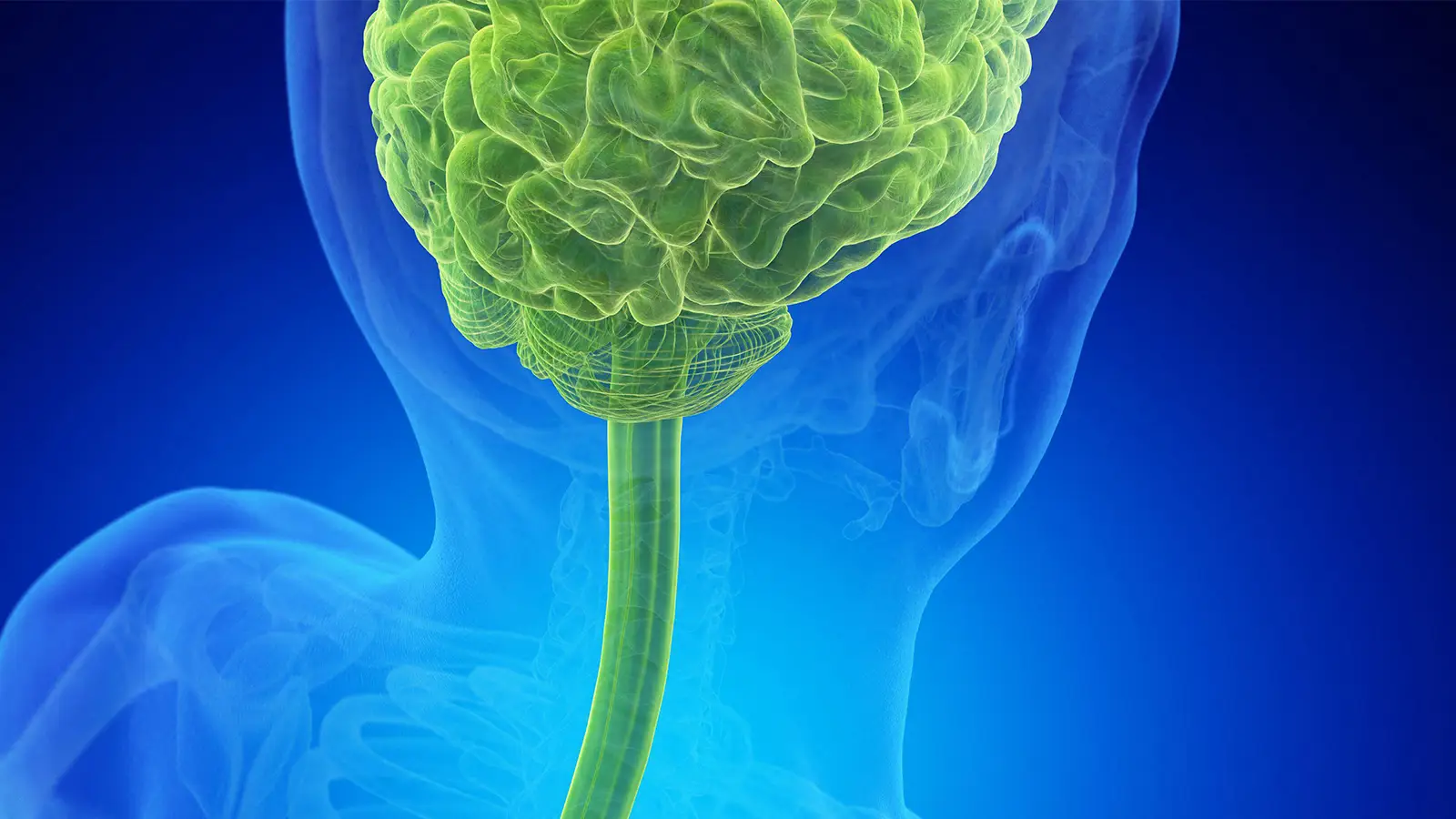
- For kids with Chiari type I malformation and syringomyelia, there was no significant difference in surgical complications whether they had decompression with or without duraplasty, a cluster-randomized controlled trial showed.
- The percentage of participants with complications within 6 months of surgery was 14% with posterior fossa decompression with duraplasty (PFD-D) and 6% with PFD alone.
- Many surgeons have “avoided what we perceive as the more effective operation, because of complications, and there doesn’t seem to be a statistical difference,” the lead researcher said.
For kids with Chiari type I malformation and syringomyelia, there was no significant difference in surgical complications whether they had decompression with or without duraplasty, a cluster-randomized controlled trial showed.
Complications within 6 months of surgery occurred in 14% of those who had posterior fossa decompression with duraplasty (PFD-D) and in 6% of those who had PFD alone (adjusted odds ratio 2.59, 95% CI 0.86 to 7.84, P=0.11), reported David Limbrick Jr., MD, PhD, of Virginia Commonwealth University School of Medicine in Richmond, and colleagues in the New England Journal of Medicine.
“There may be reasons to consider doing the PFD without duraplasty … but the bottom line is that we’ve always avoided what we perceive as the more effective operation because of the complications, and there doesn’t seem to be a statistical difference,” Limbrick told MedPage Today.
Chiari type I malformation (extension of the cerebellum into the spinal canal) and syringomyelia (spinal cord cavitation) are closely linked developmental disorders of the craniovertebral junction and spinal cord. Both can cause headaches, cerebellar and cranial nerve dysfunction, pain, hydrocephalus, sensorimotor deficits, and spinal deformity. Though PFD alone may offer clinical improvement and reduction of syringomyelia, “the choice of surgical technique remains controversial,” the researchers noted.
PFD-D involves suboccipital craniectomy (with or without cervical laminectomy), dural opening with intradural microdissection, and placement of an expansile dural graft. However, reports of a higher incidence of cerebrospinal fluid (CSF)-related complications has “prompted many surgeons to perform extradural PFD without duraplasty,” they noted. To date, “whether PFD alone carries a lower risk of surgical complications than PFD-D or provides effective treatment for clinical symptoms, neurologic deficits, syringomyelia, or quality-of-life impairment with durable effect remains unclear.”
For their study, Limbrick and colleagues treated 162 patients, of whom 78 were assigned to PFD-D and 84 who had PFD alone.
The most common surgical complications were:
- Pseudomeningocele: 8 with PFD-D, 2 with PFD
- CSF leak: 1 with PFD-D, 1 with PFD
- Chemical meningitis: 5 with PFD-D, 1 with PFD
- Hydrocephalus: 3 with PFD-D, 2 with PFD
- Postoperative wound infection: 2 with PFD-D, 2 with PFD
At 24 months, the percentage of participants with clinical improvement was 58% with PFD-D and 46% with PFD, the researchers reported.
Notably, mean reduction of the syrinx, a fluid-filled cavity or cyst characteristic of syringomyelia, was 3.08 mm in the PFD-D group and 1.22 mm in the PFD group.
In addition, fewer participants in the PFD-D group needed repeat decompression compared with the PFD group (3% vs 14%).
Both procedures brought similar improvements in Chiari Health Index for Pediatrics (CHIP) scores for the physical domain (pain frequency and severity, and non-pain symptoms), psychosocial domain, and overall health-related quality of life.
“One of the takeaways should be that the operation, which appears to be more effective in terms of syrinx response and in terms of reducing future surgeries, does not have an elevated risk of complications, statistically,” Limbrick said.
Participants had a mean age of 10 and had cerebellar tonsillar ectopia of at least 5 mm and a maximum syrinx diameter of 3.0 to 9.9 mm. They enrolled at 38 centers, which were cluster-randomized to PFD-D or PFD.
Given the young age of trial participants, Limbrick urged caution about extrapolating results to adults due to differing physiology. Additionally, the trial included only individuals with Chiari malformation and syringomyelia who were perceived by the research team as some of the most severely affected, though there are many individuals with Chiari malformation who do not have syringomyelia.
Although “none of these conclusions are definitive,” Limbrick and colleagues wrote, “they provide sufficient basis for further study of these surgical techniques with larger sample sizes, uniform intradural maneuvers and graft material, patient-level randomization, and longer follow-up.”
Source link : https://www.medpagetoday.com/pediatrics/generalpediatrics/121501
Author :
Publish date : 2026-05-29 20:49:00
Copyright for syndicated content belongs to the linked Source.