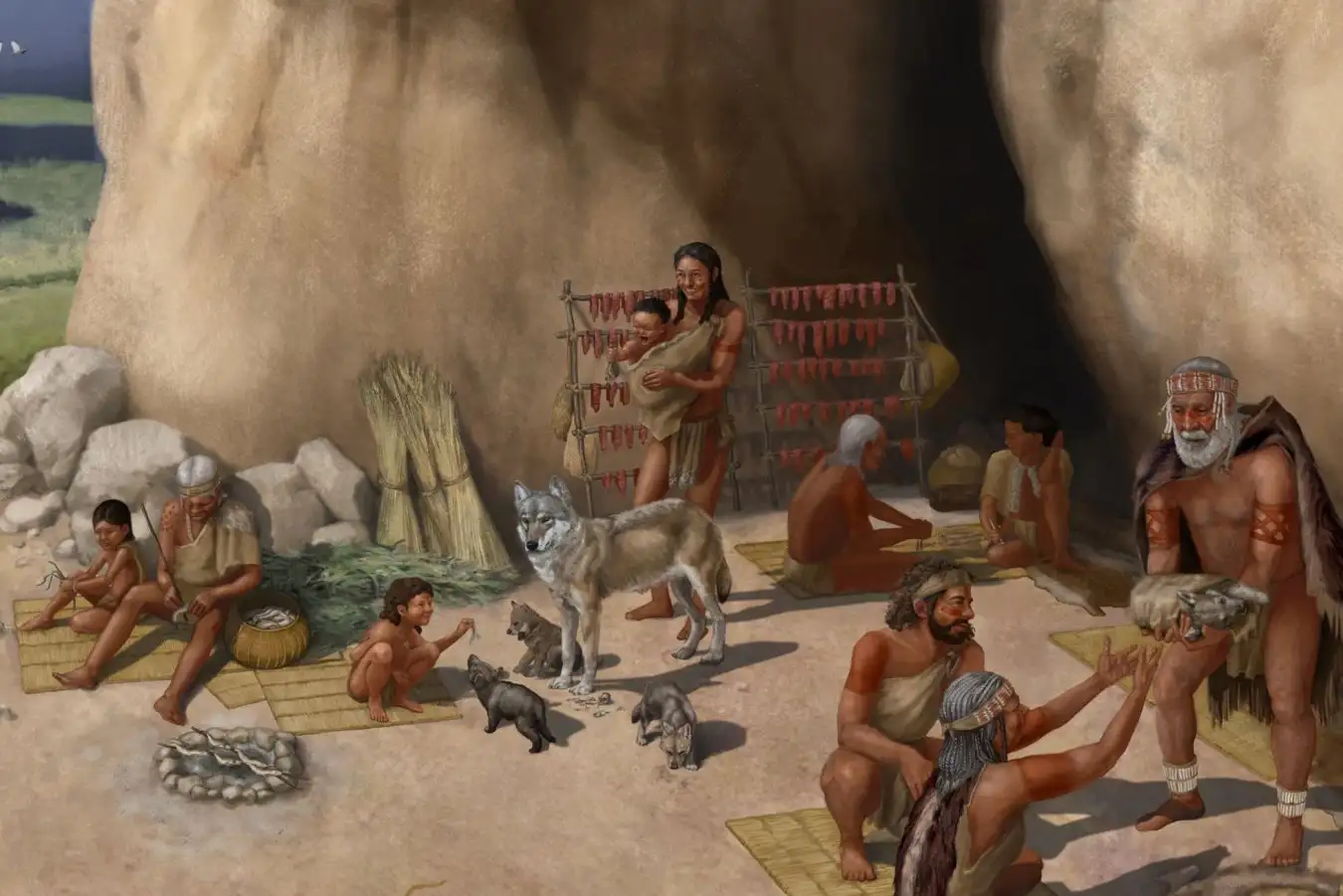
Evidence from Pınarbaşı in Turkey shows that hunter-gatherers were looking after dogs about 15,800 years ago
Kathryn Killackey
Ancient remains in Turkey from 15,800 years ago have been confirmed as coming from a dog, the earliest one ever found. Genetic evidence also reveals that our best friends were already widely distributed across Europe 14,300 years ago, when humans were hunter-gatherers and agriculture hadn’t yet emerged.
When dogs were domesticated is a knotty question, given the physical and genetic similarities between dogs (Canis lupus familiaris) and grey wolves (Canis lupus). Previously, the oldest remains genetically identified as being from a dog date to around 10,900 years ago. However, there are dog-like bones from as far back as 33,000 years ago from animals that weren’t quite dogs yet genetically, known as incipient dogs.
To get a better handle on how the history of dogs played out, Lachie Scarsbrook at the University of Oxford and his colleagues have examined the genomes obtained from several early, dog-like remains at archaeological sites around Europe.
The earliest remains confirmed as being of a dog were from the Pınarbaşı archaeological site on the Central Anatolian Plateau in Turkey. These remains date back 15,800 years to the Upper Palaeolithic, pushing back the earliest direct evidence for dogs by about 5000 years.
“By at least 15,800 years ago, dogs were already dogs, and they already look genetically and morphologically like modern dogs,” says Scarsbrook.
The team also genetically confirmed that remains from Gough’s cave in Somerset, UK, were of a dog dating back to about 14,300 years ago.
The two dogs are so genetically similar that they must have come from a relatively recent common ancestor, which was puzzling at first, says Scarsbrook. This is because they are associated with human populations that were thousands of kilometres apart, with very limited evidence of gene flow between them: the hunter-gatherer Magdalenian culture at Gough’s cave and Anatolian hunter-gatherers at Pınarbaşı.
The genomes revealed that the two Palaeolithic dogs were members of a population that expanded across the continent between 18,500 and 14,000 years ago.
“And yet we don’t think dogs are wandering all across Europe by their own steam,” says Scarsbrook. The team suggests that a third group, the Epigravettian culture, brought the dogs with them, as ancient peoples have been shown to do.
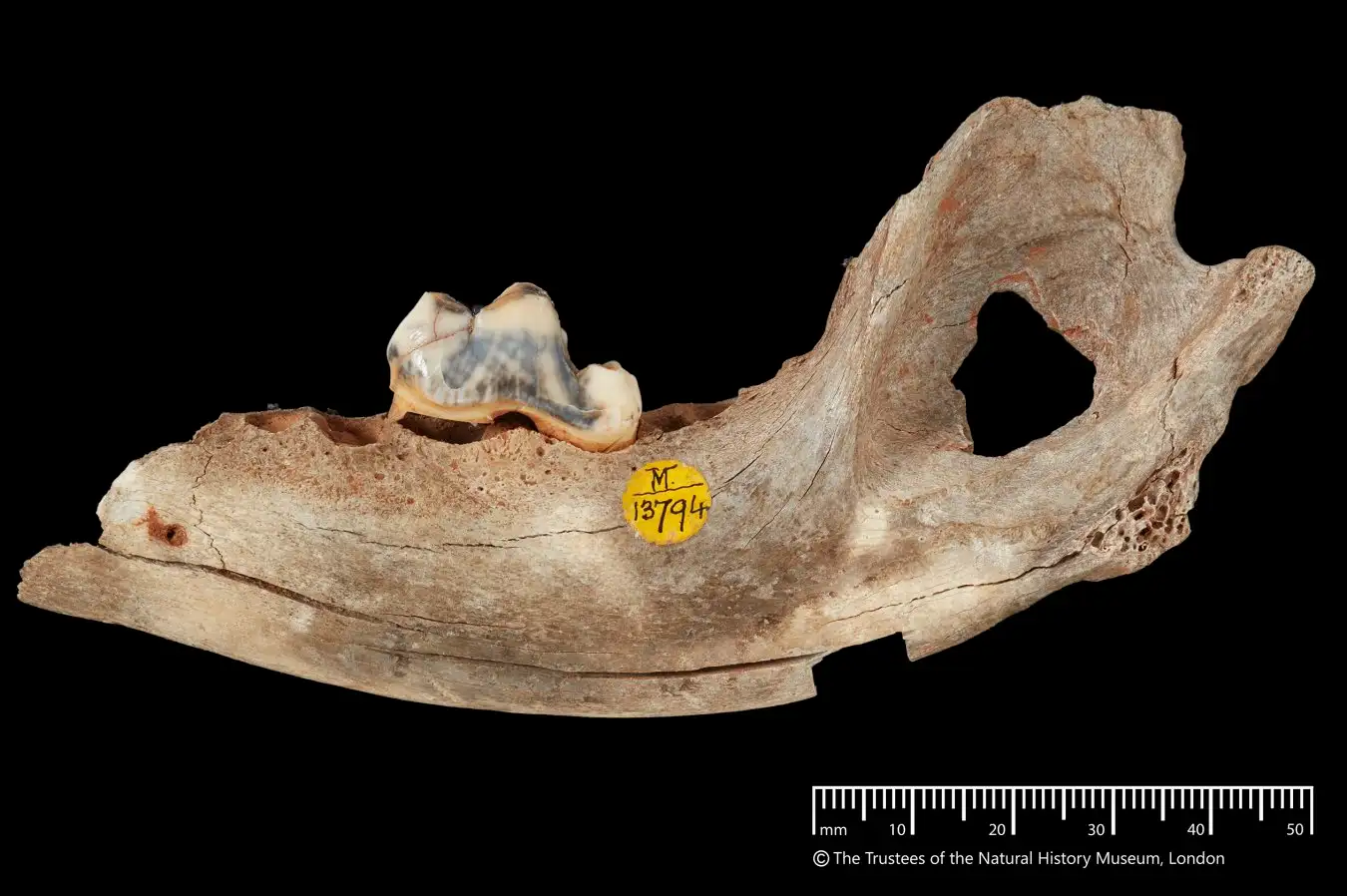
A 14,300-year-old dog jawbone from Gough’s cave, UK
TheTrustees of the Natural History Museum
During the key time window, these people were spreading northwards out of the Italian peninsula into western Europe and then south-east into Turkey. They would have interacted with both other groups, potentially leading to cultural and technological exchange.
Dogs would have given hunter-gatherer groups “a new way of hunting and keeping your cave safe, and a living blanket to keep you warm on cold nights”, says Scarsbrook.
The remains at Gough’s cave and Pınarbaşı provide clues about how ancient humans regarded the dogs. “The nuggets of the modern interaction between humans and dogs seems to have been there,” says team member William Marsh at the Natural History Museum, London.
Isotope analysis hints that the people at Pınarbaşı fed their dogs fish, which they themselves were also eating, and the animals were buried, as the humans there were. “The humans some 15,000 years ago were treating these animals seemingly symbolically,” says Marsh.
At Gough’s cave, the diet for both humans and dogs seems to have been an omnivorous mix, and there are different hints of symbolism, he says. “Rather than burying their dead, these individuals would cannibalise their dead as a funerary behaviour.” This led to postmortem cut marks, tooth marks and engravings on human bones found there, which have been taken as evidence of ritualistic human cannibalism.
A dog mandible from Gough’s cave bears similar marks and also seems to have been perforated by humans. This hints that people could have been according their dogs the same funerary traditions they gave to people, and perhaps even ate parts of their bodies, says Marsh.
“These people were also humans, who feel and have emotion. So I’m sure they would have had an attachment to those animals. But just how they express that, it’s hard for us to deduce,” says James Cole at the University of Brighton, UK. “We know Gough’s cave at that time was a really harsh environment for people to be living in, so they were going to eat whatever they could and there wouldn’t be much wasted.”
Scarsbrook thinks the initial domestication of dogs happened during the cold period known as the last glacial maximum, roughly 26,000 to 20,000 years ago. “It was a horrible time to be alive in northern Eurasia, so everything’s being pushed south, whether you’re a wolf or a human,” he says. These populations would have been forced into the same refuges, having to interact in ways they hadn’t had to previously, which could have been the start of a beautiful friendship.

Human origins and gentle walking in prehistoric south-west England
Immerse yourself in the early human periods of the Neolithic, Bronze Age and Iron Age on this gentle walking tour.
Topics:
Source link : https://www.newscientist.com/article/2520476-oldest-known-dog-extends-the-genetic-history-of-our-canine-companions/?utm_campaign=RSS%7CNSNS&utm_source=NSNS&utm_medium=RSS&utm_content=home
Author :
Publish date : 2026-03-25 16:00:00
Copyright for syndicated content belongs to the linked Source.