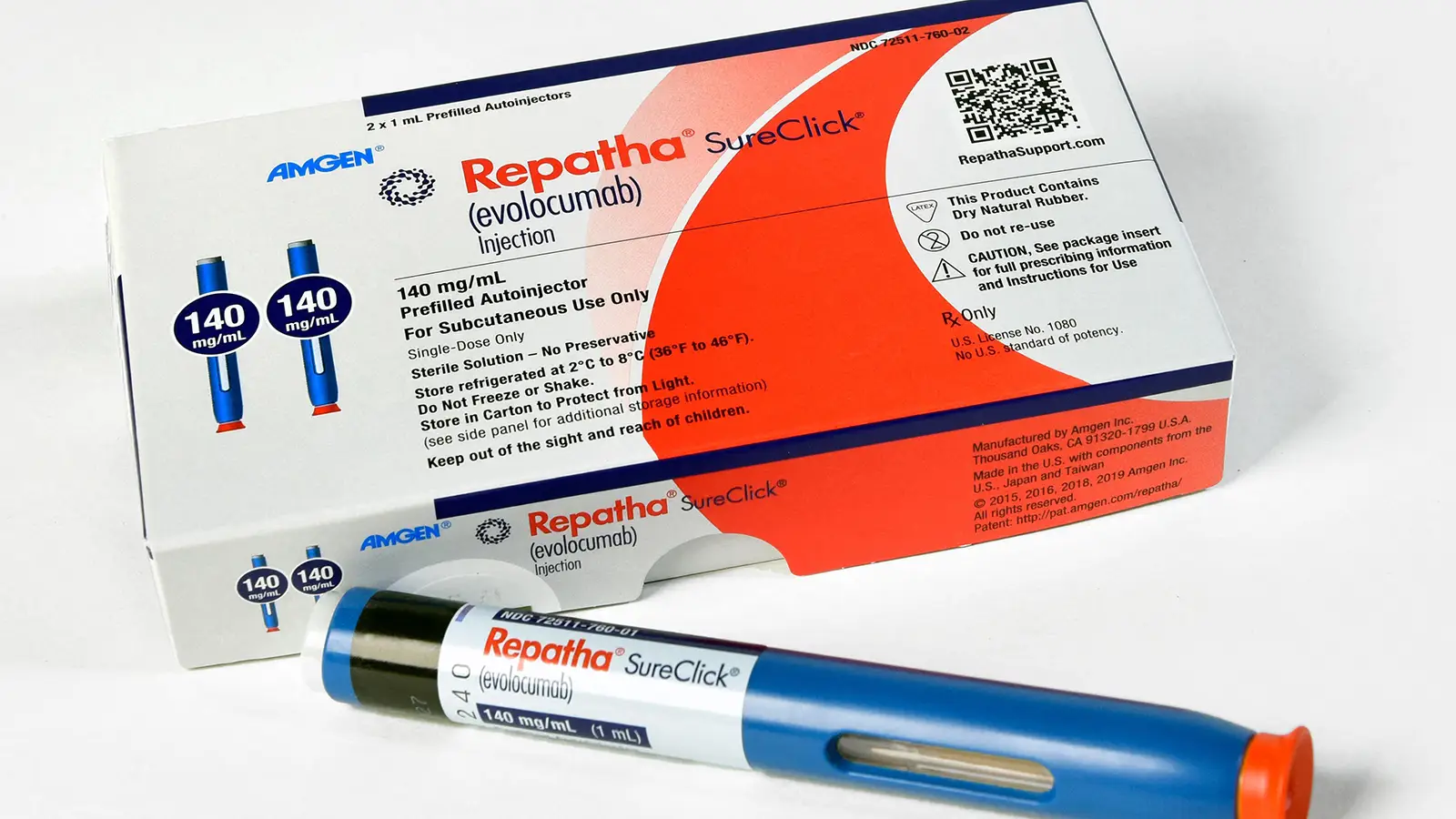
- Strong preclinical evidence suggested PCSK9 inhibitors may overcome immunotherapy resistance by preventing tumor cells from evading the immune system.
- In patients with lung cancer, melanoma, or kidney cancer, use of PCSK9 inhibitors, in addition to immunotherapy, was associated with better survival in this matched-cohort study.
- The survival benefit was independent of cardiovascular outcomes, suggesting an alternative biological pathway.
Use of a PCSK9 inhibitor to lower lipid levels was linked with significantly better survival in patients with certain cancers treated with immune checkpoint inhibitors (ICIs), a matched-cohort study showed.
Treatment with a PCSK9 inhibitor was associated with a 31% reduction in the hazard for overall survival (OS) among patients with non-small cell lung cancer (NSCLC), melanoma, or renal cell cancer (RCC). The frequency of major adverse cardiovascular events (MACE) did not differ between the groups. Patients who used PCSK9 inhibitors — evolocumab (Repatha) or alirocumab (Praluent) — also made fewer emergency department visits, had fewer hospitalizations, and required less critical care service.
The dissociation between the survival benefit and cardiovascular outcomes stands out, reported Changchuan Jiang, MD, MPH, of the University of Texas Southwestern Medical Center in Dallas, and colleagues in JAMA Network Open.
“When people think about how PCSK9 inhibitors might help cancer patients, they think about cardiovascular effects, and that’s pretty solid, proven by randomized clinical trials,” Jiang told MedPage Today. “My study is a real-world study and there’s no way we can fully control the cardiovascular confounders and clearly patients on PCSK9 inhibitors are at higher risk cardiovascularly. But it does seem like the survival benefit is independent of the cardiovascular benefit, which suggests there may be some other pathway that helps patients.”
Prospective, randomized clinical trials are needed to validate the findings, he added. A number of studies have been planned and some have already begun.
The findings add to a large and growing volume of evidence linking PCSK9 inhibition to anticancer activity and improved cancer outcomes. The reported effects include a potential to enhance the activity of the PD-(L)1 class of ICIs.
Despite the transformational impact of ICIs on cancer treatment, many patients do not respond to treatment, and others do not obtain durable responses, the authors noted in their introduction. Consequently, overcoming resistance to ICIs represents a key priority in oncology. Preclinical studies suggest PCSK9 may contribute to ICI resistance by impairing antitumor immunity. Conversely, other studies have shown that PCSK9 inhibition may potentiate response to PD-(L)1 blockade.
“Importantly PCSK9 inhibitors are already approved by the U.S. Food and Drug Administration to reduce levels of low-density lipoprotein and improve cardiovascular outcomes and are widely used in clinical practice, making them attractive candidates for therapeutic repurposing,” the authors noted.
To add clinical data to the molecular/biological evidence, Jiang and colleagues performed a propensity-matched retrospective cohort study, using data from the TriNetX clinical network. They searched the database for patients with NSCLC, melanoma, or RCC treated with PD-(L)1 inhibitors from January 2016 (a year after the first FDA approval of a PCSK9 inhibitor) through December 2024.
The patients were categorized by lipid-lowering therapy initiated within 1 year before starting a PD-(L)1 inhibitor, which produced two groups of 239 patients each, one treated with PCSK9 inhibitors and the other with high-intensity statins. The primary outcomes were OS and MACE.
During a median follow-up of 22 months (maximum 9 years), 99 patients in the PCSK9 inhibitor cohort died as compared with 129 in the statin group, which translated into a survival hazard ratio of 0.69 in favor of the PCSK9 inhibitor group. The 2-year survival probabilities were 62% for the PCSK9 inhibitor group and 51% for the statin group.
Total MACE events were 73 and 81, respectively for the PCSK9 inhibitor and statin groups, resulting in a nonsignificant hazard ratio (HR 0.85, 95% CI 0.62-1.26).
Patients in the PCSK9 inhibitor group fared significantly better for all secondary outcomes:
- Emergency department visits: HR 0.65, 95% CI 0.49-0.86, P=0.002
- Hospitalization: HR 0.73, 95% CI 0.57-0.92, P=0.008
- Use of critical care services: HR 0.68, 95% CI 0.48-0.96, P=0.03
The publication coincides with growing interest in the anticancer potential of another type of non-oncology drug — GLP-1 receptor agonists. One recent study showed that users of GLP-1 agonists had a lower risk for 12 of 13 obesity-related cancers. A study reported at the ongoing American Society of Clinical Oncology meeting showed that GLP-1 users had a significantly lower risk of disease progression for four types of cancer. Within the past year, other studies of GLP-1 drugs have shown a reduced risk of breast cancer and endometrial cancer, better survival in patients with brain metastases and those with colon cancer, and a reduced risk of multiple types of cancer in patients with diabetes and obesity.
“GLP-1 agonists are more popular in the public domain because more people are using them, mostly for weight loss,” said Jiang. “In terms of how exactly they are going to help patients with cancer, I think we’re still going to have to wait for further study. In contrast, PCSK9 is a pretty well-established pathway as a cardiology drug used to lower cholesterol, LDL specifically.”
“However, the same pathway seems to have a pretty important role in cell apoptosis, which is another way that it might have a clear role in oncology. A very important paper by a group at Duke showed pretty strong translational data suggesting a lot of tumor cells evade immune checkpoint inhibitors by using this pathway, and PCSK9 inhibitors can be used to reverse this resistance.”
PCSK9 drugs and GLP-1 agonists both have good safety profiles, he added. However, PCSK9 inhibitors might have a couple of advantages: cardiovascular drugs, in general, tend to be less expensive, and PCSK9 inhibitors are closer to patent expiration and potential development of generics.
Source link : https://www.medpagetoday.com/hematologyoncology/othercancers/121499
Author :
Publish date : 2026-05-29 20:35:00
Copyright for syndicated content belongs to the linked Source.